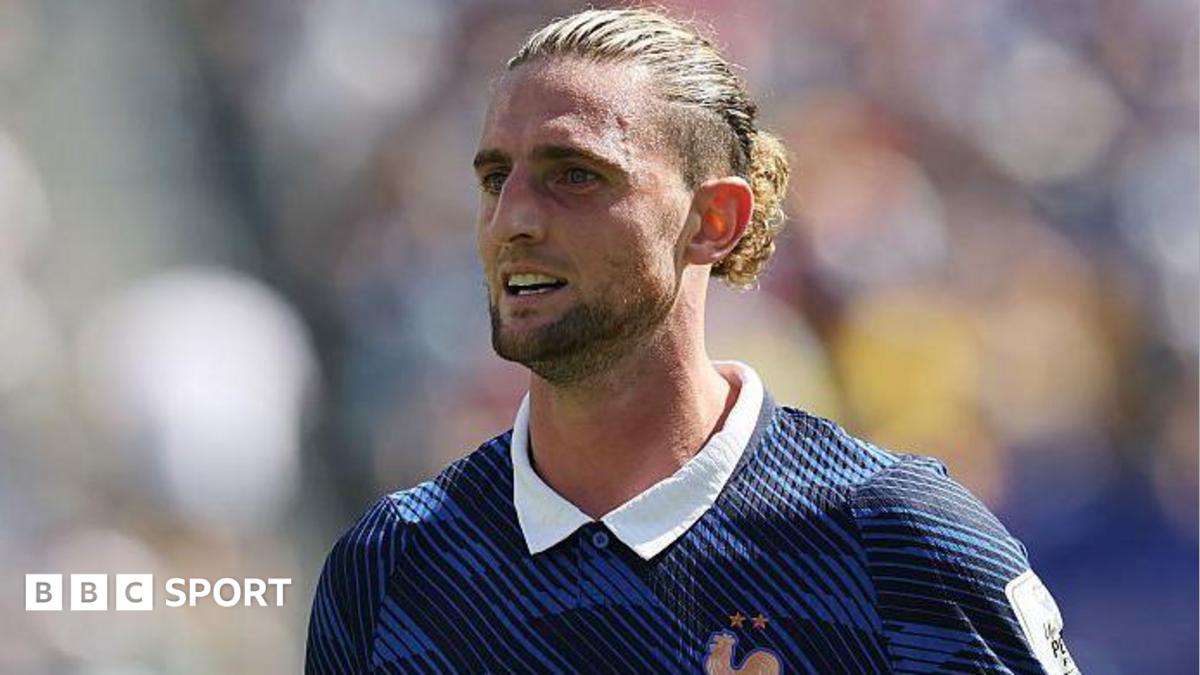
World Cup 2026: Adrien Rabiot raises concerns about New York New Jersey Stadium pitch – BBC
Adrien Rabiot has raised concerns regarding the playing surface at the New York New Jersey Stadium ahead of the 2026 World Cup, according to reports from the BBC. Rabiot joins Vinicius Jr. in criticizing the pitch quality, highlighting potential issues for elite international competition in the United States.
What are Adrien Rabiot’s concerns regarding the New York New Jersey Stadium?
Adrien Rabiot has expressed dissatisfaction with the state of the pitch at the New York New Jersey Stadium, a key venue for the upcoming 2026 World Cup. According to the BBC, the French midfielder believes the current quality of the turf does not meet the standards required for a tournament of this magnitude. His comments center on the playability of the surface and how it might hinder the technical execution of the game.
The concerns are not isolated. Football365 reports that Rabiot’s criticisms echo those previously voiced by Real Madrid star Vinicius Jr. Both players, who operate at the highest levels of European football, have pointed to the surface as a potential liability. For players like Rabiot and Vinicius Jr., the pitch is not just a backdrop but a critical tool. A surface that is too slow, uneven, or prone to tearing can disrupt the rhythm of a match and increase the risk of injury.
Key points of contention regarding the pitch include:
- Ball Roll: The speed at which the ball moves across the grass.
- Traction: The ability of players to change direction rapidly without slipping.
- Consistency: Whether the turf is uniform across the entire playing area.
How do Vinicius Jr.’s complaints align with Rabiot’s views?
The alignment between Adrien Rabiot and Vinicius Jr. suggests a systemic issue rather than a personal preference. As reported by Football365, Vinicius Jr. had previously highlighted similar deficiencies in the New York pitch. When two world-class players from different tactical roles—a controlling midfielder and a pace-dependent winger—both flag the same issue, it signals a broader problem with the stadium’s infrastructure.

For a winger like Vinicius Jr., pitch quality is paramount for acceleration and dribbling. Any inconsistency in the grass can lead to a “bobble” that kills a counter-attack. For Rabiot, the pitch affects the precision of long-range passing and the stability required for defensive positioning. The fact that both players have spoken out indicates that the current state of the New York New Jersey Stadium surface may not support the high-tempo, technical style of modern international football.
“The quality of the pitch is fundamental to how the game is played. When players of this caliber raise concerns, it indicates a gap between the current facility and the requirements of a World Cup final venue.”
Why is the New York New Jersey Stadium pitch a point of contention?
The New York New Jersey Stadium (MetLife Stadium) faces a unique set of challenges. Primarily, it is a multi-purpose venue designed to accommodate both the NFL and international soccer. The requirements for an American football field and a FIFA-standard pitch are fundamentally different.
NFL games involve heavy collisions and concentrated wear in specific areas of the field. Soccer requires a vast, uniform surface that can withstand constant pivoting and sliding over 90 minutes. Maintaining a “World Cup grade” pitch in a stadium that hosts heavy NFL traffic is a logistical hurdle. According to stadium management standards, the transition between these two sports often requires significant turf management or the installation of temporary surfaces, which can lead to the inconsistencies Rabiot and Vinicius Jr. have noted.
Furthermore, the climate in the New York and New Jersey region poses a threat to natural grass. The extreme shifts between humid summers and freezing winters make it difficult to maintain the lush, consistent carpet that European players are accustomed to in Champions League or World Cup venues.
| Feature | NFL Requirements | FIFA World Cup Requirements |
|---|---|---|
| Surface Priority | Durability and impact absorption | Ball speed and precision roll |
| Wear Patterns | Concentrated in “the trenches” | Distributed across the center circle and wings |
| Grass Type | Often hybrid or reinforced turf | High-grade natural or advanced hybrid grass |
| Maintenance Cycle | Weekly high-impact games | Strict recovery periods between matches |
What are the implications for the 2026 World Cup?
If the concerns raised by Adrien Rabiot and Vinicius Jr. are not addressed, the quality of play at one of the tournament’s most prestigious venues could suffer. The New York New Jersey Stadium is slated to host high-profile matches, including the potential final. A subpar pitch at the final would be a significant embarrassment for the host nations (USA, Canada, and Mexico) and FIFA.

Beyond the aesthetics, there is the issue of player safety. Poorly maintained pitches are linked to higher rates of non-contact injuries, such as ACL tears or ankle sprains, because the foot can “stick” in the turf during a pivot. With the value of players like Rabiot and Vinicius Jr. reaching hundreds of millions of euros, national teams are highly sensitive to any environmental risk.
The fallout from these complaints could lead to several outcomes:
- Emergency Resodding: The stadium may be forced to replace the entire surface with a more advanced hybrid system.
- Increased Scrutiny: FIFA may increase the frequency of pitch inspections at all 2026 venues.
- Player Unrest: Continued complaints could lead to formal grievances from players’ unions or national team managers.
For more information on venue preparations, see a related explainer on FIFA stadium standards.
How does FIFA handle pitch quality for major tournaments?
FIFA employs a strict set of guidelines for World Cup venues. These standards cover everything from the slope of the field to the specific type of grass seed used. Typically, FIFA prefers hybrid grass—a mix of natural grass interwoven with synthetic fibers. This provides the feel of natural grass with the durability of artificial turf, preventing the “divots” that Rabiot is concerned about.
In previous tournaments, FIFA has been known to fly in specialized turf experts to oversee the maintenance of the pitches. If the New York New Jersey Stadium is currently failing to meet these expectations, it suggests a disconnect between the stadium’s daily operations and FIFA’s tournament requirements. The reports from the BBC and Football365 serve as an early warning system, pushing the organizers to rectify the surface long before the first whistle blows in 2026.
Common misconceptions about US sports pitches
A common misconception is that because the US has world-class sports infrastructure, the pitches are automatically suited for soccer. In reality, the “American style” of stadium management often prioritizes the NFL. The heavy weight of NFL players and the nature of their game mean that many US stadiums use turf that is too hard or too synthetic for elite soccer. This is exactly why players like Rabiot, who are used to the meticulously manicured pitches of Ligue 1 or Serie A, find the current New York setup lacking.
What must happen to resolve the pitch issues?
To satisfy the demands of players like Adrien Rabiot, the New York New Jersey Stadium will likely need to implement a comprehensive turf overhaul. This is not as simple as mowing the grass more frequently; it involves the root system and the drainage layers beneath the surface.
Experts suggest that the stadium could move toward a fully integrated hybrid system that is specifically calibrated for soccer. This would involve removing the existing topsoil and installing a reinforced carpet of grass that can withstand the intensity of a World Cup match while maintaining a fast ball roll. Additionally, the stadium may need to limit the number of non-soccer events held on the pitch in the months leading up to the tournament to allow the grass to recover.
The timeline for these improvements is critical. Grass takes time to “knit” and settle. If the organizers wait until 2026 to make changes, the surface may still be unstable. The public nature of Rabiot’s and Vinicius Jr.’s concerns puts immediate pressure on the New York New Jersey Stadium management to provide a transparent plan for improvement.
FAQ: World Cup 2026 Pitch Concerns
Why is Adrien Rabiot complaining about the New York New Jersey Stadium pitch?
According to the BBC, Rabiot believes the pitch quality is insufficient for the high technical standards of the World Cup, potentially affecting ball speed and player performance.
Who else has criticized the New York New Jersey Stadium surface?
Vinicius Jr. has also raised concerns about the pitch, as reported by Football365, echoing the sentiments expressed by Rabiot.

Is MetLife Stadium (NYNJ) the only venue with pitch issues?
While Rabiot and Vinicius Jr. specifically targeted the New York New Jersey Stadium, the broader conversation involves how all US-based NFL stadiums will adapt their surfaces to meet FIFA’s strict soccer requirements.
What is the difference between an NFL pitch and a FIFA pitch?
NFL pitches are designed for impact and durability under heavy weight. FIFA pitches prioritize a smooth, consistent surface that allows the ball to roll quickly and predictably, reducing the risk of injury during rapid pivots.
Will FIFA force the stadium to change the grass?
FIFA has the authority to mandate changes to any venue that does not meet its technical specifications. Given the prestige of the 2026 tournament, it is highly likely that any surface flagged by top players will be upgraded.
The ongoing dialogue between elite players and stadium organizers highlights the tension between multi-use American venues and the exacting needs of global football. As the 2026 World Cup approaches, the New York New Jersey Stadium remains under the microscope, with the footballing world waiting to see if the surface can be brought up to the level demanded by stars like Adrien Rabiot.
