
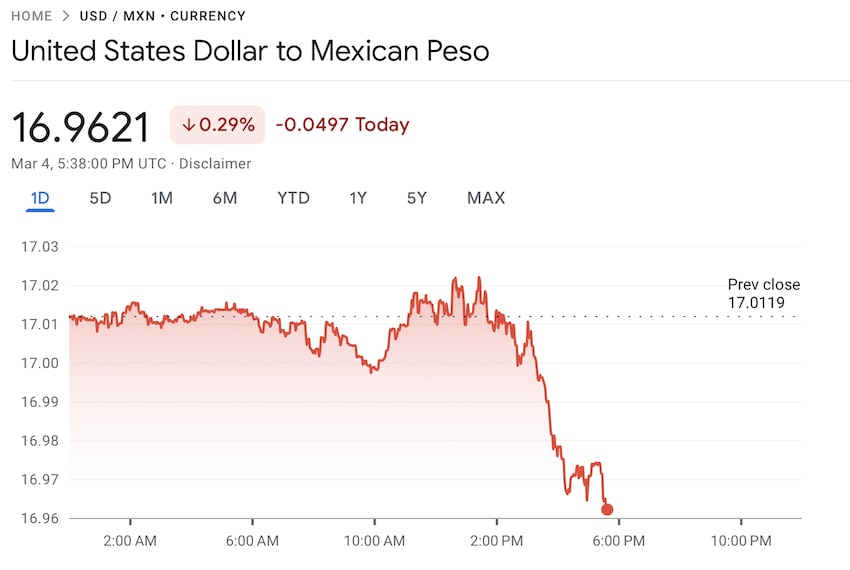
The Mexican peso strengthened slightly against the U.S. dollar on Monday, June 15, 2026, as investors bet on the imminent signing of a U.S.-Iran deal, according to local media reports. The currency traded at 17.20 pesos per dollar, a modest improvement from recent levels, while Mexican stocks also climbed on broader risk-appetite gains. The move underscores how Middle East tensions—and their potential resolution—can ripple across global markets, including emerging economies with heavy dollar exposure.
Why the peso is rising—and what it means for Mexico
Traders attributed Monday’s currency movement to two key factors: the perceived progress in U.S.-Iran negotiations and the Federal Reserve’s expected policy stance. According to public statements, the peso’s advance reflects investor optimism that a deal could ease geopolitical risks, reducing demand for the dollar as a safe-haven asset. Meanwhile, Mexican equities rose alongside broader Latin American markets, as traders weighed the Fed’s next steps after its June meeting.
“The peso’s reaction is a classic example of how emerging markets react to both local and global cues,” said a financial analyst in Mexico City, speaking to local outlets. “A U.S.-Iran agreement would lower oil price volatility, which directly benefits Mexico’s trade balance and currency stability.”
The exchange rate of 17.20 pesos per dollar marks a slight retreat from the 17.30 level seen earlier this year, according to UnoTV and El Informador. While the shift is modest, it signals growing confidence in Mexico’s economic outlook amid regional tensions. The peso’s performance also contrasts with the dollar’s broader recovery in recent weeks, as traders adjusted bets on Fed rate cuts.
How markets are reacting beyond the peso
Mexican stocks followed the peso’s lead, with the IPC benchmark index climbing on Monday, according to La Jornada. The rally mirrored gains in other Latin American markets, where risk assets benefited from easing geopolitical concerns. However, analysts warned that the Fed’s policy decisions—particularly its stance on interest rates—remain the dominant driver for Mexican assets.
“The peso’s move is a short-term reaction, but the real test will be whether the U.S.-Iran deal holds and how the Fed pivots,” said a senior economist at a major European bank, referencing earlier reports. “For now, the focus is on stability, but traders are still pricing in Fed uncertainty.”
What happens next for the peso and Mexico’s economy
If a U.S.-Iran agreement is finalized, the peso could see further support from reduced oil price swings, which would stabilize Mexico’s trade surplus—a key factor in currency valuation. However, the Fed’s next moves will dictate the longer-term trajectory. Should the central bank signal further rate cuts, emerging-market currencies like the peso could extend their gains.
For now, traders are watching three key developments:
- The timing of the U.S.-Iran deal announcement, which could trigger a more pronounced peso rally.
- The Fed’s June policy statement, due later this week, which will shape global risk sentiment.
- Mexico’s own economic data, particularly inflation and trade figures, which will influence the central bank’s next steps.
Without additional clarity on these fronts, the peso’s gains may remain limited—but the trend highlights how tightly linked Mexico’s economy is to both regional security and global monetary policy.
