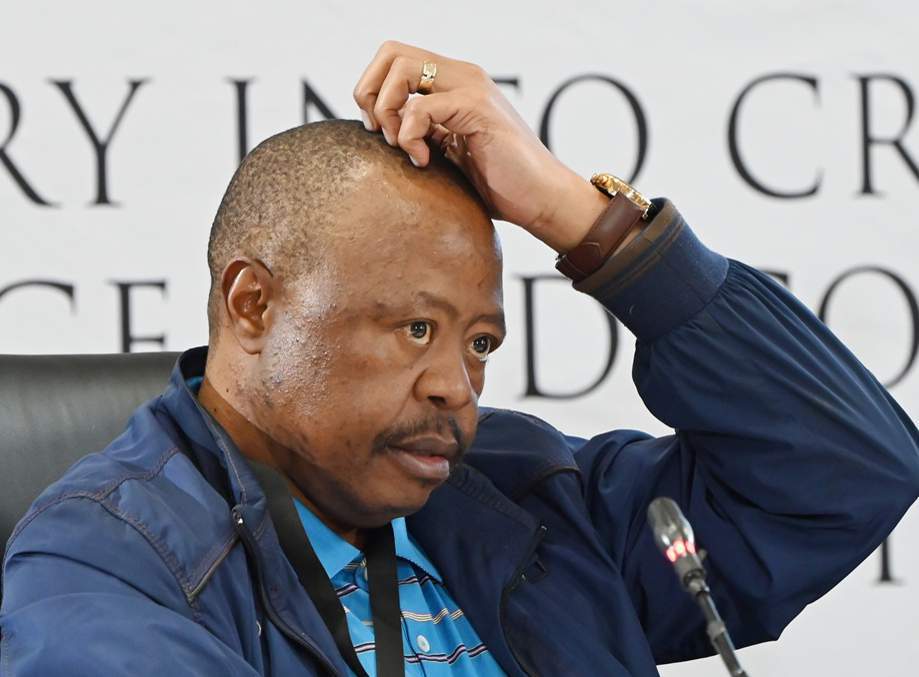
‘We see right through it’: Gauteng traffic chief’s cocaine testimony unravels at commission – News24
The Gauteng traffic chief’s testimony at the Madlanga Commission has collapsed under scrutiny following allegations of a cover-up involving an attempted R286 million drug theft. According to reports from News24 and the Daily Maverick, the witness, identified as Mashaba, faced intense questioning over his role in the incident and his failure to explain messages linking him to former MEC Faith Mazibuko.
Why the Gauteng traffic chief’s testimony is under scrutiny
The testimony of the Gauteng traffic chief has been described as “unraveling” after commission members challenged the consistency of his statements. According to News24, the proceedings reached a tipping point when it was suggested that the witness’s account of events was transparently false, leading to the remark, “We see right through it.”
The scrutiny centers on whether the traffic chief attempted to shield higher-ranking officials or hide the extent of operational failures during a high-stakes police operation. The Daily Maverick reports that the witness is specifically accused of orchestrating a cover-up to obscure the details of a botched attempt to steal narcotics valued at R286 million.
Key points of contention during the testimony include:
- Contradictory Statements: Discrepancies between the witness’s oral testimony and documented evidence.
- Refusal to Clarify: A reported unwillingness to explain the nature of communications with political figures.
- Operational Failures: Questions regarding why a theft of such magnitude was possible within the police and traffic structures.
The R286 million drug theft attempt and the reported ‘chaos’
At the heart of the Madlanga Commission’s current inquiry is an attempted theft of cocaine with an estimated street value of R286 million. The Daily Maverick highlights that the scale of the attempted theft suggests a sophisticated level of internal compromise within the law enforcement agencies involved.
While the Daily Maverick focuses on the financial valuation and the subsequent cover-up, the Mail & Guardian describes the actual event as “chaos.” This characterization suggests that the attempt to steal the drugs was not a seamless operation but one marked by disorder and potentially erratic behavior by the officers involved.
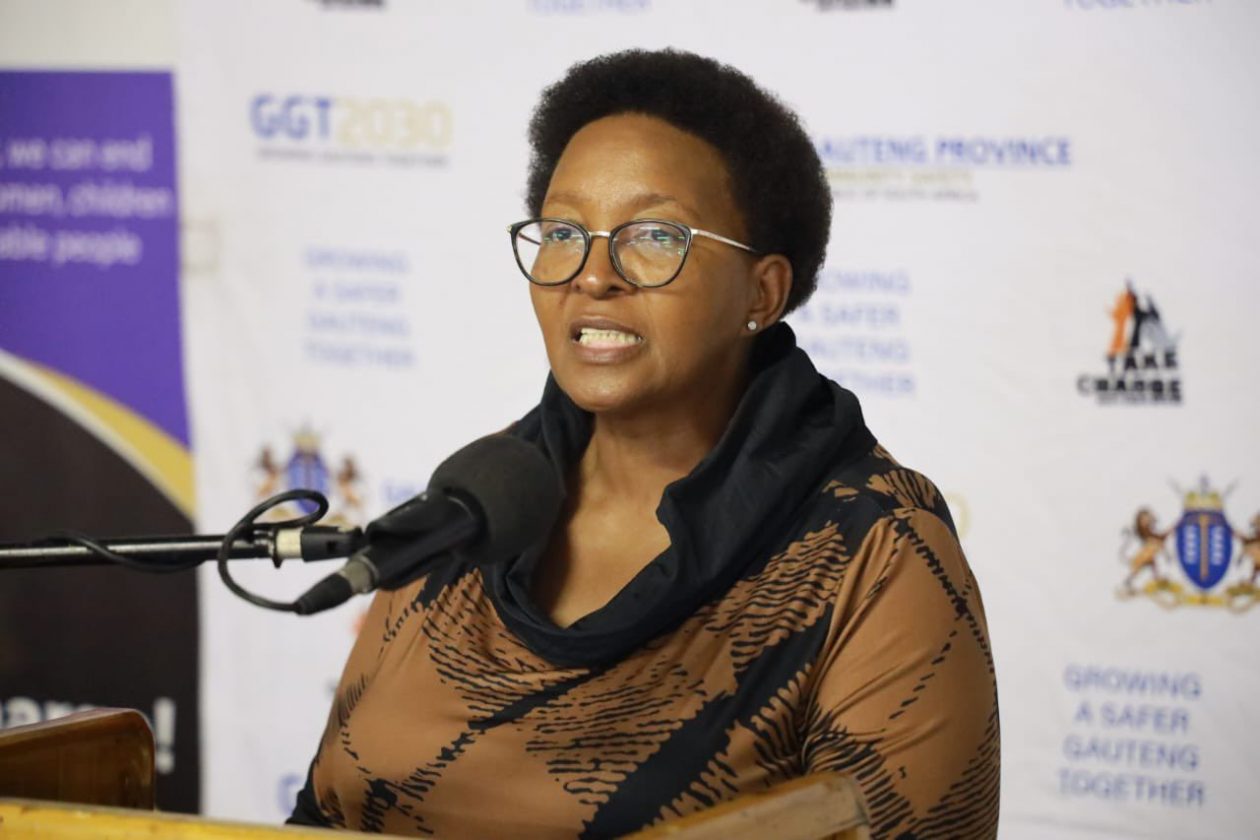
The contrast between these two reports provides a fuller picture of the event: one outlet emphasizes the massive scale of the potential loss (R286 million), while the other emphasizes the operational breakdown (“chaos”) that occurred during the attempt. This suggests that while the intent was a high-value heist, the execution was flawed, which may have contributed to the subsequent need for a cover-up.
| Reporting Angle | Source | Key Focus |
|---|---|---|
| Financial/Legal | Daily Maverick | R286 million valuation and cover-up allegations. |
| Operational | Mail & Guardian | The “chaos” surrounding the theft attempt. |
| Testimonial | News24 | The “unraveling” of the chief’s testimony. |
| Political | EWN | Messages linking the chief to Faith Mazibuko. |
The political link: Messages to former MEC Faith Mazibuko
The inquiry has expanded beyond the immediate theft to include potential political interference. According to EWN, the Gauteng traffic chief refused to explain a series of messages that link him directly to former MEC Faith Mazibuko.
The refusal to clarify these communications has raised questions about the level of political oversight—or interference—regarding the drug theft attempt. In the South African provincial government structure, a Member of the Executive Council (MEC) holds significant authority over departmental operations. The existence of direct, unexplained communication between the traffic chief and the MEC during or after a major criminal event within the department is a primary focus for the commission.
This link suggests that the “cover-up” alleged by the Daily Maverick may not have been limited to law enforcement officers but could have extended into the political sphere of the Gauteng provincial government.
The role of the Madlanga Commission
The Madlanga Commission serves as the formal mechanism for investigating these allegations of corruption and misconduct. As reported by eNCA, the traffic chief, Mashaba, has been placed “back in the hot seat,” indicating that the commission is conducting a rigorous, multi-session interrogation to pin down the facts of the R286 million theft attempt.
Commissions of inquiry in South Africa are designed to uncover systemic failures and individual culpability. In this instance, the commission is tasked with determining:
- How cocaine valued at R286 million became vulnerable to theft.
- Who authorized the movements of the drugs.
- Whether the Gauteng traffic chief acted alone or under the direction of political figures like Faith Mazibuko.
- The extent to which evidence was suppressed or altered following the “chaos” of the theft attempt.
The proceedings are being closely watched as they intersect with broader concerns about police integrity and the influence of political appointees over operational law enforcement.
Implications for Gauteng law enforcement
The revelations at the Madlanga Commission have significant implications for the credibility of the Gauteng traffic and police services. The allegation that a high-ranking official would engage in a cover-up regarding a R286 million drug theft points to a potential crisis of leadership.
If the commission finds that the traffic chief misled the inquiry, he could face charges of perjury. Furthermore, the “chaos” described by the Mail & Guardian indicates a lack of discipline and protocol within the units tasked with securing seized narcotics. This creates a precedent where the very officers entrusted with removing drugs from the streets are suspected of attempting to divert them back into the illicit market.
For those interested in the broader patterns of provincial governance, a related explainer on South African MEC powers may provide context on how political figures influence departmental heads.
Common misconceptions regarding the case
A common oversimplification of this story is that it is a simple case of drug theft. However, the evidence presented at the commission suggests three distinct layers of criminality and misconduct:
- The Primary Crime: The attempted theft of R286 million worth of cocaine.
- The Operational Failure: The “chaos” and lack of control during the event.
- The Secondary Crime: The alleged cover-up and the attempt to mislead the Madlanga Commission.
By separating these layers, it becomes clear that the “unraveling” of the testimony is not just about the drugs, but about the subsequent dishonesty and the potential involvement of the provincial executive.
Frequently Asked Questions
What is the Madlanga Commission investigating?
The commission is investigating allegations of corruption and a cover-up surrounding an attempted theft of cocaine valued at R286 million within Gauteng’s law enforcement structures.
Who is the Gauteng traffic chief mentioned in the reports?
The witness referred to as the Gauteng traffic chief in the proceedings is Mashaba, who has been questioned regarding his testimony and his links to political figures.
What is the significance of Faith Mazibuko in this case?
Faith Mazibuko is a former MEC. According to EWN, messages exist linking her to the traffic chief, and the chief’s refusal to explain these messages has led to suspicions of political involvement in the case.
How much were the drugs worth?
According to the Daily Maverick, the cocaine involved in the attempted theft had an estimated value of R286 million.
What does “unraveling testimony” mean in this context?
As reported by News24, it refers to the process where the witness’s version of events is proven inconsistent or false through the presentation of evidence, leading commission members to state they “see right through” the claims.
