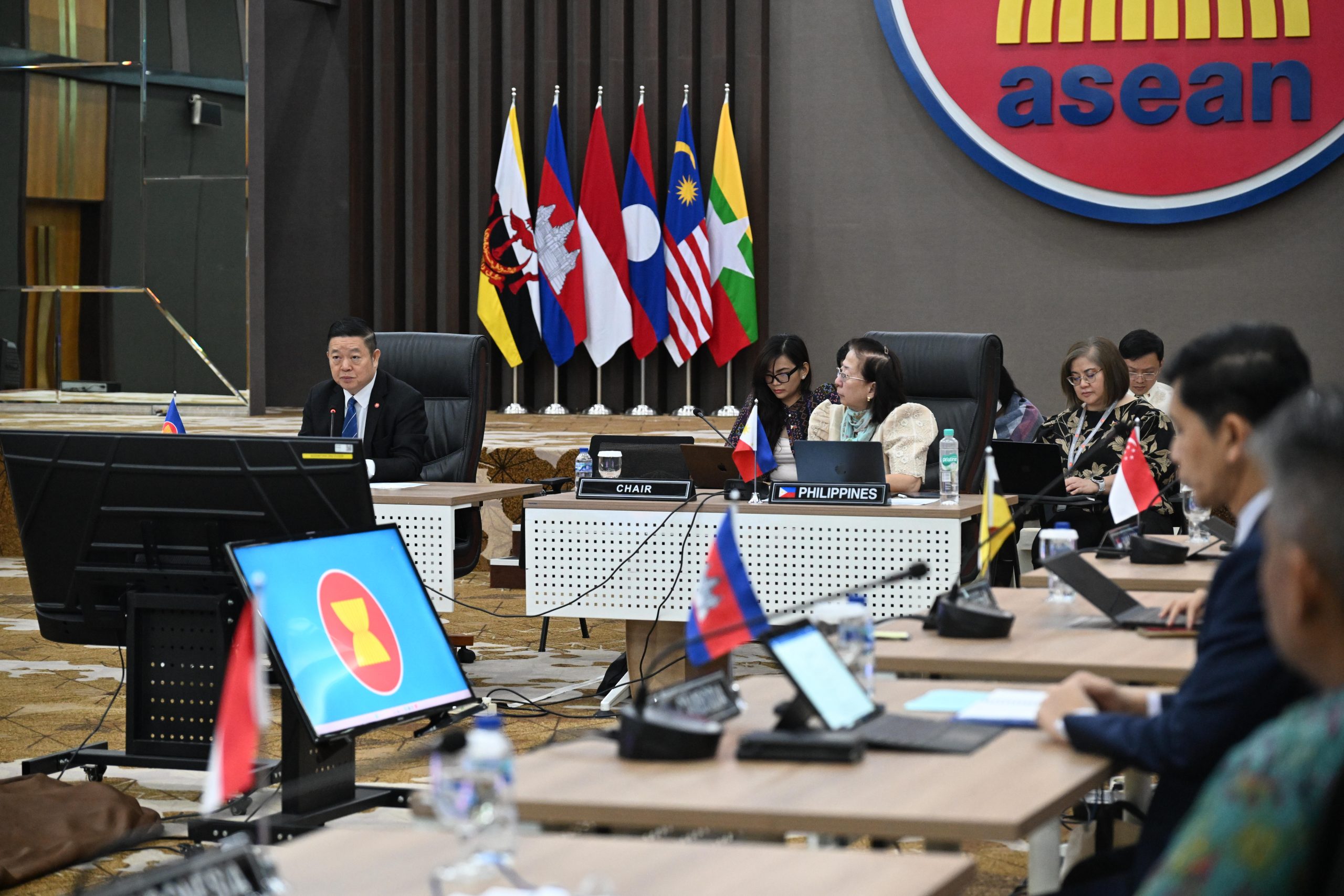
Deputy Secretary-General of ASEAN for Community and Corporate Affairs delivers remarks at the 2026 Liaoning International Friendship Cities Conference – ASEAN Main Portal
The Deputy Secretary-General of ASEAN for Community and Corporate Affairs addressed the 2026 Liaoning International Friendship Cities Conference, according to the ASEAN Main Portal. The remarks focused on strengthening sub-regional ties and corporate cooperation between ASEAN member states and Chinese municipal partners within Liaoning province to foster economic integration.
What happened at the 2026 Liaoning International Friendship Cities Conference?
The Deputy Secretary-General of ASEAN for Community and Corporate Affairs delivered a series of remarks aimed at expanding the network of “friendship cities” between the Association of Southeast Asian Nations (ASEAN) and the Liaoning province of China. According to the ASEAN Main Portal, the event served as a platform for municipal leaders and corporate executives to discuss urban development, trade corridors, and cultural exchanges.
The conference emphasized the shift toward sub-regional diplomacy. Rather than focusing solely on national-level agreements, the remarks highlighted how city-to-city partnerships can accelerate the implementation of broader ASEAN-China trade goals. This approach allows local governments to bypass some of the bureaucratic hurdles associated with national diplomacy, focusing instead on specific industrial synergies and local corporate partnerships.
Key themes from the remarks included:
- Urban Connectivity: Improving the logistics and digital infrastructure connecting ASEAN cities with Liaoning’s industrial hubs.
- Corporate Synergy: Encouraging ASEAN-based firms to establish footprints in Liaoning while inviting Chinese enterprises to invest in ASEAN community projects.
- Cultural Diplomacy: Utilizing friendship city agreements to increase people-to-people exchanges, specifically in education and tourism.
Who is the Deputy Secretary-General of ASEAN for Community and Corporate Affairs?
The Deputy Secretary-General for Community and Corporate Affairs holds a strategic role within the ASEAN Secretariat. This position is tasked with overseeing the “ASEAN Community,” which is built upon three primary pillars: the Political-Security Community, the Economic Community, and the Socio-Cultural Community. According to institutional frameworks provided by the ASEAN Main Portal, the “Corporate Affairs” aspect of this role specifically manages the relationship between the bloc and the private sector.
By attending the Liaoning conference, the Deputy Secretary-General acted as the primary bridge between the intergovernmental goals of the ten ASEAN member states and the commercial interests of the private sector. This role ensures that high-level diplomatic agreements—such as those found in the Regional Comprehensive Economic Partnership (RCEP)—are translated into actionable business opportunities at the municipal level.
| ASEAN Pillar | Focus Area in Liaoning Conference | Expected Outcome |
|---|---|---|
| Economic Community | Trade and Corporate Investment | Increased FDI and streamlined customs |
| Socio-Cultural Community | Friendship City Exchanges | Educational and cultural partnerships |
| Political-Security Community | Sub-regional Stability | Enhanced municipal-level diplomatic trust |
Why does the Liaoning International Friendship Cities Conference matter?
Liaoning province is a critical industrial heartland in Northeast China. For ASEAN, establishing strong ties with this specific region is a strategic move to diversify trade partners beyond the coastal megacities like Shanghai or Shenzhen. According to regional economic data, Liaoning’s strength in heavy industry, shipbuilding, and petrochemicals aligns with the infrastructure needs of several developing ASEAN member states.
The “Friendship Cities” model is a recognized diplomatic tool. By pairing a city in ASEAN—such as Jakarta, Bangkok, or Hanoi—with a city in Liaoning, both parties create a direct channel for economic cooperation. This reduces reliance on national intermediaries and allows for “niche” cooperation, such as a city specializing in electronics partnering with a city specializing in raw material processing.
Furthermore, this conference occurred alongside other strategic engagements. The ASEAN Main Portal also noted that the Deputy Secretary-General for Community and Corporate Affairs delivered remarks at the 2026 ASEAN-China Media Cooperation Forum. The timing of these two events suggests a coordinated effort to manage both the economic (Liaoning Conference) and the narrative (Media Forum) aspects of the ASEAN-China relationship.
How does this fit into the broader ASEAN-China relationship?
The 2026 engagements in Liaoning occur during a period of intensified regional integration. The relationship between ASEAN and China is governed by a complex web of agreements, most notably the ASEAN-China Free Trade Area (ACFTA) and the RCEP. However, these large-scale agreements often face challenges in local implementation.
“Sub-regional cooperation serves as the operational arm of national diplomacy, turning broad treaties into specific contracts and city-level projects.”
By focusing on “Community and Corporate Affairs,” the ASEAN Secretariat is signaling that the next phase of growth will not come from new treaties, but from the optimization of existing ones. The focus is now on “corporate affairs”—meaning the actual movement of capital, the establishment of factories, and the synchronization of supply chains.
The involvement of the media, as seen in the parallel Media Cooperation Forum, is intended to build public support for these economic ties. Media cooperation helps frame the “Friendship Cities” initiative not just as a business deal, but as a social and cultural bridge, reducing potential friction caused by geopolitical tensions in other parts of the region.
What are the implications for corporate entities in the region?
For corporations, the remarks delivered by the Deputy Secretary-General indicate a more welcoming environment for cross-border investment. When the ASEAN Secretariat explicitly promotes “Corporate Affairs” at a provincial conference in China, it provides a layer of political cover and institutional support for companies looking to enter the Northeast China market.
Potential implications include:
- Reduced Market Entry Barriers: Friendship city agreements often lead to local tax incentives or streamlined permitting for companies from the partner city.
- Supply Chain Diversification: ASEAN firms can leverage Liaoning’s industrial capacity to secure raw materials, while Chinese firms can use ASEAN cities as hubs for reaching the wider Southeast Asian market.
- Joint Ventures: The focus on “corporate affairs” suggests a push toward joint ventures rather than simple export-import relationships.
Companies interested in these developments should monitor the specific city-pairings resulting from the 2026 conference, as these will be the primary conduits for new trade incentives. related explainer on ASEAN trade agreements may provide further context on the legal frameworks supporting these moves.
Comparing the Liaoning Conference and the Media Cooperation Forum
While both events featured the Deputy Secretary-General for Community and Corporate Affairs, their objectives differed significantly. The Liaoning International Friendship Cities Conference was an operational event, focusing on the “how” of economic and municipal cooperation. In contrast, the ASEAN-China Media Cooperation Forum was a perceptual event, focusing on the “why” and the public image of the partnership.

The dual appearance of the Deputy Secretary-General at these forums demonstrates a “two-track” diplomacy strategy. Track one handles the hard assets—factories, ports, and city budgets. Track two handles the soft assets—public opinion, news coverage, and cultural narratives. According to reports from the ASEAN Main Portal, this integrated approach is designed to ensure that economic growth is supported by social stability and positive media representation.
Common misconceptions about “Friendship Cities”
A common misconception is that friendship city or sister-city agreements are merely symbolic gestures involving the exchange of plaques and ceremonial visits. In the context of the 2026 Liaoning conference, however, these agreements are being positioned as economic instruments.
Unlike purely symbolic partnerships, these “Corporate Affairs” driven agreements often include specific Memorandums of Understanding (MoUs) regarding:
- Technical Exchange: Sharing urban planning data or smart-city technologies.
- Trade Quotas: Preferential treatment for specific goods traded between the two cities.
- Investment Zones: The creation of dedicated industrial parks for businesses from the partner city.
By framing these partnerships through the lens of the ASEAN Community’s economic pillar, the Secretariat is moving the “Friendship City” concept from the realm of culture into the realm of commerce.
What to monitor in the coming months
The success of the Deputy Secretary-General’s remarks will be measured by the number of formal MoUs signed between Liaoning cities and ASEAN municipalities. Observers should look for announcements regarding new logistics hubs in Northeast China that specifically service ASEAN trade routes.
Additionally, the interplay between the Media Cooperation Forum and the Liaoning conference will be telling. If the media narrative shifts toward highlighting specific “success stories” of corporate partnerships in Liaoning, it will indicate that the two-track diplomacy strategy is functioning as intended.
Industry analysts should also watch for any shifts in the ASEAN-China investment flow. A spike in corporate registrations from ASEAN firms in Liaoning province would provide concrete evidence that the Deputy Secretary-General’s remarks have translated into tangible economic activity.
Frequently Asked Questions
What was the primary goal of the Deputy Secretary-General’s remarks at the Liaoning conference?
The primary goal was to promote sub-regional cooperation by establishing and strengthening “friendship city” ties between ASEAN member states and cities in China’s Liaoning province, specifically focusing on corporate and economic integration.
How does the “Community and Corporate Affairs” portfolio impact these meetings?
This portfolio allows the Deputy Secretary-General to align the high-level goals of the ASEAN Community (Economic, Political, and Socio-Cultural) with the practical needs of the private sector, ensuring that diplomatic ties lead to actual business investment.
Why is Liaoning province significant for ASEAN?
Liaoning is a major industrial hub in Northeast China with strengths in heavy industry and manufacturing. For ASEAN, it represents an opportunity to diversify trade partners and secure industrial partnerships outside of China’s coastal regions.
What is the difference between the Liaoning Conference and the ASEAN-China Media Cooperation Forum?
The Liaoning Conference focused on municipal and corporate economic ties (operational diplomacy), while the Media Cooperation Forum focused on managing the public narrative and communication between the two regions (perceptual diplomacy).
Are “Friendship Cities” just symbolic partnerships?
While they can be symbolic, the 2026 initiative emphasizes “Corporate Affairs,” meaning these partnerships are intended to include concrete economic benefits, such as investment incentives and streamlined trade processes between specific cities.
