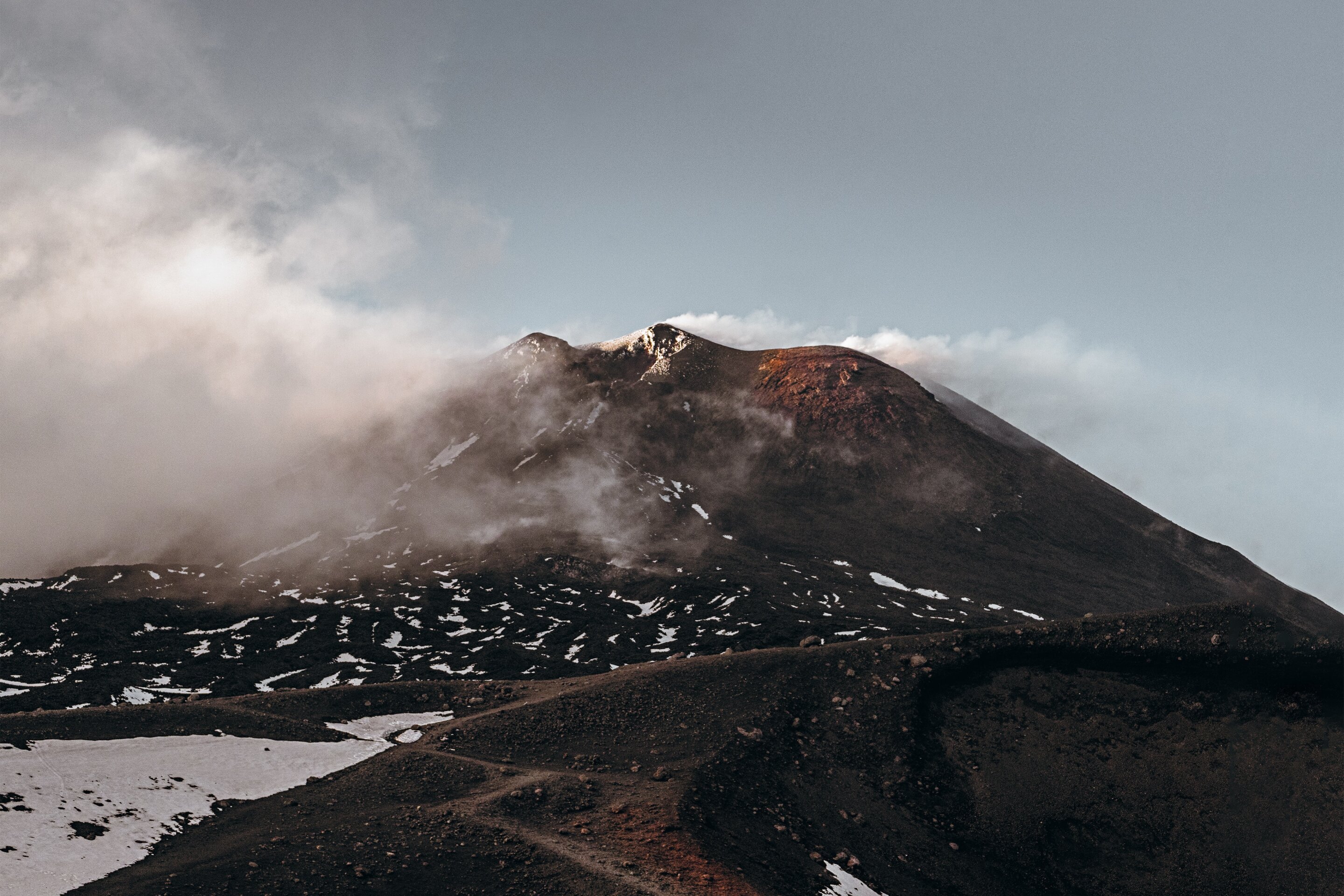
Mount Etna’s Volcanic Secrets: How Carbon Dioxide and Water Vapor Shape Explosive Eruptions
Recent studies of Mount Etna’s eruptions have uncovered a groundbreaking insight into the mechanisms that drive volcanic explosions. Researchers have found that carbon dioxide and water vapor can independently trigger distinct types of explosive activity, challenging long-held assumptions about the role of gas composition in eruptions. This discovery not only deepens our understanding of volcanic behavior but also has significant implications for predicting and mitigating the risks associated with active volcanoes.
Unpacking the Discovery: What Happened?
Mount Etna, one of the most active volcanoes in the world, has long been a focal point for geological research. In a recent study published in a leading scientific journal, researchers analyzed data from multiple eruptions to investigate the role of different gases in driving explosive activity. The findings revealed that carbon dioxide (CO₂) and water vapor (H₂O) can act as separate catalysts for explosive eruptions, each producing distinct types of volcanic activity.
Traditionally, scientists have viewed volcanic eruptions as primarily driven by the buildup of gas pressure within magma. However, the new study suggests that the specific composition of these gases—particularly CO₂ and H₂O—can influence the nature of the eruption. For instance, CO₂-rich eruptions were found to produce more violent, ash-laden explosions, while water vapor-dominated eruptions tended to result in more sustained, effusive flows.
How the Research Was Conducted
The research team used a combination of geochemical analysis, seismic data, and satellite imagery to track the behavior of gases during eruptions. By comparing the gas compositions of different eruptions, they identified patterns that correlated with the type of explosive activity observed. Advanced modeling techniques were also employed to simulate how variations in gas content might affect the dynamics of magma ascent and eruption.
One of the key challenges in this research was distinguishing the effects of individual gases. Since CO₂ and H₂O often coexist in volcanic systems, isolating their roles required careful analysis of eruption sequences and gas emission records. The team also collaborated with experts in volcanology and geochemistry to validate their findings through cross-disciplinary approaches.
Who Is Involved in This Research?
The study was led by a team of volcanologists from the Italian National Institute of Geophysics and Volcanology (INGV), in collaboration with international partners. These researchers have been studying Mount Etna for decades, leveraging its frequent eruptions as a natural laboratory for understanding volcanic processes.

Key contributors to the project include Dr. Elena Ricci, a senior researcher in volcanic gas analysis, and Dr. Marco Bellucci, an expert in magma dynamics. Their work builds on years of fieldwork and data collection at Mount Etna, one of the most extensively monitored volcanoes on the planet.
Collaborative Efforts
The study also involved partnerships with institutions such as the University of Catania and the European Geosciences Union. These collaborations enabled access to specialized equipment and datasets, including high-resolution gas sensors and seismic monitoring networks. The international scope of the research highlights the growing importance of cross-border scientific cooperation in addressing global geological challenges.
When and Where Did This Occur?
Mount Etna, located on the island of Sicily, Italy, has been erupting for over 2,000 years. The specific eruptions analyzed in the study took place between 2010 and 2023, a period marked by several significant volcanic events. These eruptions provided the researchers with a wealth of data, as Mount Etna’s frequent activity allows for repeated observations and comparisons.
Historical Context of Mount Etna’s Activity
Mount Etna’s history is a record of continuous volcanic activity, with eruptions ranging from small effusive flows to major explosive events. Notable eruptions in recent history include the 2002–2003 activity, which produced large lava flows, and the 2018–2019 eruptions that sent ash plumes into the atmosphere. These events have been extensively documented, providing a critical reference point for the current study.

The volcano’s accessibility and the presence of a dedicated monitoring network make it an ideal subject for long-term research. Scientists have established a system of seismometers, gas sensors, and thermal cameras to track changes in the volcano’s behavior, enabling real-time data collection during eruptions.
Why This Matters: Implications of the Discovery
The findings have significant
