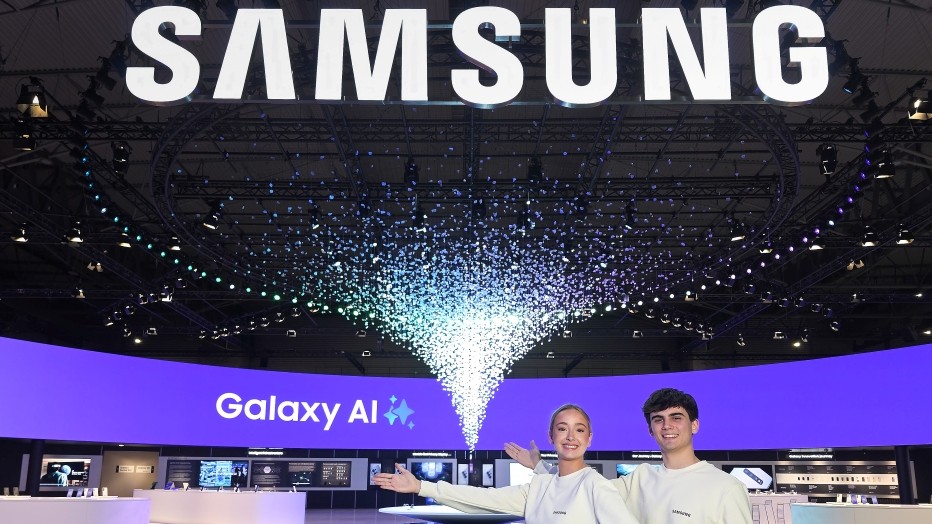
Samsung Advances Galaxy AI and Its Connected Ecosystem at MWC 2026 – samsung.com
The landscape of mobile technology is shifting from devices that simply respond to commands to systems that proactively anticipate user needs. At the Mobile World Congress (MWC) 2026 in Barcelona, Samsung Electronics has signaled a definitive move toward this future. By unveiling the Galaxy S26 series and introducing a broader vision for “Agentic AI,” the company is attempting to redefine the relationship between users and their digital ecosystems.
The exhibition at Fira Gran Via represents more than just a product launch. it is a strategic demonstration of how artificial intelligence is evolving from a set of isolated features into a cohesive, agentic companion. This transition aims to create a more intuitive and seamless experience across a diverse array of hardware, including smartphones, wearables, and next-generation form factors.
The Core of the Reveal: The Galaxy S26 Series
At the center of Samsung’s MWC 2026 presence is the Galaxy S26 series. Positioned as the third generation of Samsung’s AI-integrated phones, the S26 is engineered to be the most intuitive iteration of the Galaxy AI vision to date. While previous generations focused on introducing generative AI capabilities, the S26 series is built on a foundation of performance designed specifically to handle the demands of an AI-first user experience.
The strategic importance of the S26 lies in its role as the primary hub for the broader Galaxy ecosystem. By integrating deeper AI capabilities directly into the handset, Samsung is positioning the smartphone not just as a communication tool, but as the central intelligence coordinator for all other connected devices.
“MWC is an opportunity to show not only where Galaxy AI is today, but where it’s going next,” stated TM Roh, Chief Executive Officer, President and Head of Device eXperience (DX) Division at Samsung Electronics. “From the Galaxy S26 series to emerging form factors like Galaxy XR and TriFold, we’re pushing the boundaries of what mobile technology can be — while keeping the user experience at the center of every innovation.”
Understanding the Shift to Agentic AI
A recurring theme throughout the MWC 2026 showcase is the concept of “Agentic AI.” To understand why this is a pivotal development, it is necessary to distinguish between standard generative AI and agentic systems.
Traditional AI assistants typically operate on a request-and-response model: a user asks a question or gives a command, and the AI provides an answer or performs a single task. Agentic AI, however, is designed to act as a companion with a degree of autonomy. It doesn’t just answer; it executes. This means the AI can anticipate needs, orchestrate complex workflows across different applications, and manage tasks with minimal manual intervention.
Key Characteristics of the Agentic AI Vision
- Proactive Anticipation: Rather than waiting for a prompt, the system analyzes context to suggest actions before the user explicitly asks.
- Cross-Device Orchestration: The AI operates fluidly across the Galaxy ecosystem, meaning a task started on a phone can be seamlessly transitioned or managed via wearables.
- Personalized Intuition: The system evolves based on individual user patterns, making the interaction feel more like a personalized assistant than a generic tool.
By moving toward an agentic model, Samsung is attempting to reduce the “friction” of technology, where the AI handles the operational overhead of managing apps and settings, leaving the user to focus on the end goal.
Expanding the Ecosystem: Wearables and New Form Factors
Samsung’s strategy at MWC 2026 emphasizes that AI cannot exist in a vacuum; it requires a diverse set of touchpoints to be truly effective. The introduction of the Galaxy Buds4 series alongside the S26 series illustrates this commitment to a connected ecosystem.
The synergy between the S26 and the Buds4 allows Galaxy AI to work cohesively across different modalities. For example, the AI can leverage audio input and environmental context from wearables to refine the assistance it provides on the primary mobile device. This interconnectedness ensures that the “agentic” nature of the AI is present regardless of which device the user is currently interacting with.
Exploring Emerging Form Factors
Beyond the traditional smartphone and earbud categories, Samsung is utilizing MWC 2026 to showcase the future of hardware. Two specific mentions—Galaxy XR and the TriFold—highlight the company’s exploration of how AI can be better served by new physical designs.
| Form Factor | Strategic Purpose | AI Integration Potential |
|---|---|---|
| Galaxy S26 | Central Intelligence Hub | Primary interface for Agentic AI management. |
| Galaxy Buds4 | Ambient Interaction | Contextual audio data for personalized AI responses. |
| Galaxy XR | Immersive Computing | Spatial AI that interacts with the physical environment. |
| TriFold | Expanded Productivity | Multi-window AI workflows and enhanced visual data processing. |
The move toward XR (Extended Reality) and TriFold displays suggests that Samsung believes the next leap in AI utility requires more screen real estate and more immersive ways to visualize data. An agentic AI is significantly more powerful when it can project information into a user’s field of vision (XR) or manage multiple complex documents on a massive, foldable canvas (TriFold).
AI-Driven Network Innovations
While the consumer-facing devices garner the most attention, Samsung is also highlighting its leadership in the underlying infrastructure that makes these experiences possible. The company is showcasing AI-driven network innovations that span the entire connectivity ecosystem.
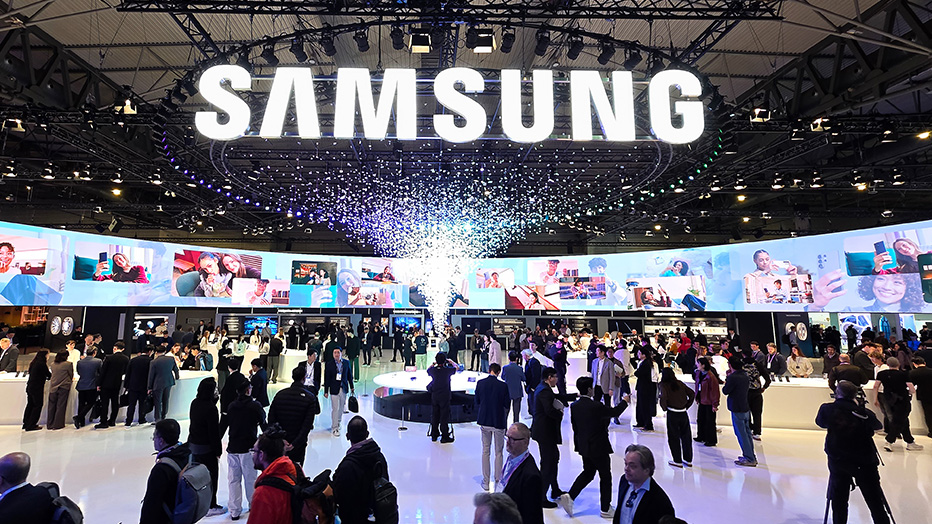
The relationship between AI and networking is symbiotic. For an “agentic companion” to feel instantaneous and intuitive, the latency between the device and the cloud (or the edge) must be virtually non-existent. AI-driven networks can optimize traffic in real-time, predicting congestion and allocating bandwidth to ensure that high-demand AI tasks—such as those required for XR or complex agentic workflows—operate without lag.
This comprehensive approach—controlling both the hardware (S26, Buds4, XR) and the network infrastructure—gives Samsung a vertical integration advantage. By optimizing the network for the specific needs of Galaxy AI, the company can deliver a more stable and responsive experience than competitors who rely on third-party network optimizations.
Industry Implications and Strategic Positioning
Samsung’s presentation at MWC 2026 reflects a broader industry trend: the transition from “AI as a feature” to “AI as the operating philosophy.” For several years, smartphone manufacturers have added AI-powered photo editing or voice transcription. However, the “Agentic AI” vision represents a fundamental shift in the user interface (UI) and user experience (UX).
If successful, this approach changes the smartphone from a tool that the user operates into a partner that operates on the user’s behalf. This has significant implications for how software is developed. Apps will no longer be the primary destination for users; instead, the AI agent will act as the layer that interacts with those apps, extracting the necessary data and performing the required actions behind the scenes.
Potential Challenges in the Agentic Shift
- Privacy and Trust: For an AI to be truly agentic and proactive, it requires deep access to user data and habits. Maintaining security while increasing autonomy is a critical balance.
- Battery and Thermal Constraints: Running complex, agentic AI models locally on a device requires significant power and efficient heat dissipation, putting pressure on hardware engineering.
- User Adoption: Shifting users from a “command” mindset to a “collaborative” mindset with their device requires a steep learning curve and a highly intuitive interface.
By emphasizing the “user experience at the center,” as TM Roh noted, Samsung is acknowledging that the technology is only as good as its accessibility. The success of the S26 and the agentic vision will depend on whether the AI feels like a helpful companion or an intrusive presence.
The Path Toward a Connected Future
The announcements at MWC 2026 suggest that Samsung is no longer viewing the smartphone as a standalone product, but as one node in a larger, intelligent web. The integration of the S26, the Buds4, and the upcoming XR and TriFold devices creates a versatile environment where AI can manifest in whatever form is most useful at the moment.
This ecosystem approach creates a “lock-in” effect, where the value of the AI increases as the user adds more Samsung devices. An AI that knows your health data from a wearable, your productivity habits from a TriFold, and your visual preferences from an XR headset is exponentially more capable than an AI confined to a single screen.
As the industry moves forward, the benchmark for a “premium” device will likely shift. It will no longer be defined solely by camera megapixels or processor clock speeds, but by the sophistication of the agentic intelligence embedded within the device and its ability to synchronize with the rest of the user’s digital life.
Quick Reference: MWC 2026 Key Highlights
- Event Location: Fira Gran Via, Barcelona, Spain.
- Primary Device: Galaxy S26 series (3rd generation AI phone).
- Core Concept: Agentic AI — a proactive, intuitive digital companion.
- Ecosystem Additions: Galaxy Buds4, Galaxy XR, and TriFold form factors.
- Infrastructure Focus: AI-driven network innovations for seamless connectivity.
Frequently Asked Questions
What is “Agentic AI” in the context of the Galaxy S26?
Agentic AI refers to a shift from passive AI (which responds to prompts) to proactive AI (which acts as an agent). In the Galaxy S26, this means the AI can anticipate user needs and execute complex tasks across different apps and devices with minimal manual input, acting more like a digital companion than a tool.
How does the Galaxy S26 differ from previous AI phones?
The Galaxy S26 is the third generation of Samsung’s AI-integrated phones. Unlike earlier versions that focused on specific generative features, the S26 is engineered for a more comprehensive “agentic” experience, emphasizing deeper ecosystem integration and more intuitive, personalized interactions.
What are the Galaxy XR and TriFold devices?
These are emerging form factors showcased by Samsung at MWC 2026. Galaxy XR focuses on Extended Reality, blending digital information with the physical world, while the TriFold is a new folding screen design that provides significantly more display area for productivity and AI-driven multitasking.
Why is Samsung focusing on “network innovations” alongside hardware?
Advanced AI, especially in XR and agentic systems, requires extremely low latency and high bandwidth to feel seamless. By developing AI-driven network innovations, Samsung ensures that the infrastructure can support the real-time demands of its connected ecosystem.
How do the Galaxy Buds4 fit into the AI ecosystem?
The Galaxy Buds4 serve as an audio touchpoint for Galaxy AI. By working in tandem with the S26, they allow the AI to leverage ambient sound and voice interactions to provide a more cohesive and contextual experience across the user’s wearables and mobile devices.
For those interested in how these developments fit into the broader mobile landscape, a related explainer on the evolution of generative AI in hardware may provide further context on the industry-wide shift toward on-device intelligence.
