
All Whites Coach Darren Bazeley Impressed by Tim Payne’s Reaction to His Newfound Online Fame
In the high-stakes world of international football, fame usually follows a predictable trajectory: a breakout performance, a string of goals, a high-profile transfer, and a gradual climb in social media following. However, Tim Payne, a stalwart defender for the New Zealand All Whites, recently experienced a digital explosion that defies conventional sports logic. In a matter of days, Payne transitioned from a respected professional with a modest online presence to a global internet sensation, amassing millions of followers in a whirlwind of World Cup-related visibility.
While the numbers are staggering, the real story lies in the reaction of the man at the center of the storm and the approval of his mentor. All Whites coach Darren Bazeley has expressed significant admiration for how Payne has navigated this sudden surge in notoriety. In an era where “clout” often overrides concentration, Bazeley’s observation that All Whites coach Darren Bazeley impressed by Tim Payne’s reaction to his newfound online fame highlights a critical intersection between modern celebrity and professional athletic discipline.
The Digital Explosion: From Thousands to Millions
To understand why Darren Bazeley is so impressed, one must first grasp the sheer scale of the phenomenon. Tim Payne did not simply “grow” his social media presence; he experienced a viral anomaly. Before the World Cup chaos, Payne’s Instagram account was a typical athlete’s page—focused on training, family, and the occasional match photo, with a following of around 5,000 people.
Almost overnight, that number skyrocketed. Reports indicate that Payne’s following surged past the one-million mark and continued climbing toward four million. To put this in perspective, Payne briefly became more followed on Instagram than the All Blacks, New Zealand’s most iconic sporting brand. For a defender in a sport that often plays second fiddle to rugby in the Kiwi consciousness, this was an unprecedented shift in digital gravity.
| Metric | Pre-Viral Phase | Post-Viral Phase | Growth Factor |
|---|---|---|---|
| Follower Count | Approx. 5,000 | 4 Million+ | ~800x Increase |
| Public Profile | Respected Professional | Global “Folk Hero” | Extreme |
| Digital Reach | Local/Niche | International/Mainstream | Exponential |
This surge wasn’t the result of a calculated marketing campaign or a carefully curated “influencer” strategy. Instead, Payne became a symbol—a “folk hero” of sorts—whose presence during the World Cup resonated with a global audience for reasons that often transcend the actual game of football. The internet, in its unpredictable fashion, decided that Tim Payne was the face of a specific, relatable energy, turning a reliable defender into a digital deity.
Why Darren Bazeley’s Approval Matters
For a national team coach, a player becoming a global celebrity overnight is typically a cause for concern. The distractions are manifold: the constant notifications, the influx of direct messages, the temptation to lean into the “persona” created by the internet, and the inevitable pressure to maintain a public image. The risk of “head-spinning” is high, and for a defender—a position that requires immense focus, spatial awareness, and a grounded temperament—any loss of concentration can be catastrophic on the pitch.

This is why Darren Bazeley’s reaction is so pivotal. Bazeley has noted that Payne has remained remarkably unfazed by the noise. Rather than letting the fame inflate his ego or distract him from his duties, Payne has approached the situation with a mixture of curiosity and healthy skepticism.
“The most impressive thing isn’t the number of followers, but the fact that Tim hasn’t changed. He’s still the same professional, the same teammate, and the same focused athlete he was when he had five thousand followers.”
By remaining grounded, Payne has demonstrated a level of psychological maturity that is rare in the age of the “viral athlete.” Bazeley recognizes that the ability to ignore the digital applause while remaining committed to the grind of professional sport is a competitive advantage. When the All Whites coach reflects on the situation, he isn’t praising the fame itself, but rather the mental fortitude required to coexist with it without being consumed by it.
Who is Tim Payne? The Man Behind the Meme
To the four million people following him, Tim Payne might be a meme or a symbol of World Cup eccentricity. To those who follow New Zealand football, he is a cornerstone of the national team’s defense. Payne’s journey to the All Whites was not an overnight success; it was built on years of persistence, tactical intelligence, and a willingness to play in various leagues to hone his craft.
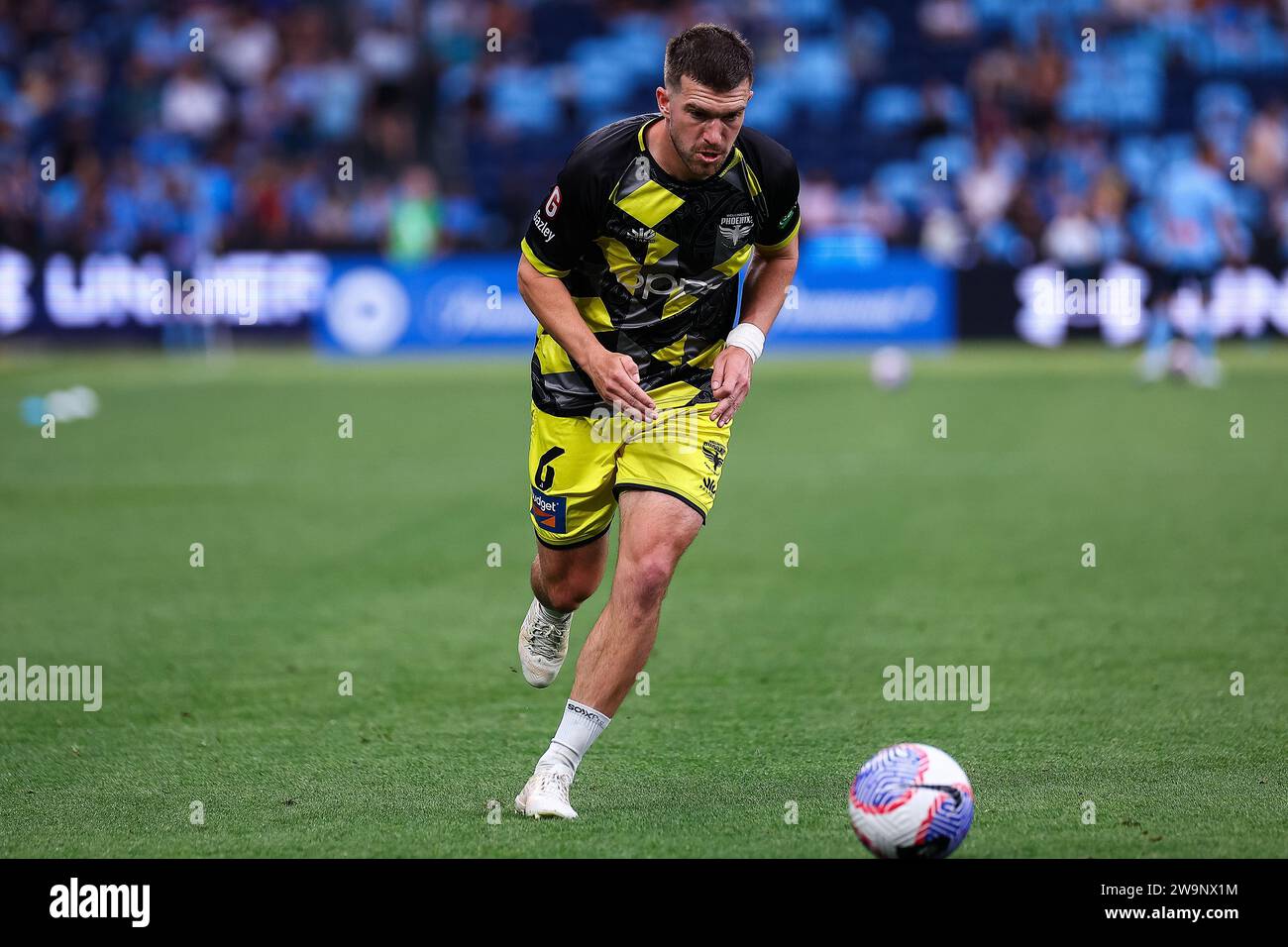
- Tactical Reliability: Known for his positioning and ability to read the game, Payne provides a stabilizing presence in the backline.
- Professionalism: His career has been characterized by a “workman-like” approach, focusing on the fundamentals of defending rather than seeking the spotlight.
- Leadership: As a senior figure in the squad, his composure serves as a blueprint for younger players entering the international arena.
The irony of his newfound fame is that it contradicts everything Payne stands for as a player. He is a defender—the unsung hero of the pitch whose best games are often those where he is barely noticed because he has neutralized the opposition so effectively. To suddenly become the most visible person in the room is a jarring transition, yet it is this very contrast that has fueled his appeal to the public.
The “Meaning” of Digital Fame in Modern Sport
One of the most poignant aspects of this story is Payne’s own questioning of the phenomenon. He has openly wondered what these millions of followers “actually mean.” This question cuts to the heart of a broader sociological shift in how we consume sports.
In the past, a player’s value was measured by caps, trophies, and statistics. Today, there is a secondary currency: visibility. A player can have a massive digital footprint without necessarily having a corresponding impact on the game’s outcome. This creates a strange duality where an athlete is simultaneously a professional employee of a sporting club and a content creator for a global audience.
Payne’s skepticism suggests a refusal to conflate digital popularity with professional achievement. He understands that a million likes on a photo do not equal a clean sheet against a top-tier opponent. This distinction is exactly what Darren Bazeley finds so impressive. By questioning the utility of his fame, Payne effectively immunizes himself against the pitfalls of narcissism that often plague modern athletes.
For those interested in the intersection of sports and technology, this could be a related explainer on the psychology of athlete branding, exploring how visibility impacts on-field performance.
Comparing the All Whites and the All Blacks: A Cultural Shift
The fact that Tim Payne briefly eclipsed the All Blacks in Instagram popularity is a fascinating data point for New Zealand’s sporting culture. For decades, the All Blacks have been the undisputed titans of the NZ sporting landscape, possessing a brand that is recognized in every corner of the globe. Rugby is not just a sport in New Zealand; it is a national identity.
However, the “Payne Phenomenon” suggests a few things about the current climate:
- The Global Reach of Football: The FIFA World Cup remains the most-watched sporting event on earth. When a New Zealand player becomes a focal point of that conversation, the reach is exponentially larger than any single rugby match, regardless of the All Blacks’ prestige.
- The Nature of Virality: The All Blacks’ following is built on a legacy of dominance and institutional power. Tim Payne’s following was built on a “moment”—a viral spark that captured the internet’s imagination. One is a slow burn; the other is a flash fire.
- Diversification of Interest: There is a growing appetite among younger New Zealanders for football, moving away from the traditional rugby-centric monoculture.
While the All Blacks will likely regain their numerical lead, the event serves as a reminder that the digital landscape allows for sudden, democratic shifts in attention. A single player can, for a brief window, become the most famous face of their country’s sport.
The Implications for the All Whites’ Future
While Darren Bazeley is focused on the immediate mental health and focus of his player, there is a strategic silver lining to this chaos. The All Whites have long struggled for visibility in a crowded sporting market. Tim Payne’s fame provides a unique “entry point” for thousands of new fans to discover New Zealand football.
If managed correctly, this visibility can be converted into tangible growth for the sport:
- Increased Sponsorship: Brands are more likely to invest in a team that has a “viral” asset.
- Youth Engagement: Young aspiring footballers are more likely to be inspired by a player who is seen as a global “folk hero.”
- Mainstream Media Coverage: The curiosity surrounding Payne brings the All Whites into conversations that they might otherwise be excluded from.
The challenge for the organization is to ensure that the “meme” fades into the background while the “interest in the team” remains. The goal is to move the audience from following Tim Payne the personality to following the All Whites the team.
Managing the Noise: Lessons for Modern Athletes
The story of Tim Payne and Darren Bazeley offers a case study in how to handle the volatility of the digital age. Many athletes struggle when the spotlight shifts from their skill to their persona. The “noise” can become deafening, leading to anxiety, burnout, or a loss of identity.
Key strategies for maintaining balance during sudden fame:
- Maintain a Support System: Relying on coaches like Bazeley and teammates who knew you before the fame keeps you anchored in reality.
- Limit Digital Consumption: Setting boundaries on social media usage prevents the “echo chamber” effect.
- Focus on the Process: Prioritizing the daily training habits over the daily follower count ensures that professional standards do not slip.
- Maintain a Healthy Skepticism: As Payne did, questioning the “meaning” of digital metrics prevents the ego from becoming tied to an unstable number.
By treating his fame as a curiosity rather than a destination, Payne has avoided the trap of becoming a caricature of himself. He remains, a footballer.
Frequently Asked Questions About Tim Payne’s Social Media Surge
How did Tim Payne get so many followers so quickly?
Payne’s growth was a result of viral momentum during the World Cup. He became a “folk hero” to a global audience, where his personality and presence resonated with internet culture, leading to an exponential increase in followers across platforms like Instagram.
Why was coach Darren Bazeley impressed by Tim Payne?
Bazeley was impressed by Payne’s humility and his ability to remain focused on his professional duties despite the massive distraction of global fame. He praised Payne for not letting the numbers change his character or his commitment to the team.
Is Tim Payne actually more popular than the All Blacks?
In terms of specific Instagram follower counts during the peak of his viral surge, Payne’s numbers briefly exceeded those of the All Blacks’ official account. However, this was a spike in individual popularity rather than a shift in the overall institutional brand power of New Zealand rugby.
What is Tim Payne’s role in the All Whites?
Tim Payne is a seasoned defender known for his tactical discipline and reliability. He is a key part of the New Zealand national team’s defensive structure and is respected for his professionalism and leadership on the pitch.
How does this affect the New Zealand national football team?
While primarily a personal phenomenon, Payne’s fame brings unprecedented global visibility to the All Whites. This provides an opportunity to attract new fans, increase sponsorship potential, and grow the profile of football within New Zealand.
As the digital dust settles, the legacy of this moment will likely not be the number of followers Tim Payne acquired, but the grace with which he handled them. In a world obsessed with the “follow” button, the most valuable asset a player can have is the ability to ignore it. For Darren Bazeley and the All Whites, having a player who can stare down both a world-class striker and a four-million-strong digital crowd with the same level of composure is a win far greater than any viral trend.
