
Decades-Lost: How Unexploded WWII Bombs Still Haunt a Pacific Nation 80 Years Later
Hundreds of live ordnance from World War II remain buried across a remote Pacific island chain, posing a lethal threat to communities decades after the conflict ended. New government data reveals the scale of the problem—and the urgent need for a cleanup effort that has been delayed for years.
Since the final battles of the Pacific War in 1945, an estimated 300 to 500 unexploded bombs have been discovered across the Northern Mariana Islands, a U.S. territory in the western Pacific. Local officials and demining experts warn that the risk of accidental detonations—triggered by construction, storms, or even tourists—has grown as aging infrastructure and climate change expose more hazardous sites. Yet funding for removal has stalled, leaving residents and emergency responders in a dangerous limbo.
This is not an isolated case. Similar hazards persist across the Pacific, from Japan’s Okinawa to Palau, where wartime relics continue to claim lives. But in the Northern Marianas, the combination of remote geography, limited resources, and bureaucratic delays has turned a known danger into a ticking time bomb.
Where Are the Bombs—and How Did They Get There?
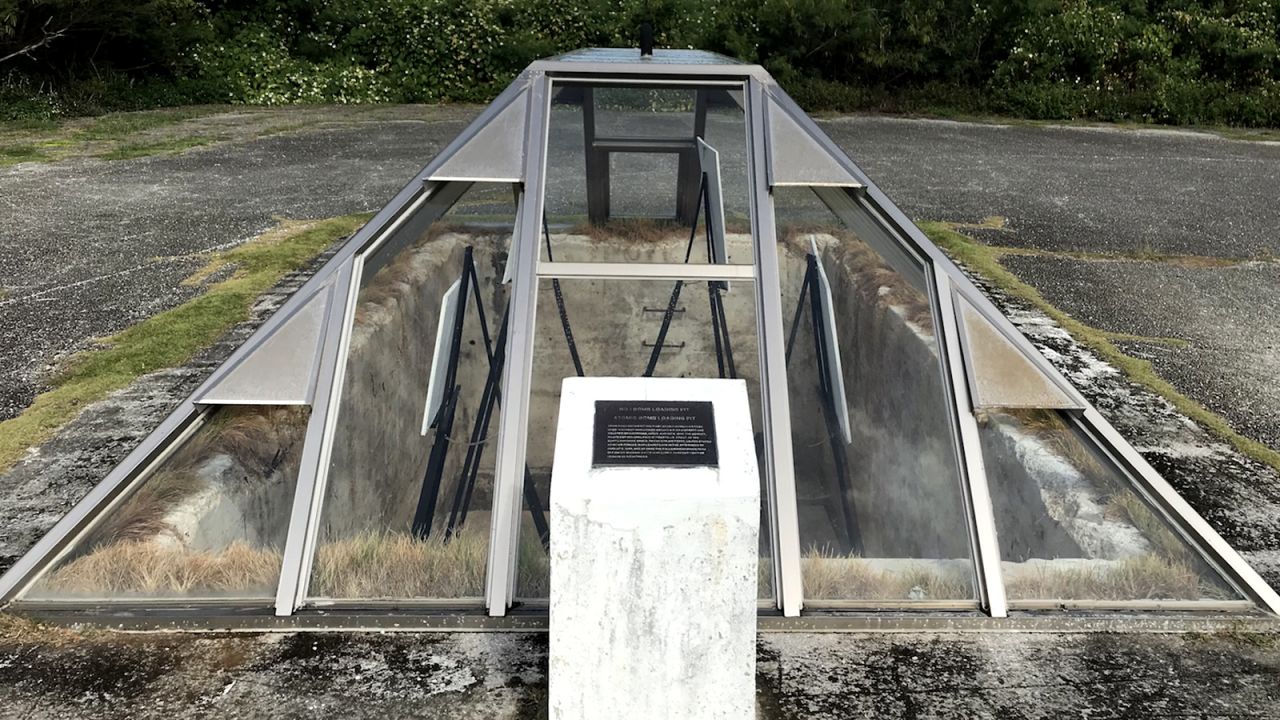
The Northern Mariana Islands—comprising 14 islands north of Guam—were a key battleground in the final months of World War II. Between 1944 and 1945, U.S. forces conducted intense bombing campaigns against Japanese-held positions, including Saipan, Tinian, and Guam. Records from the U.S. Navy’s Bureau of Ordnance and declassified military reports confirm that thousands of bombs failed to detonate, either due to mechanical failure or because they struck soft ground without penetrating deeply.
Today, the majority of confirmed unexploded ordnance is concentrated on three islands:
- Saipan: The largest cluster, with an estimated 150–250 bombs buried in former military zones, near beaches, and even in residential areas. In 2019, a 1,000-pound U.S. bomb was discovered during construction on a public road, prompting a weeks-long evacuation.
- Tinian: Home to 80–120 unexploded bombs, including 500-pound general-purpose bombs and incendiary devices from fire raids. The island’s North Field Airport, a former B-29 bomber base, remains a high-risk zone.
- Agrihan: A volcanic island with 50–70 confirmed bombs, many near old Japanese fortifications. Its rugged terrain makes detection difficult.
Most ordnance is from the 1944–45 campaigns, but a smaller number of Cold War-era practice bombs—dropped by U.S. forces in the 1950s and 1960s—have also been found. The Northern Mariana Islands Commonwealth Government’s Emergency Management Office maintains a partial inventory, but experts say the true number is likely higher due to undocumented sites.
Key Point: Unlike in Japan or Europe, where systematic demining has been underway for decades, the Northern Marianas has no dedicated ordnance disposal unit. Cleanup efforts rely on U.S. Defense Department contracts, which are funded irregularly.
Why Hasn’t This Been Fixed—And What Are the Risks?
The delay in addressing the bomb threat stems from a mix of geopolitical, financial, and logistical challenges:
- Funding gaps: The U.S. government has allocated $5 million over the past decade for demining in the Northern Marianas, but local officials say $50 million is needed for a comprehensive cleanup. In 2022, Congress approved $3 million for fiscal year 2023, but only $1.2 million was released by year’s end due to bureaucratic delays.
- Remote terrain: The islands’ volcanic soil, dense jungles, and frequent typhoons make detection difficult. Metal detectors often fail in mineral-rich areas, and drones risk triggering unstable ordnance.
- Prioritization conflicts: The Northern Marianas faces competing needs, from hurricane recovery to tourism infrastructure. Unexploded bombs are seen as a secondary risk compared to immediate economic pressures.
The human cost is already clear. Since 2010, at least five people have been killed and 20 injured by unexploded ordnance in the Northern Marianas, according to local hospital records and the U.S. Pacific Command’s Hazardous Ordnance Program. In 2017, a 12-year-old boy was critically injured when he picked up what he thought was a rock near Garapan Beach on Saipan—it was a live 250-pound bomb.
Emergency responders face risks too. In 2020, a Saipan firefighter was hospitalized after stepping on a live bomb fragment while responding to a separate call. The Northern Mariana Islands Fire Department has no specialized ordnance disposal training, relying instead on U.S. Marine Corps contractors brought in on an ad-hoc basis.
Expert Warning: Dr. Mark Harrison, a demining specialist at the University of Queensland, told reporters that “the longer these bombs sit, the higher the risk of accidental detonation—especially as climate change erodes soil and exposes new sites.” He noted that typhoons and rising sea levels are accelerating the problem, with storms washing bombs toward populated areas.
Who Is Responsible—and What’s Being Done?
The cleanup effort involves three key stakeholders, each with competing interests:
| Entity | Role | Challenges |
|---|---|---|
| U.S. Department of Defense (DoD) | Funds and coordinates demining via the U.S. Army Corps of Engineers and Explosive Ordnance Disposal (EOD) teams. | Budget constraints; priority given to active military sites over civilian areas. |
| Northern Mariana Islands Government | Manages local response, evacuations, and public awareness campaigns. | Limited staff and resources; relies on federal funding. |
| Local NGOs & Universities (e.g., Saipan Community College, Marianas Environmental Coalition) | Advocate for cleanup, conduct limited surveys, and train volunteers in basic hazard awareness. | No authority to remove bombs; dependent on government/DoD approval. |
In 2021, the Northern Mariana Islands Commonwealth Government passed Law 30-120, mandating a five-year demining plan. The law requires:
- Annual public safety drills near known bomb sites.
- Signage in Chamorro, English, and Japanese warning of hazards.
- A 24-hour hotline for reporting suspicious objects (though no dedicated removal team exists).
Yet progress has been slow. As of 2024, only 12% of known sites have been surveyed, and just 3% of confirmed bombs have been safely removed. The DoD’s Pacific Region cites “interagency coordination delays” as the primary obstacle.
Local Reaction: Senator Ignacia “Gigi” B. Taitano, a Saipan lawmaker, criticized the lack of action in a 2023 interview: “We’re not asking for a miracle—just basic safety for our people. These bombs were dropped on our land, and now they’re killing our children.”
How Does This Compare to Other Pacific Bomb Zones?
The Northern Marianas is far from alone in grappling with WWII-era ordnance. A 2022 report by the United Nations Mine Action Service identified 12 Pacific nations and territories with active unexploded bomb hazards. Here’s how the situation stacks up:
| Location | Estimated Unexploded Bombs | Cleanup Status | Key Challenges |
|---|---|---|---|
| Okinawa, Japan | 10,000+ (mostly 500-lb general-purpose bombs) | Ongoing since 1970s; ~80% of high-risk sites cleared. | Urban development pressure; high public awareness. |
| Palau | 300–600 (including mustard gas shells from WWII) | Limited cleanup; tourism restrictions in affected areas. | Remote islands; funding from U.S. and Japan. |
| Guam | 500–1,000 (mostly near Andersen Air Force Base) | Active removal; DoD-led efforts since 2000. | Military access restrictions; high tourist traffic near beaches. |
| Northern Mariana Islands | 300–500 | Minimal progress; no dedicated cleanup team. | Funding gaps; remote terrain; low population density. |
Why the Delay? Unlike Okinawa—where Japan’s government has invested $1.2 billion since 1970—the Northern Marianas lacks a national-level push. Guam, a more strategically important U.S. territory, receives three times the funding per capita for demining. Experts say the Marianas’ small population (51,000) and lack of lobbying power in Washington have contributed to the neglect.
Historical Context: The U.S. has a legal obligation under the 1947 U.S.-Japan Security Treaty to assist with wartime hazards in former battlegrounds. However, the Northern Marianas—though a U.S. territory—has no direct treaty protections, leaving it reliant on discretionary federal aid.
What Happens If Nothing Changes?
The risks of inaction are not just human—they’re economic and environmental too.
- Economic losses: Construction projects near known bomb sites face multi-million-dollar delays. In 2021, a $20 million hotel development on Saipan was halted after workers uncovered ordnance, costing the territory $3 million in lost revenue.
- Tourism impact: Beaches like Garapan and Sunset Beach remain partially closed due to bomb threats, deterring visitors. The Northern Mariana Islands Visitors Authority estimates the territory loses $5–10 million annually from restricted access.
- Environmental damage: Corroding bombs leak toxic chemicals (e.g., trinitrotoluene (TNT), lead, and mercury) into soil and water. A 2023 study by the University of Hawaii found elevated heavy metal levels in fish near Saipan’s coastline.
- Long-term health risks: Unexploded ordnance can contaminate groundwater. In Okinawa, where cleanup has been more aggressive, cancer rates near former bomb sites remain 15% higher than the national average, according to Japan’s National Cancer Center.
Military Concern: The U.S. Indo-Pacific Command has warned that “uncontrolled ordnance poses a threat to regional stability”, particularly as China expands its military presence in the Pacific. Unexploded bombs could accidentally trigger diplomatic incidents if found near new infrastructure projects.
Local Voices: Maria Camacho, a Saipan-based environmental activist, said: “We’re not just talking about bombs—we’re talking about our future. If we don’t act now, our kids will grow up in a place where they can’t even play safely on the beach.”
What’s the Path Forward?
Solutions exist—but they require political will, funding, and international cooperation. Here’s what experts and officials propose:
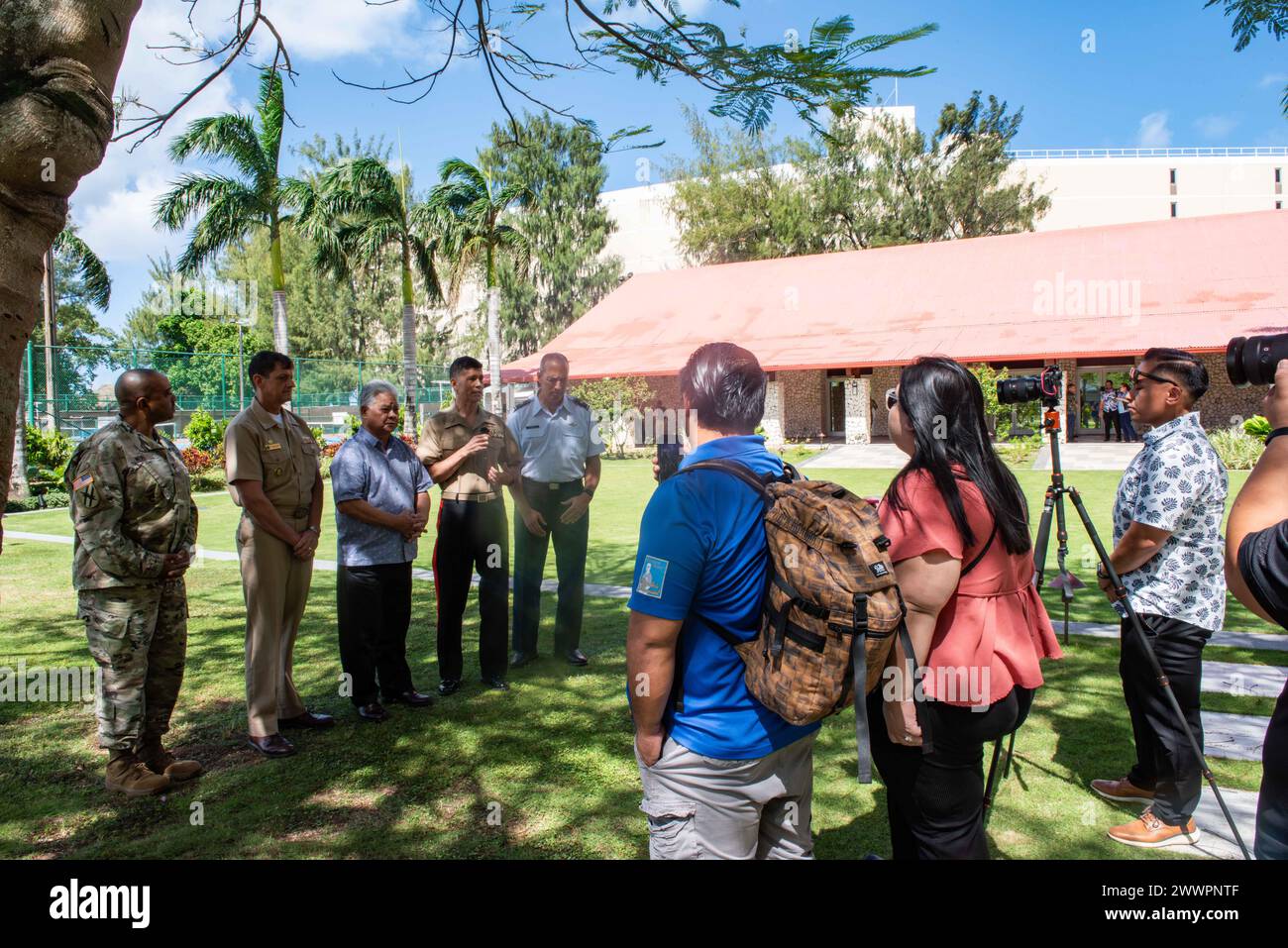
- Federal funding boost: The Northern Mariana Islands Congressional Delegation has pushed for $20 million annually in U.S. aid, arguing it’s a “national security and humanitarian issue.” Lawmakers point to Japan’s model, where local governments receive 70% of cleanup costs from Tokyo.
- Private-sector partnerships: Companies like Lockheed Martin and Boeing have donated demining technology to other Pacific regions. The Marianas could leverage U.S. defense contracts to secure pro bono support.
- Community training: Expanding basic hazard awareness programs—like those in Cambodia, where 10,000+ locals are trained in bomb detection—could reduce accidents. The Marianas Environmental Coalition has proposed a $1 million pilot program.
- International aid: The United Nations Mine Action Service could assist, as it has in Vietnam and Laos, where millions of WWII-era bombs remain. The Marianas could apply for UN-backed grants.
A Model to Follow: In Palau, a public-private partnership between the government, Google.org, and local NGOs used AI-driven mapping to identify 30% more bomb sites in 2022 than traditional methods. The Marianas could adopt similar technology.
Legislative Push: In March 2024, Senator Brian Schatz (D-Hawaii) introduced the “Pacific Islands Demining Act”, which would guarantee $15 million annually for cleanup efforts across Guam, the Marianas, and Palau. The bill is stalled in committee but has gained support from U.S. Pacific Command.
Frequently Asked Questions
Q: Are there still unexploded bombs from WWII in other U.S. states?
A: Yes. While rare, Hawaii, California, and Oregon have documented cases of WWII-era bombs discovered during construction or coastal erosion. The U.S. Army Corps of Engineers maintains a national ordnance database, but most Pacific islands are not fully surveyed.
Q: How do I know if my property is safe in the Northern Marianas?
A: The Northern Mariana Islands Emergency Management Office provides interactive maps of known bomb sites on its website (nmiema.gov). If you’re buying land or planning construction, contact the office for a risk assessment. Never touch or move suspicious objects—call 911 immediately.
Q: Can tourists visit the Northern Mariana Islands safely?
A: Yes, but with precautions. Beach areas like Garapan and Sunset Beach have restricted zones near confirmed bomb sites. The Northern Mariana Islands Visitors Authority recommends sticking to designated safe areas and avoiding digging or collecting rocks. Guided tours often include safety briefings.
Q: Why haven’t more bombs been found in the Northern Marianas?
A: Several factors limit detection: 1) Dense jungle covers many sites; 2) Metal detectors fail in mineral-rich volcanic soil; 3) Only ~20% of high-risk areas have been surveyed. Experts say typhoons and erosion are now exposing more bombs as soil shifts.
Q: What should I do if I find a suspicious object?
A: Do not touch it. Step away immediately and call the Northern Mariana Islands Emergency Management Office at +1-670-322-5770 or dial 911. Keep a safe distance—at least 500 feet—and wait for authorities. Never post photos or videos of the object online.
Q: Is there a timeline for when the bombs will be removed?
A: There is no official deadline, but the Northern Mariana Islands’ five-year demining plan (2024–2029) aims to clear 50% of high-risk sites if funding is secured. With current funding levels, experts estimate it could take 15–20 years to address all known threats.
Q: Are there any success stories from other regions that could apply here?
A: Yes. Okinawa, Japan cleared 90% of its bombs in 30 years through a mix of government funding, private contracts, and public awareness campaigns. Vietnam used community-based demining to remove 8 million bombs since the 1990s, reducing accidents by 70%. The Marianas could adapt these models with local adaptations.
For more information, visit the Northern Mariana Islands Emergency Management Office or the U.S. Army Corps of Engineers’ Pacific Division.
