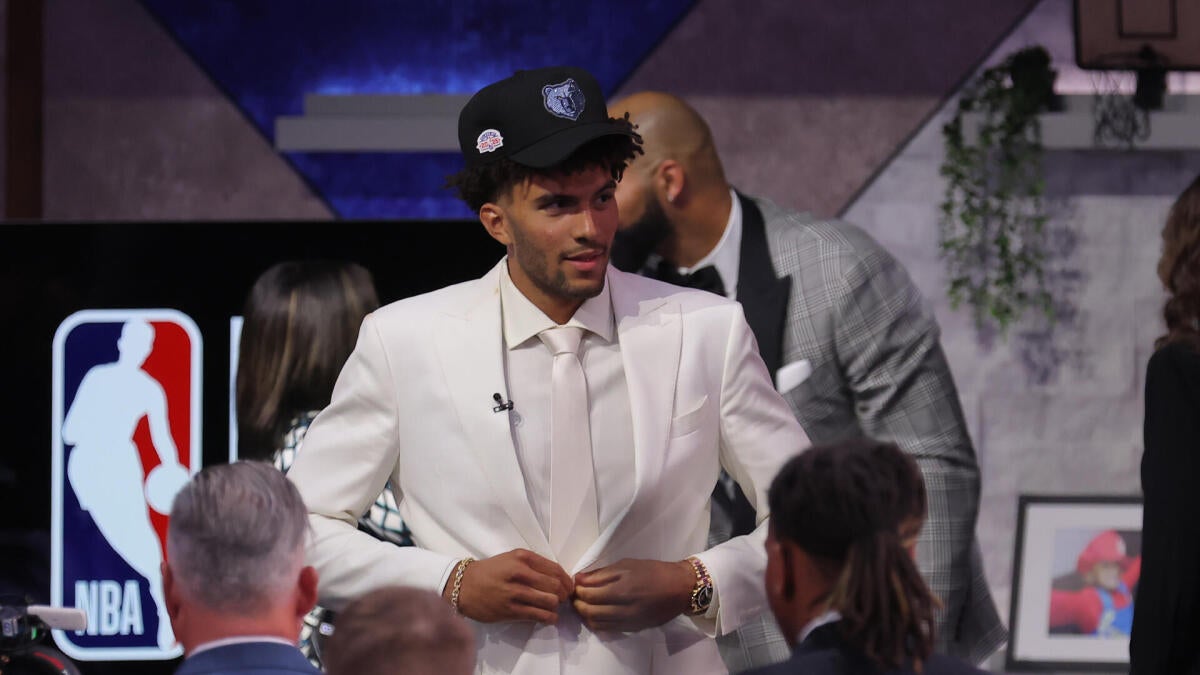
2026 NBA Draft Grades: Live Pick-by-Pick Analysis, Updates for Round 1 with AJ Dybantsa Picked No. 1
AJ Dybantsa was selected as the first overall pick in the 2026 NBA Draft, according to CBS Sports. The selection anchors a first round characterized by a premium on versatile wing scoring and aggressive asset reallocation, as detailed in pick-by-pick analysis and fit grades provided by the New York Times and Bleacher Report.
Why AJ Dybantsa Was Selected First Overall
The decision to select AJ Dybantsa at No. 1 reflects a league-wide shift toward high-ceiling, perimeter-oriented playmakers. According to CBS Sports, Dybantsa entered the draft as the consensus top prospect due to a combination of size, shot-creation ability, and defensive versatility. His selection satisfies the immediate need for a franchise cornerstone capable of impacting both ends of the floor.
Analysts from the New York Times note that Dybantsa’s “fit” grade is particularly high because of his ability to slot into multiple positions. In the modern NBA, where positional fluidity is a requirement for championship contenders, a player with Dybantsa’s toolkit provides a strategic advantage. His ability to generate offense in isolation while maintaining efficiency from the perimeter made him the safest and most rewarding choice for the team holding the top pick.
Key attributes that contributed to his No. 1 status include:
- Elite Shot Creation: Ability to create space against NBA-level defenders.
- Two-Way Potential: Length and lateral quickness that translate to switchable perimeter defense.
- Basketball IQ: High-level decision-making in pick-and-roll scenarios.
First Round Grades and Pick-by-Pick Analysis
The first round of the 2026 NBA Draft was marked by a divide between teams sticking to their board and those reacting to the available talent pool. The New York Times provided comprehensive results and grades, focusing on how each pick fits the existing roster construction of the selecting team.
Early in the draft, the “value” grades remained high as the top-tier prospects fell into their projected slots. However, as the round progressed, several teams opted for “best player available” (BPA) strategies over specific positional needs. Bleacher Report’s analysis indicates that this approach led to higher overall grades for teams that secured elite talent, even if that talent overlapped with existing players on their roster.
The grading process for the 2026 draft generally followed two distinct metrics:
| Grading Metric | Focus Area | Primary Goal |
|---|---|---|
| Roster Fit | Positional need and chemistry | Immediate tactical improvement |
| Asset Value | Player ceiling and trade potential | Long-term franchise valuation |
According to the New York Times, teams that prioritized “Roster Fit” saw more mixed grades, as some picks were viewed as “safe” but lacked the transformative potential of the top five selections. Conversely, teams that targeted “Asset Value” received higher marks for maximizing the potential of their draft capital.
How Trade Activity Shaped the 2026 NBA Draft
Trade volatility defined the 2026 draft, with several teams moving up or down to secure specific targets. The Bleacher Report Trade Tracker monitored these shifts in real-time, noting that the frequency of first-round swaps reached a multi-year high.
Many of these trades were driven by the desire to acquire “wing depth,” a trend that began with the selection of AJ Dybantsa. Teams without established perimeter scorers were more likely to trade future assets to move into the top 15. According to Bleacher Report, these moves were often viewed as high-risk, high-reward, as teams sacrificed future flexibility for immediate talent.
The implications of this trade activity are twofold:
- Asset Depletion: Several teams now lack first-round picks for the 2027 and 2028 cycles, limiting their ability to rebuild if their 2026 picks do not pan out.
- Concentrated Talent: A few aggressive front offices managed to stockpile young talent, potentially accelerating their championship windows.
This aggressive trading environment suggests that NBA front offices are increasingly unwilling to wait for a prospect to develop if a more “NBA-ready” player is available via trade.
Detroit Pistons and the Second Round Outlook
While the first round focused on franchise-altering talent, the second round shifted toward specialization and low-risk development. The Detroit Free Press highlighted the Detroit Pistons as a key team to watch in the second round, as they looked to add depth to a rebuilding core.
The Pistons’ strategy in the second round, as reported by the Detroit Free Press, centered on finding “role-player” archetypes—specifically three-and-D wings and backup rim protectors. Because the first round is often reserved for high-usage players, the second round allows teams like Detroit to find complementary pieces who can thrive without needing the ball in their hands.

The Detroit Free Press noted that the Pistons’ positioning in the second round provided them with a strategic advantage, allowing them to survey the remaining talent pool and pick the best fit for their specific timeline. This approach minimizes the risk associated with second-round picks, which historically have a lower success rate than first-round selections.
Strategic goals for Detroit in the second round include:
- Specialized Skill Sets: Targeting players with elite shooting or rebounding percentages.
- Low-Cost Contracts: Utilizing second-round slots to acquire talent on more manageable rookie deals.
- Developmental Upside: Scouting international players who may require a year of seasoning in the G League.
Comparing the 2026 NBA Mock Draft to Actual Results
The gap between projection and reality was narrow for the top of the draft but widened significantly toward the end of the first round. ESPN’s mock draft, which projected all 60 picks in Rounds 1 and 2, served as a benchmark for the industry.
In the top five, ESPN’s projections were largely accurate, with AJ Dybantsa’s No. 1 selection aligning with the majority of mock drafts. However, the New York Times and Bleacher Report noted several “surprises” in the 10-20 range. Several players projected as mid-lottery picks slid further than expected, while a few “sleepers” were taken earlier than ESPN had predicted.
This discrepancy highlights the difference between projected value and actual team need. While ESPN’s projections were based on a talent hierarchy, the actual draft results reflected the specific strategic goals of each front office.
Contrast in framing between outlets:
- ESPN: Focused on a rigid talent hierarchy and projected slots for all 60 players.
- New York Times: Focused on the “fit” and the long-term systemic impact of each pick.
- Bleacher Report: Focused on the fluidity of the draft, emphasizing trades and the “Trade Tracker” dynamics.
This difference in reporting underscores that a draft “grade” is subjective; a player who is a “reach” according to a mock draft may be a “perfect fit” according to a roster analysis.
Long-Term Implications of the 2026 Class
The 2026 NBA Draft is expected to leave a lasting mark on the league’s tactical evolution. The selection of AJ Dybantsa as No. 1 signals a continued move away from traditional center-centric offenses toward a more versatile, perimeter-driven game. This shift forces opposing defenses to prioritize lateral speed and switchability over raw size.
Furthermore, the high volume of trades in the first round indicates a growing trend of “win-now” mentalities among mid-tier teams. By trading future assets for current draft picks, these teams are shrinking their development windows in hopes of hitting on a superstar immediately.
The success of this draft will eventually be measured by how many of the first-round picks transition into All-Star caliber players. If the “wing-heavy” strategy pays off, the 2026 class could be remembered as the catalyst for a new era of offensive efficiency. If these players struggle to adapt to the professional game, the teams that traded their future assets will face a difficult road to recovery.
For more information on how these picks impact the league’s salary cap, see a related explainer on NBA rookie scale contracts.
Frequently Asked Questions About the 2026 NBA Draft
Who was the No. 1 overall pick in the 2026 NBA Draft?
AJ Dybantsa was selected No. 1 overall in the 2026 NBA Draft, according to reports from CBS Sports.
How are NBA Draft grades determined?
Draft grades are typically assigned by analysts based on two factors: “Value” (whether the player was taken at their projected slot) and “Fit” (how well the player’s skills complement the selecting team’s current roster), as analyzed by the New York Times and Bleacher Report.

Which team had a significant presence in the second round?
The Detroit Pistons were highlighted by the Detroit Free Press as a key team in the second round, focusing on adding specialized role players and depth to their roster.
Did the actual draft match the ESPN mock draft?
While the top of the draft largely aligned with ESPN’s projections, including AJ Dybantsa at No. 1, there were several discrepancies in the middle and late first round where team needs overrode projected talent rankings.
What was the most prominent trend in the 2026 NBA Draft?
The most prominent trend was the high valuation of versatile wing players and a significant increase in first-round trade activity, according to Bleacher Report’s Trade Tracker.
