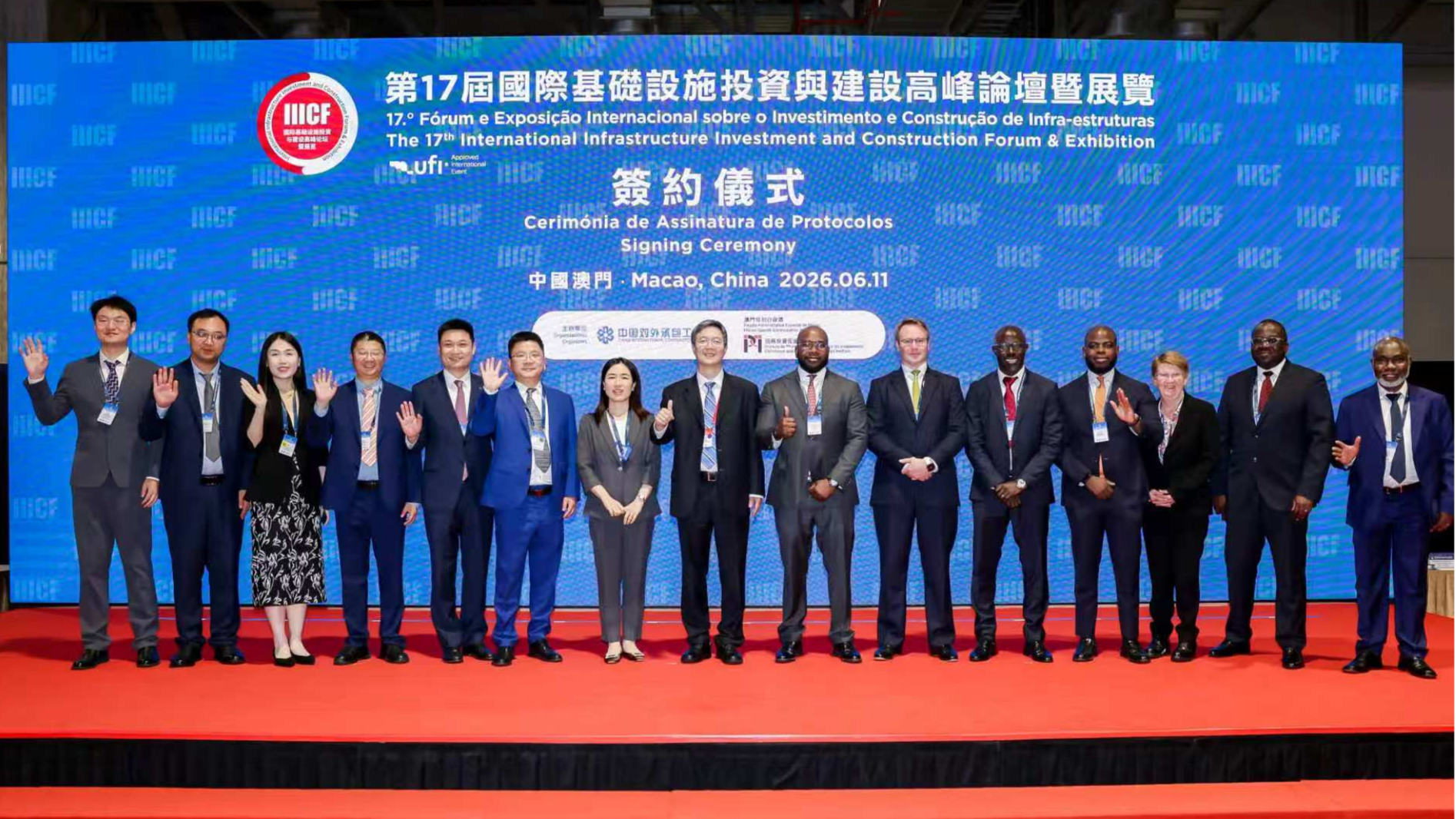
Infrastructure Forum in Macao Closes with 21 Deals Worth $9.9 Billion
The 17th International Infrastructure Investment and Construction Forum & Exhibition (IIICF) in Macao concluded with the signing of 21 deals valued at $9.9 billion, according to reports from chinadailyasia.com. The forum, which featured high-level attendance from Macao’s Chief Executive Sam Hou Fai, focused on integrating green energy and digital connectivity into global infrastructure development.
How much investment was secured at the 17th IIICF?
According to chinadailyasia.com, the 17th International Infrastructure Investment and Construction Forum & Exhibition (IIICF) resulted in 21 signed agreements with a combined total value of $9.9 billion. These deals represent a mixture of investment commitments and construction contracts aimed at expanding physical and digital networks.
The financial scale of these agreements underscores Macao’s role as a facilitator for international capital. The forum served as a meeting point for government officials, state-owned enterprises, and private investors. By centralizing these negotiations, the event aimed to accelerate the transition from project planning to active execution.
Key financial highlights from the event include:
- Total Deal Value: $9.9 billion
- Number of Agreements: 21
- Primary Focus Areas: Green energy, digital infrastructure, and cross-border connectivity
Who led the proceedings and what was the official focus?
Chief Executive Sam Hou Fai attended the opening ceremony of the 17th IIICF, as confirmed by the Macao Special Administrative Region (SAR) Government website. During the event, the Chief Executive met with representatives from various international delegations to discuss investment opportunities and the strategic role of the region in global trade.
According to China.org.cn, the forum placed a heavy emphasis on “green digital connectivity.” This approach suggests a shift away from traditional “grey” infrastructure—such as basic concrete roads and bridges—toward “smart” infrastructure. This includes the integration of 5G networks, IoT (Internet of Things) sensors, and sustainable energy sources into the design of new transport and utility networks.
“The 17th intl infrastructure forum in Macao features green digital connectivity,” reports China.org.cn, highlighting the thematic pivot toward sustainability.
The focus on digital connectivity aims to reduce the long-term operational costs of infrastructure while lowering the carbon footprint of construction. This alignment follows global trends where investors increasingly prioritize Environmental, Social, and Governance (ESG) criteria before committing capital to large-scale projects.
Which specific projects were showcased at the forum?
One of the most significant contributions to the forum came from Pakistan’s Water and Power Development Authority (WAPDA). According to the Daily Parliament Times, the Chairman of WAPDA used the international platform to showcase three major hydroelectric projects: the Diamer Basha, Dasu, and Mohmand projects.
These projects are critical to Pakistan’s energy security and water management. By presenting them at the IIICF, WAPDA sought to attract international investment and technical expertise to expedite their completion. These dams are designed to provide massive amounts of clean energy and improve irrigation capabilities in the region.
| Project Name | Lead Agency | Primary Purpose |
|---|---|---|
| Diamer Basha | WAPDA | Hydroelectric power and water storage |
| Dasu | WAPDA | Clean energy generation |
| Mohmand | WAPDA | Irrigation and power production |
The inclusion of these specific energy projects aligns with the forum’s overarching theme of green connectivity. Hydroelectric power provides a low-carbon alternative to fossil-fuel-based energy, fitting the “green” mandate emphasized by the forum organizers.
Why does Macao act as a hub for these infrastructure deals?
The 17th IIICF demonstrates Macao’s strategic intent to diversify its economy beyond the gaming and tourism sectors. By hosting a major international investment forum, the city-state positions itself as a bridge between mainland China and Lusophone (Portuguese-speaking) countries, as well as other global partners.
According to EIN News, Chief Executive Sam Hou Fai’s meetings with delegation representatives were central to the event’s success. These interactions facilitate a “soft landing” for international investors who wish to enter the Chinese market or for Chinese firms looking to export their construction expertise globally.
The regional advantages Macao offers include:
- Legal Frameworks: A distinct legal system that can provide a comfortable middle ground for international contract negotiations.
- Diplomatic Links: Strong ties to Portuguese-speaking nations, which often possess significant natural resources and infrastructure needs.
- Political Support: Direct backing from the SAR government to promote investment and trade.
This positioning allows the IIICF to function not just as a trade show, but as a diplomatic tool for economic cooperation. The $9.9 billion in deals is a tangible outcome of this “bridge” strategy.
What are the implications of “green digital connectivity”?
The shift toward green digital connectivity, as reported by China.org.cn, has several long-term implications for how global infrastructure is built. Traditional infrastructure often suffers from “stranded asset” risk, where a project becomes obsolete or environmentally non-compliant before it pays for itself.
By integrating digital tools, developers can implement “predictive maintenance,” using sensors to identify structural weaknesses before they lead to failure. This extends the life of the asset and reduces the need for carbon-intensive repairs. On the “green” side, the focus is on using low-carbon materials and ensuring that the project supports biodiversity and climate resilience.
For the 21 deals signed at the forum, this means that the $9.9 billion investment is likely directed toward projects that can prove their sustainability. This trend is a response to the global climate crisis and the increasing availability of “green bonds”—loans specifically earmarked for environmentally friendly projects.
Related explainer on sustainable infrastructure financing may provide further context on how these green deals are structured.
How do the WAPDA projects fit into the larger geopolitical context?
The presentation of the Diamer Basha, Dasu, and Mohmand projects by WAPDA is not merely a technical exercise. As noted by the Daily Parliament Times, these projects are vital for Pakistan’s national development. Their presence at a forum in Macao suggests a continued reliance on international partnerships to fund and build critical energy infrastructure.
These projects often involve complex financing models, including sovereign loans and public-private partnerships (PPPs). The challenge for WAPDA is to balance the need for rapid construction with the requirement for transparent, sustainable financing. By showcasing these projects at the IIICF, WAPDA is diversifying its outreach to potential investors beyond traditional bilateral agreements.
The scale of these projects is immense, often requiring billions of dollars in investment and decades of planning. The fact that they were a centerpiece of the 17th IIICF highlights the forum’s ability to attract “mega-projects” that have significant regional impact.
Comparison of Infrastructure Trends
When comparing the goals of the 17th IIICF with previous infrastructure forums, a clear evolution is visible. Earlier forums often focused on the sheer volume of concrete and steel—the “hard” infrastructure of roads and ports. The current iteration, however, emphasizes the “soft” layer of digitalization and the “green” layer of sustainability.
- Past Focus: Capacity expansion, raw tonnage, and physical connectivity.
- Current Focus: Efficiency, carbon neutrality, and digital integration.
This transition reflects a broader global shift in the construction industry, where “smart cities” and “net-zero” goals have replaced simple expansion as the primary drivers of investment.
What are the potential challenges for these $9.9 billion in deals?
While the announcement of 21 deals worth $9.9 billion is a significant headline, the transition from a signed agreement to a completed project is often fraught with difficulty. Infrastructure projects are notoriously susceptible to delays and cost overruns.
Potential hurdles include:
- Regulatory Approval: Large-scale projects, especially those like the WAPDA dams, require extensive environmental impact assessments and government permits.
- Financing Volatility: Changes in interest rates or currency fluctuations can make a $9.9 billion portfolio more expensive to maintain over time.
- Geopolitical Tensions: Cross-border infrastructure is often tied to political stability. Any shift in diplomatic relations between the investing and receiving nations can stall progress.
The success of these deals will depend on the ability of the signatories to move past the “memorandum of understanding” (MoU) stage into concrete project milestones. The involvement of the Macao SAR government, as seen in Chief Executive Sam Hou Fai’s active role, is intended to provide the institutional stability needed to mitigate these risks.
Frequently Asked Questions
What is the IIICF?
The International Infrastructure Investment and Construction Forum & Exhibition (IIICF) is a recurring event in Macao that brings together global investors, government officials, and construction firms to facilitate deals and partnerships in the infrastructure sector. The 17th edition focused heavily on green and digital connectivity.
How much money was committed at the 17th IIICF?
According to reports from chinadailyasia.com, the forum closed with 21 deals totaling $9.9 billion in value.
What are the WAPDA projects mentioned at the forum?
The Water and Power Development Authority (WAPDA) of Pakistan showcased three major hydroelectric projects: Diamer Basha, Dasu, and Mohmand. These are aimed at increasing clean energy production and improving water storage for the country.
Who is Sam Hou Fai?
Sam Hou Fai is the Chief Executive of the Macao Special Administrative Region (SAR). He attended the 17th IIICF and met with various international delegations to promote investment in the region.
What does “green digital connectivity” mean in this context?
As reported by China.org.cn, this refers to the integration of sustainable, low-carbon energy sources (green) and advanced information technology like 5G and IoT (digital) into the planning and operation of infrastructure projects to increase efficiency and reduce environmental impact.
The outcome of the 17th IIICF signals a continuing trend toward high-tech, sustainable development in the global south and east. As these 21 deals move toward implementation, the industry will watch to see if the $9.9 billion investment translates into the “green digital” reality promised during the forum’s proceedings.
