
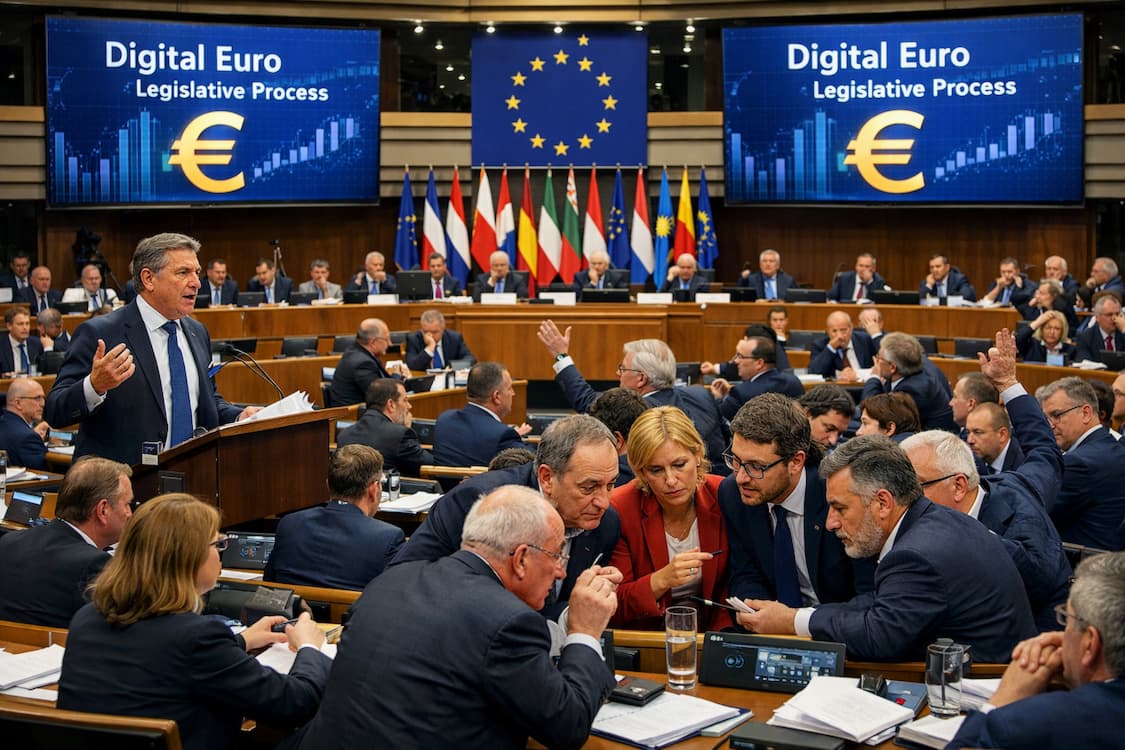
The European Parliament has granted first approval for the regulation to create a digital euro, according to reports from multiple European media outlets. The initiative seeks to establish a sovereign electronic currency to reduce the European Union’s reliance on U.S.-based payment processors such as Visa, Mastercard, and PayPal.
- Regulatory Milestone: The European Parliament provided initial approval for the digital euro framework.
- Strategic Goal: The EU aims to decouple its payment infrastructure from dominant non-European providers.
- Current Stage: The process has moved through the first approval phase and the Commission’s negotiating mandate.
Why the EU is shifting toward a sovereign digital currency
The primary driver for the digital euro is the desire to escape the dominance of private, non-EU payment systems. According to reports from AGI, the regulation is designed to allow the bloc to “svincolarsi”—or break away—from the grip of Visa, Mastercard, and PayPal. By creating a public digital alternative, the EU intends to secure its financial autonomy and ensure that its payment rails are not controlled by foreign corporate entities.
Applying the “Tesla Lesson” to European payments
European policymakers are treating the digital euro as a critical infrastructure project that cannot afford failure. Corriere della Sera highlighted a “Tesla lesson” for Europe, suggesting that the bloc must avoid the mistakes it made in other tech sectors—where it lagged behind in innovation and adoption—by ensuring the digital euro is executed flawlessly. This perspective frames the digital currency not just as a financial tool, but as a strategic necessity to prevent another instance of European tech irrelevance.
Current regulatory status and next steps
The project is currently in its early legislative stages. Il Post confirmed that the European Parliament has given its first approval to the regulation. Additionally, ANSA reported that the Commission has unlocked the process by giving the first “ok” to the negotiating mandate. While Lavoce.info characterized the progress as “better late than never,” the project now moves toward final negotiations and technical implementation.
