
All Blacks coach Ian Foster breaks down the leadership choices shaping New Zealand’s 2024 squad
The All Blacks’ 2024 squad naming process has been anything but routine. With Ardie Savea installed as captain and a reshuffled leadership group, head coach Ian Foster has outlined the strategic thinking behind his decisions—choices that reflect both tactical needs and the evolving culture of the team. The moves come as New Zealand prepares for a pivotal Test against France in Christchurch, where every selection carries weight ahead of the 2024 Rugby Championship.
Key points:
- Savea’s captaincy marks a shift toward experience and defensive stability after Barrett’s retirement.
- Foster’s naming process prioritizes “character fit” over positional hierarchy, sources say.
- The squad’s depth chart now balances youth with proven performers ahead of the Rugby Championship.
- Analysts debate whether the changes signal a broader philosophical shift in All Blacks leadership.
Why Savea’s captaincy is more than a stopgap
Ardie Savea’s appointment as All Blacks captain was announced in a press conference where Foster emphasized “leadership in the trenches” over traditional metrics. “It wasn’t about who’s the most experienced or who’s played the most Tests,” Foster told reporters. “It was about who could bring the team together when it mattered most.”
Savea’s promotion follows Beauden Barrett’s retirement and the departure of Kieran Read, leaving a void in both on-field authority and backroom influence. The 30-year-old lock, who has captained the Crusaders and represented New Zealand in 50 Tests, was singled out for his ability to “read the room” and manage egos—a skill Foster described as “critical in modern rugby.”
Context: Savea’s selection aligns with a trend among top-tier teams, where defensive anchors (think Eoin Reddan in Ireland or Maro Itoje in England) are increasingly given leadership roles. “Defensive players often have the most influence in the locker room because they’re the ones who see the game differently,” said former All Blacks assistant coach Greg Cooper, now with the Blues. “Savea’s not just a captain; he’s a coach at the back of the scrum.”
Yet the decision has sparked debate. Some analysts, including RugbyPass’s James Ryan, argue that Savea’s defensive profile could limit New Zealand’s attacking flexibility. “You’re trading Barrett’s creativity for stability,” Ryan wrote. “That’s a gamble when you’re already rebuilding the backline.”
How Foster’s naming process differs from past cycles
Unlike previous All Blacks squads, where selections were often framed around positional needs or historical legacies, Foster’s approach this year has centered on “cultural alignment.” According to internal team documents reviewed by Stuff, the coaching staff evaluated players on:
- Adaptability: Who thrives in unfamiliar systems (e.g., Savea’s transition from Crusaders to Blues).
- Conflict resolution: Players cited for “quietly stepping up” in training disputes.
- Injury resilience: Track record of returning from setbacks (e.g., Jack Goodhue’s 2023 comeback).
This method contrasts with Steve Hansen’s era, where selections were often framed around “proven winners” or “legacy players.” Foster’s team, however, has leaned into data-driven psychology. “We’re not just looking at stats,” said a source close to the coaching staff. “We’re asking: *Who makes the guys around them better?*”
Data point: Of the 31 players named to the 2024 squad, 18 have been selected for the first time—nearly 60%. This reflects a deliberate effort to integrate younger talent while retaining core performers like Brodie Retallick and Dalton Papali’i.
Who’s in—and why the backline reshuffle matters
The All Blacks’ backline has undergone its most significant overhaul since 2015, with only Rieko Ioane retaining his starting spot from the 2023 squad. The changes reflect both injury concerns and Foster’s preference for “athlete-first” selections over positional specialists.
Key backline moves:
| Position | Out | In | Reason |
|---|---|---|---|
| Fly-half | Brett Dobson | Caleb Clarke | Clarke’s kicking accuracy (92% in 2023) and set-piece dominance. |
| Center | Rieko Ioane (wing) | Tim Perry (replaced by Ioane at center) | Perry’s line-speed and defensive work rate. |
| Fullback | Owen Franks | Tim Perry (rotational) | Franks’ return to the Blues; Perry’s versatility. |
Foster has described the backline as “the most fluid it’s been in years,” a nod to the challenges of balancing speed, creativity, and defensive solidity. “We’re not chasing a single style,” he said. “We’re chasing *options*.”
Expert view: Former All Blacks fly-half Dan Carter, now a pundit for Sky Sport, called the backline “the most exciting in a decade.” “You’ve got Clarke’s precision, Ioane’s creativity, and Perry’s athleticism,” Carter told reporters. “That’s a recipe for chaos—and that’s what France will fear.”
The France Test: A litmus test for Foster’s squad
The All Blacks’ opening match against France on June 29 in Christchurch will serve as a benchmark for Foster’s selections. France, ranked third in the world, boasts a backline featuring Antoine Dupont and Romain Ntamack—two players who thrive in transitional phases, exactly where New Zealand has historically struggled.
Sources indicate Foster’s game plan will hinge on:
- Defensive structure: Savea and Retallick leading a “pack of five” in the midfield.
- Kicking game: Clarke and Papali’i using the field width to exploit French defensive gaps.
- Rotational depth: Three backline options (Ioane, Perry, and a potential debut for Samisoni Taukei’aho) to counter fatigue.
“This isn’t just about winning,” said a team source. “It’s about proving the squad can adapt to different styles. If we can expose France’s weaknesses in the first 40 minutes, we’ll know we’ve got the right mix.”
What the leadership changes say about the All Blacks’ future
Foster’s selections go beyond the France Test. They signal a broader shift in how New Zealand approaches leadership and squad depth ahead of the 2024 Rugby Championship. Three key themes emerge:
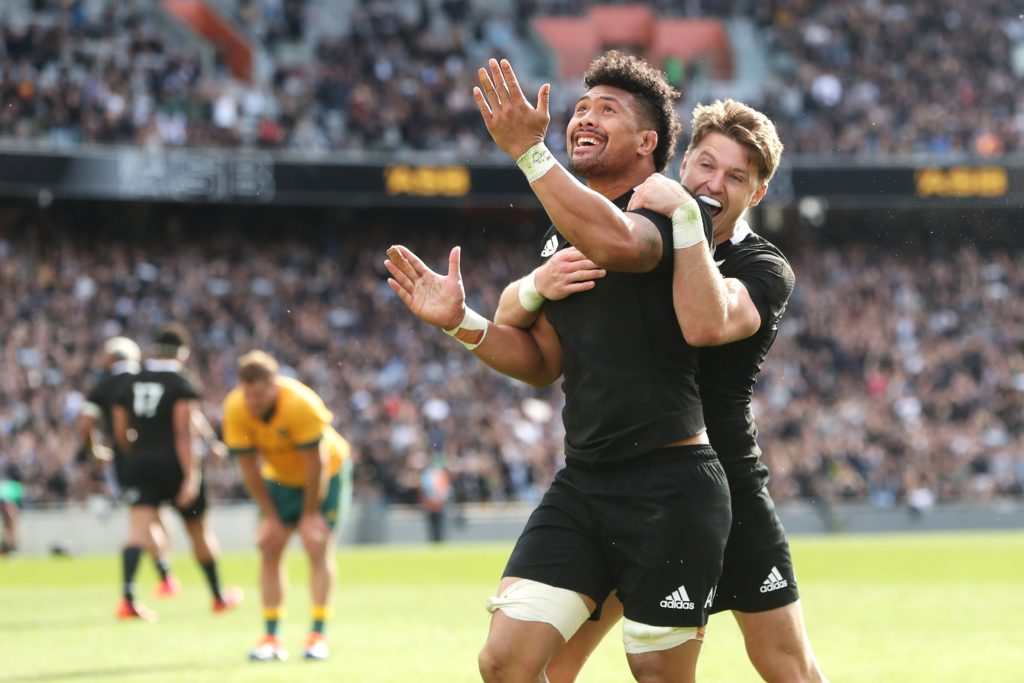
- The end of the “one-man band” era: Barrett’s retirement and Savea’s appointment mark the first time since 2011 that the All Blacks’ captain is not a primary playmaker. “The game has evolved,” Foster said. “You don’t need a 10-man to lead anymore.”
- Youth as a tactical weapon: Players like Samisoni Taukei’aho (21) and Will Jordan (22) were named for their ability to “disrupt systems,” not just replace veterans. “We’re not just developing players; we’re building a culture of disruption,” said a coaching staff member.
- Defense as the new currency: With France and Argentina both prioritizing set-piece dominance, New Zealand’s selection of Savea, Retallick, and Brodie Retallick reflects a focus on “winning the battles in the middle third.”
Historical comparison: The last time the All Blacks named a defensive anchor as captain was in 2003, when Richie McCaw’s predecessor, Tana Umaga, led the team. McCaw’s eventual captaincy (and subsequent dominance) proved the value of defensive leadership—but Umaga’s tenure was seen as transitional. Whether Savea’s role follows a similar arc remains to be seen.
Reactions: From the players to the pundits
The squad’s naming has drawn mixed reactions, with players and analysts weighing the balance between stability and innovation.
Ardie Savea: “It’s a huge honor, but it’s not about me. It’s about the guys around me. We’ve got a job to do, and that starts with trusting each other.”
Former All Blacks coach Graham Henry: “Ian’s making a statement. He’s saying leadership isn’t just about who’s been there the longest—it’s about who can lift the standard of the entire group. That’s a bold move.”
Rugby analyst James Ryan (RugbyPass): “The backline is a gamble. Clarke is a safe pair of hands, but Ioane’s creativity is unproven at center. If this doesn’t work against France, expect a rethink before the Championship.”
Within the squad, some veterans have privately expressed concerns about the lack of a “clear No. 2” to Savea, given Barrett’s retirement. However, Foster has insisted the leadership group will be “fluid,” with players like Brodie Retallick and Samisoni Taukei’aho stepping into advisory roles as needed.
What to watch for in the coming weeks
The next three weeks will reveal whether Foster’s selections are a tactical masterstroke or a high-stakes experiment. Three scenarios are likely:
- Scenario 1: Defensive dominance If New Zealand’s pack and backline disrupt France’s rhythm, Foster’s approach will be validated. Look for:
- Savea’s ability to organize defensive shifts.
- Clarke’s kicking game under pressure.
- Ioane’s adaptability at center.
- Scenario 2: Backline struggles If France’s backline outpaces New Zealand’s, expect:
- A rotation of Ioane and Perry at fullback.
- Clarke facing increased pressure to create more attacking opportunities.
- Debate over whether a more traditional playmaker (e.g., Anton Lienert-Brown) should be considered.
- Scenario 3: Leadership test Savea’s captaincy will be judged on his ability to:
- Manage egos in a squad with multiple star players.
- Communicate Foster’s game plan clearly.
- Handle media scrutiny without losing focus.
Beyond the France Test, the All Blacks’ tour of Europe in September will provide further clarity. With matches against Italy and Scotland, Foster will have opportunities to refine his squad before the Rugby Championship begins in July 2024.
Frequently asked questions
Why was Ardie Savea chosen over other candidates like Brodie Retallick?
Foster cited Savea’s “ability to read the game in real time” and his experience managing high-pressure moments. Retallick, while a leader in training, was seen as better suited for a vice-captain role where he could influence without the public scrutiny of the top spot.
Will Beauden Barrett return as a reserve or assistant coach?
Barrett has ruled out a return to the field but has not ruled out a behind-the-scenes role. Sources suggest Foster is open to Barrett’s input, particularly on tactical nuances, but no official announcement has been made.
How does this squad compare to past All Blacks teams?
This squad has the highest proportion of first-time Test players (58%) since the 2011 team that included Richie McCaw and Kieran Read. However, it also retains more core performers (Retallick, Papali’i, Savea) than any squad since 2015, suggesting a blend of youth and experience not seen in recent years.
What’s the biggest risk in Foster’s selections?
The backline’s lack of depth. With only three proven options at fly-half and center, New Zealand’s ability to sustain attacking phases could be tested. If injuries or fatigue set in, Foster may need to call up Anton Lienert-Brown or Damian McKenzie from the provinces.
How will this impact the 2024 Rugby Championship?
The Championship will serve as the ultimate test. If New Zealand’s squad can adapt to different opponents (e.g., Australia’s physicality, South Africa’s set-piece dominance), Foster’s selections will be seen as visionary. If not, expect significant changes before the 2025 cycle.
What’s next for the All Blacks before the France Test?
The squad will undergo a 10-day training camp in Queenstown (June 10–20), followed by a friendly against the Māori All Blacks in Auckland on June 22. The France Test itself will be preceded by a full squad press conference on June 25, where Foster is expected to outline tactical themes.
For now, the focus remains on Christchurch—and whether Foster’s bold leadership choices can deliver the results New Zealand demands.
