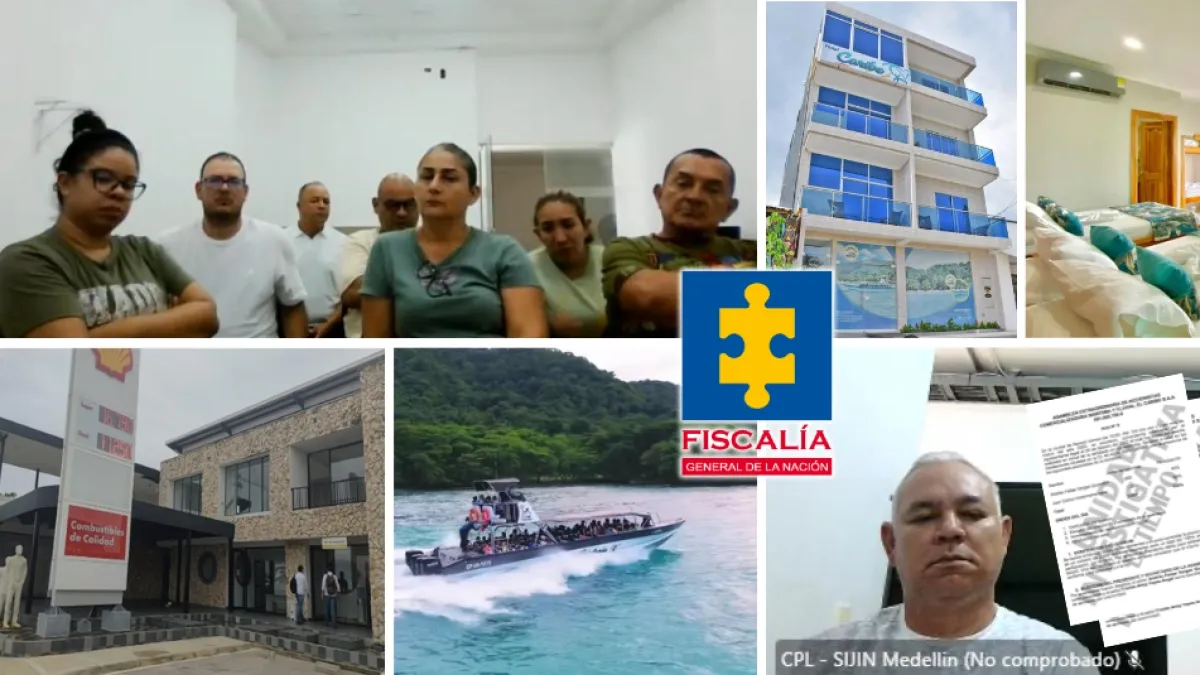
Colombian authorities dismantled a migrant trafficking network that smuggled more than 800,000 people, including citizens from Afghanistan, Iraq, and China, through the Urabá Gulf. The criminal organization used fraudulent tourism packages as a cover for its operations and laundered more than 100 billion Colombian pesos, according to local media reports.
- Migrants transported: 800,000+ (primarily from Afghanistan, Iraq, and China)
- Money laundered: Over 100 billion Colombian pesos (approximately $29 million USD)
- Method: Fraudulent tourism agencies and travel plans
- Primary locations: Antioquia and Chocó departments, Colombia
- Legal action: Nine suspected members captured
How the fake tourism network operated
The organization functioned by posing as a legitimate travel agency to mask the illegal movement of people. According to local reports, the network sold “tourism packages” to migrants, providing a veneer of legality to their transit through the Antioquia and Chocó departments. This disguise allowed the traffickers to move large groups of people toward the Urabá Gulf without triggering immediate suspicion from authorities.
The operation specifically targeted non-American migrants. The reports highlight a massive influx of individuals from Afghanistan, Iraq, and China. These migrants were funneled through the network’s logistical chain before being pushed toward the border with Panama.
The financial scale of the laundering operation
The network’s financial footprint was extensive. Local media reports indicate that the group laundered more than 100 billion Colombian pesos. Other regional reports estimate the laundered amount at over $29 million USD.
The traffickers used the fake tourism business to integrate illegal profits into the formal economy. By simulating legitimate business transactions and travel bookings, the organization could move millions of dollars generated from smuggling fees without alerting financial regulators.
The route through the Urabá Gulf and Darién Gap
The trafficking route centered on the Urabá Gulf, a strategic coastal region in Colombia. From here, migrants were guided into the Darién Gap, a dense, roadless jungle that separates Colombia from Panama.
The Darién Gap is one of the most dangerous migration corridors in the world. By controlling the logistics in the Urabá region, the network acted as a gateway, charging migrants for passage through the jungle toward North America. The sheer volume of people—exceeding 800,000—underscores the scale of the logistical infrastructure the network had built in the region.
Legal actions and arrests
The operation culminated in the capture of nine suspected members of the network. According to official reports, these individuals were key components of the trafficking and laundering cell.
Authorities have seized assets and records linked to the fake travel agency. The investigation focused on the intersection of human smuggling and financial crimes, treating the “tourism” front as a primary piece of evidence for the money laundering charges.
