Daniel McDonnell: Haaland dazzles Boston, but Iraq star Hussein’s extraordinary journey steals the spotlight – Irish Independent
Erling Haaland’s high-profile appearance in Boston showcased the commercial and athletic peak of modern football, but the global conversation has shifted toward Iraqi striker Aymen Hussein. According to reports from the BBC and Al Jazeera, Hussein has overcome profound personal losses and tragedy to lead Iraq toward the 2026 World Cup, turning his athletic success into a symbol of national resilience.
How Erling Haaland’s Boston Appearance Set the Stage
The arrival of Erling Haaland in Boston served as a reminder of the immense gravitational pull held by the sport’s most elite players. Haaland, known for his record-breaking goal-scoring rates in the English Premier League, brought a level of celebrity and athletic precision that captivated the local crowd. The event was characterized by the glitz and high-performance expectations associated with global football icons.
While Haaland’s performance provided the initial spectacle, the narrative surrounding the event quickly evolved. The contrast between the polished, commercial success of a European superstar and the raw, emotional journey of an international underdog became the focal point for many observers. This shift highlights a recurring theme in sports: while individual brilliance draws the crowd, stories of human endurance often hold the deeper emotional resonance.
Key elements of the Boston event included:
- High-intensity displays of technical skill by Haaland.
- Significant commercial interest and fan engagement in the United States.
- A demonstration of the “brand” power of modern football stars.
Who is Aymen Hussein and Why is He the ‘Lion of Mesopotamia’?
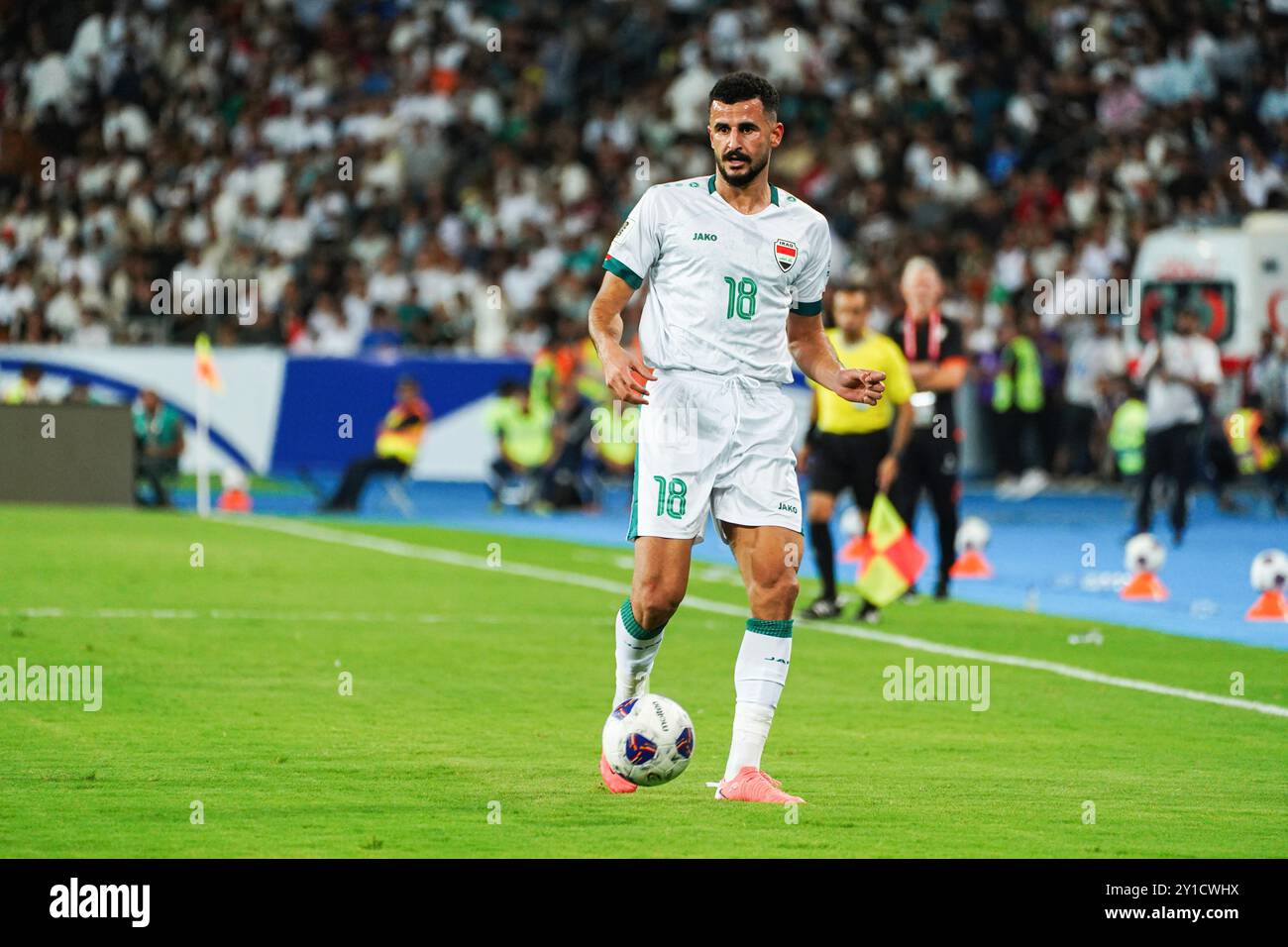
Aymen Hussein has emerged as the talisman for the Iraqi national team, earning the moniker “Lion of Mesopotamia.” As reported by Al Jazeera, Hussein is not merely a goal-scorer but a symbol of hope for a nation that has endured decades of conflict and instability. His role as a striker involves more than tactical execution; he carries the aspirations of millions of Iraqi citizens.
Hussein’s ascent to the top of Iraqi football has been marked by a relentless drive to succeed on the international stage. His ability to perform under pressure has made him indispensable to the national squad’s efforts to secure a place in the 2026 World Cup. For Iraq, football serves as a rare unifying force, and Hussein has positioned himself at the center of that unity.
The “Lion of Mesopotamia” title reflects both his physical presence on the pitch and his perceived courage off it. According to Al Jazeera, this identity is deeply tied to the cultural heritage of Iraq, framing his athletic achievements within the broader context of national pride and recovery.
The Personal Tragedies Aymen Hussein Overcame
The BBC reports that Hussein’s path to footballing glory was not a linear progression of success. Instead, it was punctuated by severe personal losses that threatened to derail his career. The striker has faced family tragedies and personal hardships that would have sidelined many athletes, yet he used these experiences as a catalyst for his professional growth.

These losses created a psychological burden that Hussein had to manage while maintaining the physical demands of professional football. The BBC notes that his journey is defined by the ability to transform grief into motivation. This resilience has earned him respect not only from his teammates but from opponents and fans across the Middle East.
The specific nature of these challenges includes:
- Dealing with the death of close family members during critical stages of his career.
- Navigating the emotional instability associated with Iraq’s volatile social climate.
- Overcoming periods of doubt and professional isolation.
“Aymen Hussein’s story is a testament to the power of resilience, showing that the greatest victories often come after the hardest battles.” — Analysis based on reports from Al Jazeera and BBC.
Iraq’s Historic Path to the 2026 World Cup
Iraq’s pursuit of the 2026 World Cup is more than a sporting goal; it is a historic mission. The 2026 tournament, hosted by Canada, Mexico, and the United States, offers an expanded format that provides more opportunities for nations like Iraq to showcase their talent on the world’s biggest stage.
According to the BBC, Hussein’s goals have been instrumental in Iraq’s qualification campaign. The team has had to navigate the grueling Asian qualifiers, facing established powers and emerging threats. The strategic importance of Hussein’s presence in the attack cannot be overstated, as he provides the clinical finishing necessary to secure points in tight matches.
The implications of Iraq qualifying for the World Cup include:
- Increased international visibility for Iraqi athletes.
- A boost in national morale and a sense of collective achievement.
- Potential for increased investment in Iraq’s domestic football infrastructure.
| Feature | Erling Haaland (Boston) | Aymen Hussein (Iraq) |
|---|---|---|
| Primary Narrative | Elite Performance & Stardom | Resilience & National Hope |
| Context | Commercial/Exhibition | Competitive/World Cup Qualification |
| Emotional Driver | Athletic Excellence | Overcoming Personal Tragedy |
| Impact | Global Brand Growth | National Identity & Pride |
Comparing Commercial Stardom and National Heroism
The juxtaposition of Haaland and Hussein reveals a stark divide in how football is consumed and valued. Haaland represents the “industry” of football—the era of the global superstar whose image is as valuable as his goal-scoring ability. His presence in Boston was a masterclass in sports marketing and individual brilliance.
In contrast, Hussein represents the “soul” of football. His journey, as detailed by Al Jazeera, is not about brand deals or celebrity status, but about the survival and ascent of a human being against the odds. While Haaland’s dazzle is a product of peak physical and technical training, Hussein’s “spotlight” is a product of emotional endurance.
This contrast suggests that while the world admires the perfection of a player like Haaland, it connects more deeply with the imperfection and struggle of a player like Hussein. The “extraordinary journey” mentioned in reports refers to this transition from personal darkness to international light.
The Wider Impact of Hussein’s Success on Iraqi Society
Football in Iraq has often been a mirror of the country’s political and social state. According to Al Jazeera, Hussein’s success provides a positive counter-narrative to the images of war and instability often associated with Iraq in international media. When Hussein scores, it is not just a point on a scoreboard; it is a statement of existence and capability.
The “Lion of Mesopotamia” has become a role model for young Iraqis, demonstrating that personal tragedy does not have to define one’s future. This social impact extends beyond the pitch, influencing how a generation of youth perceives the possibility of success despite systemic obstacles.
The broader consequences of this narrative include:
- A shift in international perception of Iraqi resilience.
- The promotion of sports as a tool for psychological healing in post-conflict zones.
- Increased unity among diverse ethnic and religious groups within Iraq through a shared sporting goal.
For more on how sports influence national identity, see a related explainer on the sociology of international football.
Common Misconceptions About Iraq’s World Cup Journey
One common oversimplification is that Iraq’s progress is solely due to individual talent. However, reports from the BBC suggest a more complex picture. The Iraqi national team has undergone significant tactical shifts and structural changes to compete at the highest level. Hussein is the face of the effort, but he is supported by a system designed to maximize his strengths.
Another misconception is that Hussein’s personal tragedies are merely “flavor” for a sports story. In reality, these events have fundamentally shaped his approach to the game. His resilience is not a side-note; it is the engine that drives his performance. The mental toughness required to return to professional sport after severe loss is a skill as critical as any tactical ability.
What to Watch for in the Lead-up to 2026
As the 2026 World Cup approaches, the focus will remain on whether Iraq can maintain its momentum. The pressure on Aymen Hussein will only increase as he continues to be the primary source of goals for the “Lions of Mesopotamia.” His ability to manage the weight of national expectation while maintaining his form will be critical.
Furthermore, the interaction between the commercial side of the game (represented by stars like Haaland) and the emotional side (represented by Hussein) will likely continue. As the World Cup expands, more stories of resilience from “non-traditional” football powers are expected to emerge, further diversifying the narrative of the beautiful game.
Observers should monitor:
- Iraq’s final qualification standings and their opponents in the group stages.
- Hussein’s physical condition and ability to avoid injury during a congested calendar.
- The growth of football infrastructure within Iraq as a result of this renewed international interest.
Frequently Asked Questions
Who is Aymen Hussein?
Aymen Hussein is a professional striker for the Iraqi national team, often referred to as the “Lion of Mesopotamia.” He is known for his goal-scoring ability and his resilience in overcoming significant personal tragedies to lead Iraq in their 2026 World Cup qualification efforts.
Why is Aymen Hussein’s story compared to Erling Haaland’s?
The comparison serves to contrast two different types of footballing impact: the global, commercial stardom and athletic perfection of Erling Haaland versus the emotional, nationalistic, and resilience-driven journey of Aymen Hussein.
What happened to Aymen Hussein that made his journey “extraordinary”?
According to reports from the BBC and Al Jazeera, Hussein suffered profound personal losses and family tragedies that threatened his career. His ability to overcome this grief and reach the pinnacle of international football is what defines his journey as extraordinary.
Is Iraq officially qualified for the 2026 World Cup?
Iraq is currently in the process of competing in the Asian qualifiers. Aymen Hussein has been a key figure in their campaign, helping the team move closer to securing a historic spot in the expanded 2026 tournament.
What does “Lion of Mesopotamia” mean?
It is a nickname given to Aymen Hussein that blends his physical strength as a striker with the historical and cultural imagery of Mesopotamia (ancient Iraq), symbolizing bravery and national strength.
The convergence of these stories—the dazzle of the elite and the grit of the survivor—underscores the dual nature of football. While the world may watch Haaland for the spectacle, it looks to Hussein for the inspiration.
