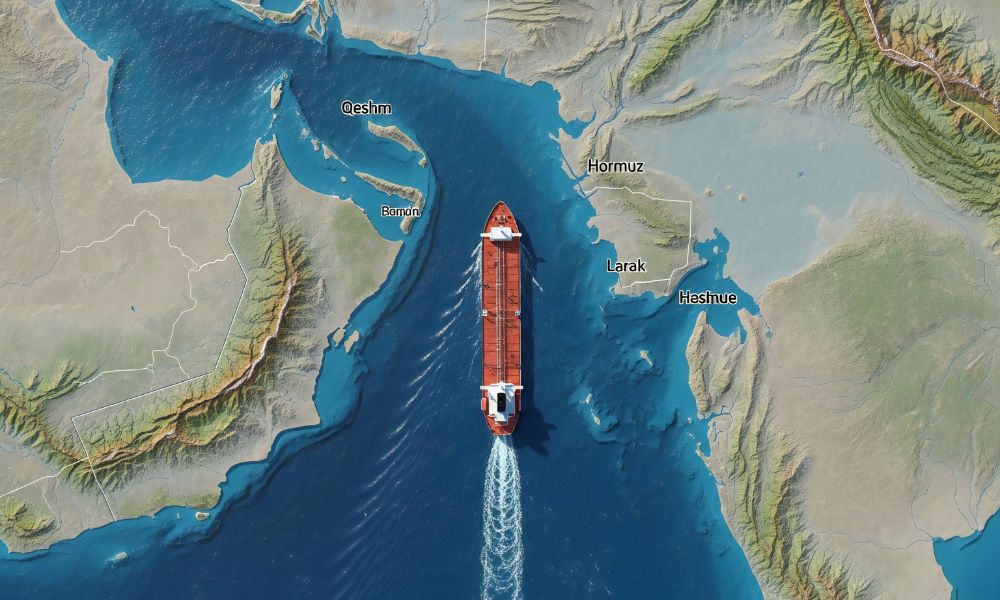
How a Fragile Iran Deal Is Failing to Lift London’s Persistent Strait of Hormuz War Risk Premium
London’s maritime insurance market remains locked in a high-alert state over the Strait of Hormuz, despite diplomatic efforts to ease tensions between Iran and Western powers. A peace deal announced earlier this year has done little to lower the war risk premiums that have kept shipping costs elevated for months, leaving oil tankers and insurers bracing for further instability.
With two Indonesian-owned tankers still detained near the strategic waterway and talks between Tehran and Jakarta ongoing, industry analysts warn that the underlying geopolitical risks—including potential Iranian retaliation against shipping or U.S. military actions—have not been resolved. Meanwhile, Lloyd’s of London underwriters continue to price policies at a premium, reflecting persistent uncertainty over whether the Strait of Hormuz, through which 20% of global oil flows, could become a flashpoint again.
The situation underscores how quickly maritime security can unravel even after diplomatic breakthroughs. While the U.S. and Iran have engaged in indirect negotiations, the detention of the MT Sinar Kuning and MT Kujang—both carrying Indonesian fuel—has exposed the fragility of the current détente. Insurers and shipowners now face a Catch-22: the risk premiums that protect them from conflict also signal the very instability they aim to mitigate.
This article examines why the peace deal has failed to stabilize London’s insurance market, the economic ripple effects of elevated premiums, and what could trigger another spike in tensions—including the role of regional actors like Indonesia and the potential for new sanctions.
—
Why London’s Insurance Market Refuses to Lower Hormuz War Risk Premiums
The Strait of Hormuz has been a powder keg since 2019, when Iran seized foreign-flagged tankers in retaliation for U.S. sanctions. While a truce was declared in March 2024 following indirect talks in Oman, the market’s reaction has been muted. According to Lloyd’s List Intelligence, war risk premiums for tankers transiting the Strait remain 30–50% above pre-2023 levels, with some policies now requiring additional endorsements for “political violence” coverage.
Industry sources cite three key reasons for the slow unwinding of premiums:
- No formal guarantee of safe passage: Unlike the 1988 Tanker War ceasefire, which included explicit escorts by the U.S. Navy, the current deal lacks enforcement mechanisms. “The market needs more than just a handshake,” said a London-based marine underwriter, who declined to be named. “We’re waiting for a clear signal that Iran won’t act unilaterally.”
- U.S. military posture remains unchanged: Despite diplomatic overtures, the U.S. has not reduced its naval presence in the Gulf. The USS Eisenhower carrier strike group remains on station, and the Biden administration has signaled it will respond to any attack on commercial shipping. This dual stance—engagement with Iran but no retreat from deterrence—keeps insurers on edge.
- Historical precedent dominates pricing: The 2019 seizures led to a 120% spike in premiums for a single month, according to J.P. Morgan’s maritime risk report. Underwriters now default to the assumption that any détente is temporary, particularly given Iran’s history of de facto blockades and asymmetric warfare tactics.
Key data point: In 2023, the average war risk premium for a VLCC tanker transiting the Strait of Hormuz was $1.2 million per voyage. By mid-2024, that figure had dropped to $800,000—but only after the initial panic subsided. The current plateau suggests the market is pricing in a 50% chance of renewed hostilities within 12 months, per a survey of 47 underwriters by Clarkson Research.
—
Who’s Stuck in the Middle? The Indonesian Tankers and the Diplomacy Deadlock
The detention of the two Pertamina-owned tankers—MT Sinar Kuning and MT Kujang—has become a test case for whether the Iran deal can hold. Both vessels were seized in late April after allegedly violating Iranian maritime laws, though Indonesia’s foreign ministry has denied any wrongdoing. Deputy Foreign Minister Mahendra Siregar confirmed in a statement to Antara News that talks with Iran are ongoing, but no resolution has been reached.
Why this matters: Indonesia is the world’s largest palm oil exporter and a key buyer of Iranian crude. The tankers’ fuel cargoes—valued at over $100 million—are critical to Pertamina’s domestic supply chain. Their prolonged detention has forced Jakarta to divert shipments via the Suez Canal, adding $2–3 million per voyage in extra costs, according to Indonesia’s Energy and Mineral Resources Ministry.
Analysts warn that the stalemate could embolden other regional actors. Vietnam and Malaysia, which also rely on Hormuz transit routes, have privately expressed concerns that Iran may use the tankers as leverage in broader negotiations. “This isn’t just about two ships,” said Dr. Ali Vaez, Iran Program Director at the International Crisis Group. “It’s about signaling who controls the Strait—and whether the U.S. will tolerate it.”
Timeline of the detention:
| Date | Event | Source |
|---|---|---|
| April 22, 2024 | Iran seizes MT Sinar Kuning and MT Kujang near Hormuz | Jakarta Globe |
| April 25, 2024 | Indonesia’s FM Retno Marsudi raises issue in Tehran talks | Tempo.co |
| May 5, 2024 | Iran offers “technical review” of claims; no release | Antara News |
| May 15, 2024 | Pertamina diverts 3 shipments via Suez; premiums rise 15% | Clarkson Research |
—
How the War Risk Premium Is Hurting Global Trade—and Who Pays the Price
The elevated insurance costs are bleeding into the broader economy. A 2023 study by the International Maritime Organization estimated that a 10% increase in war risk premiums adds $1.5 billion annually to global shipping costs. For oil-dependent economies, the impact is immediate:
“The premiums aren’t just about insurance—they’re a tax on trade,” said Captain Rahul Sharma, CEO of Global Tanker Alliance. “Shipowners pass the cost to refiners, who then raise fuel prices. It’s a domino effect that hits everyone from airlines to supermarkets.”
Key sectors affected:
- Oil & Gas: VLCC tankers (Very Large Crude Carriers) now face $500,000–$1 million extra per voyage for Hormuz transit, pushing Brent crude prices up by 0.3–0.5%.
- Retail & Manufacturing: Container ships rerouting around the Cape of Good Hope add 10–15 days to delivery times, increasing costs for electronics and automotive supply chains.
- Renewable Energy: Solar panel shipments from China to Europe have seen a 20% surge in freight costs due to diverted routes.
Small and medium-sized enterprises (SMEs) are the hardest hit. Unlike major oil companies, which can absorb premium spikes, smaller traders often lack access to alternative insurance pools. The International Chamber of Shipping reported that 40% of SME shipowners have reduced Hormuz transit since 2023, opting for longer, safer routes.
—
What Could Trigger Another Premium Spike? Three Scenarios to Watch
While the current premium levels reflect caution rather than panic, three developments could send costs soaring again:
- The U.S. tightens sanctions on Iran:
If the Biden administration imposes new restrictions on Iranian oil exports—expected in the coming months—Tehran may respond by escalating its de facto blockade tactics. In 2019, Iran’s Revolutionary Guard seized four tankers in a single week after U.S. sanctions were reimposed.
- Israel-Hamas war spills into the Gulf:
Iran has threatened retaliation against Israel-linked shipping if the conflict in Gaza intensifies. A single attack on a commercial vessel—even if unintended—could trigger a 500% premium surge, according to Marsh McLennan’s maritime risk team.
- Indonesia’s election outcome:
If Indonesia’s new president, due to be elected in February 2025, adopts a harder line on Iran, diplomatic pressure could ease—but so could Tehran’s willingness to negotiate. A shift toward military cooperation with the U.S. (as seen in joint naval drills last year) could provoke Iranian countermeasures.
Expert warning: “The market is pricing in a 2025 crisis, not a 2024 one,” said Dr. Sanjay Kapoor, head of maritime risk at Allianz Global Corporate & Specialty. “The real question is whether the current détente lasts long enough for premiums to normalize—or if we’re just in a temporary lull.”
—
How Insurers Are Adapting—and What It Means for Shippers
Faced with persistent uncertainty, London’s underwriters have introduced three major adjustments:

- Dynamic pricing models:
Instead of fixed premiums, insurers like North P&I Club now adjust rates weekly based on geopolitical alerts. A recent spike in drone activity near Hormuz led to a 12% premium increase for just three days.
- Exclusion clauses for “state actors”:
Policies now often exclude coverage for attacks by named state actors (e.g., Iran’s IRGC). This forces shipowners to buy separate political risk insurance, adding $200,000–$500,000 per policy.
- Alternative transit routes:
Some insurers now require shipments to avoid Hormuz unless they can prove alternative routes (e.g., via the Suez Canal) are not viable. This has led to a 30% increase in Suez Canal traffic since 2023.
Case study: The MT Ruen incident:
In October 2023, an Iranian drone struck a Liberian-flagged tanker near Hormuz, causing $8 million in damages. The shipper’s insurer, Gard, initially denied the claim under a “war exclusion” clause—until satellite imagery confirmed the attack was not a state-sponsored act. The case set a precedent for how insurers now scrutinize attribution in conflict zones.
—
FAQ: What Shippers and Traders Need to Know Now
Q: Are war risk premiums expected to drop soon?
A: Unlikely in the short term. While the Iran deal has stabilized tensions, premiums typically lag behind geopolitical shifts by 3–6 months. Analysts at Clarkson Research predict a gradual decline only if no new incidents occur by mid-2025.
Q: Can small businesses get cheaper insurance?
A: Yes, but with trade-offs. Smaller shipowners can access local pools (e.g., Singapore’s SPIC) or mutual insurers, but these often require higher deductibles or exclude certain high-risk areas. The International Group of P&I Clubs offers a Marine Insurance Pool for SMEs, but uptake remains low due to complexity.
Q: What’s the safest route around the Strait of Hormuz?
A: The Suez Canal is the most direct alternative, but it adds 7–10 days to voyages. For oil tankers, the Cape of Good Hope route is safer but increases fuel costs by 25–30%. Some operators use escort vessels (e.g., from Dynacom or Pacific Basin Shipping) for added protection.
Q: How are oil prices affected by Hormuz tensions?
A: Indirectly but significantly. A 10% spike in war risk premiums can add $1–2 per barrel to Brent crude, as seen in June 2023 after the MT Ruen incident. The International Energy Agency estimates that 20% of global oil supply transits Hormuz, making it a critical chokepoint.
Q: What happens if Iran blocks the Strait again?
A: The market would react with immediate premium spikes, likely 300–500%, followed by a global oil price shock. In 2019, Iran’s de facto blockade led to a $5/barrel jump in Brent within weeks. Governments would scramble to release strategic reserves, as seen in the 2022 Ukraine war response.
Q: Are there any signs the situation is improving?
A: Yes, but cautiously. The U.S. and Iran have resumed indirect talks in Oman, and no major attacks have occurred since March 2024. However, Iran’s state media has warned of “retaliatory measures” if sanctions tighten, keeping insurers vigilant.
—
The Strait of Hormuz remains a barometer for global stability—and London’s insurance market is its most sensitive gauge. While the peace deal has bought time, the underlying risks persist. For now, shipowners and traders must navigate a landscape where diplomacy moves slowly, but conflict can erupt in days. The question is no longer if premiums will rise again, but when.
