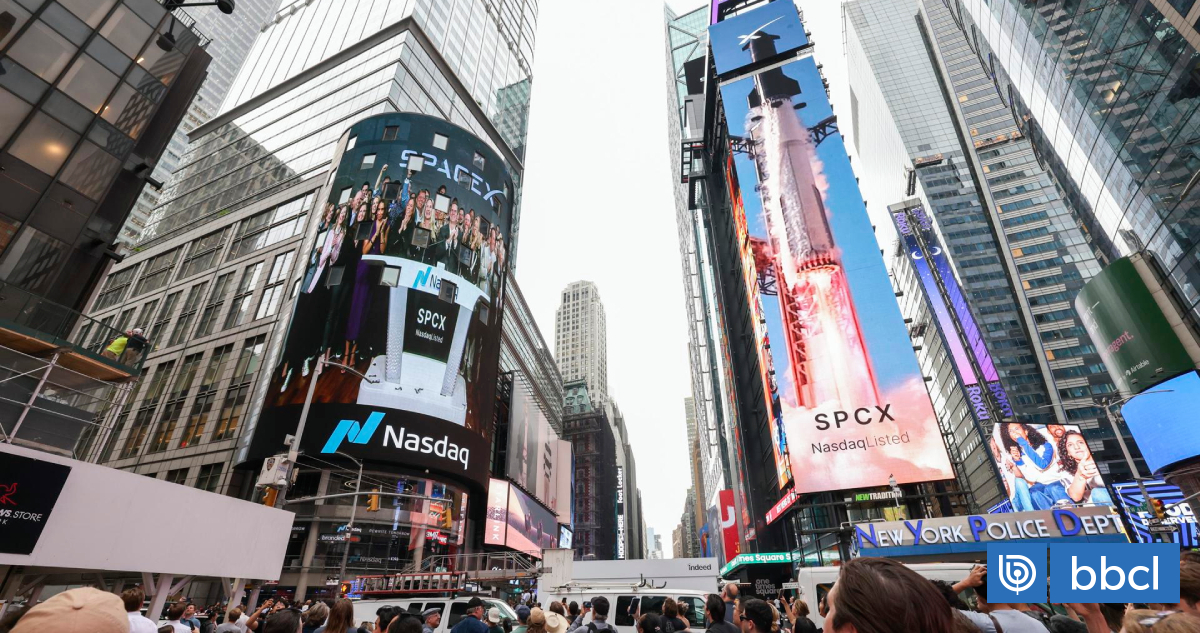
SpaceX’s stock surged nearly 20% in its first two days of public trading, catapulting the company into the ranks of the world’s six most valuable publicly traded firms by market capitalization—while also propelling its CEO, Elon Musk, closer to the top of global wealth rankings.
Shares of the aerospace and space technology firm jumped 11% on its second day of trading Thursday, following a record-breaking debut that valued the company at $180 billion. By Friday, the stock had climbed another 20%, lifting SpaceX’s market cap to roughly $220 billion, according to public statements and trading data. That valuation places SpaceX ahead of industry giants like Tesla and Amazon in terms of market value, though its revenue and profitability remain far lower.
Why the Stock Rally Matters for Musk and Investors
The surge in SpaceX’s stock price has directly inflated Elon Musk’s net worth, which now stands at $130 billion, according to Forbes Chile. The wealth increase comes as Musk’s holdings in SpaceX—his largest single asset—gain value alongside the company’s public listing. Oxfam previously estimated that Musk’s wealth already exceeds that of half the world’s population, a figure that has grown with the stock’s performance.

For investors, the listing marks a rare opportunity to gain exposure to SpaceX’s rapid growth in satellite launches, space tourism, and defense contracts. The company’s valuation reflects its dominance in the commercial space sector, where it has no major competitors. However, analysts note that SpaceX’s revenue—reportedly around $3.5 billion last year—lags far behind its market cap, raising questions about sustainability.
How the IPO Compares to Other Tech Debuts
SpaceX’s direct listing, which bypassed a traditional initial public offering (IPO) process, drew comparisons to other high-profile tech debuts. Unlike companies that raise capital through underwritten IPOs, SpaceX sold no new shares, instead allowing existing shareholders—primarily Musk—to unlock value. This approach mirrors that of companies like Airbnb and Rivian, which also chose direct listings to avoid diluting ownership.
Yet SpaceX’s debut stands out for its speed: the company went from private to publicly traded in just two days, a process that typically takes months for most firms. The rapid timeline reflects SpaceX’s status as a high-growth, high-margin business with strong demand for its services, particularly in satellite internet and government contracts.
According to local media reports, SpaceX’s stock performance has also sparked interest among institutional investors, including pension funds. CNN en Español noted that the listing could make SpaceX shares available in retirement accounts like the 401(k) system, potentially exposing millions of ordinary investors to the company’s risks and rewards.
What’s Next for SpaceX and Its Valuation
With the stock now trading publicly, SpaceX faces immediate pressure to deliver on its growth projections. The company has announced plans to increase its cadence of Starlink satellite launches and expand its Starship program, both of which are critical to sustaining its valuation. Analysts suggest that any delays or cost overruns in these projects could trigger volatility in the stock price.

For Musk, the listing provides liquidity to fund his other ventures, including Tesla and xAI, though he retains majority control of SpaceX. The company’s financial disclosures, expected in the coming weeks, will offer clearer insights into its revenue streams, margins, and long-term growth strategy. Until then, the market’s reaction will hinge on whether investors believe SpaceX can maintain its breakneck pace of innovation and execution.
