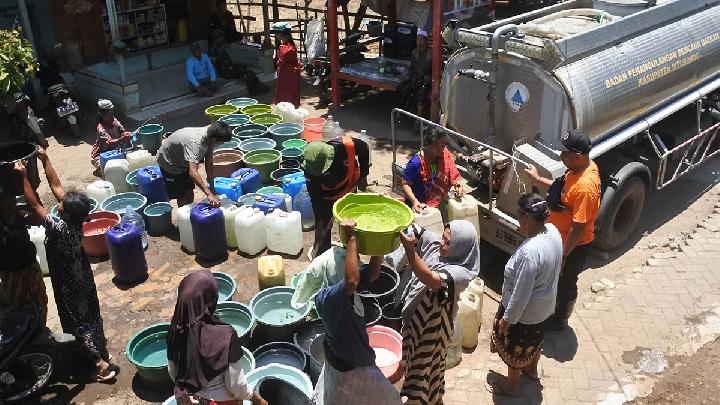
El Niño’s Growing Threat to Southeast Asia’s Economy and Food Security
JAKARTA — A strengthening El Niño event is setting the stage for one of the most severe dry seasons in years across Southeast Asia, with meteorologists warning of worsening droughts, rampant wildfires, and disruptions to fishing and agriculture that could push millions into food insecurity. According to the World Meteorological Organization (WMO), the current El Niño—expected to peak between October and December—could bring temperatures 1.5°C above average in parts of Indonesia, Malaysia, and the Philippines, exacerbating water shortages and crop failures.
Governments and aid agencies are already scaling up emergency responses, but experts say the economic toll could exceed $10 billion in lost agricultural output and infrastructure damage alone. Meanwhile, fishermen in the region’s coastal communities face a paradox: while El Niño typically boosts fish catches in some areas, the same conditions are drying up rivers and reservoirs that support aquaculture and irrigation.
The stakes are highest in Indonesia, where the Meteorology, Climatology, and Geophysics Agency (BMKG) has issued a red alert for 17 provinces, including Sumatra and Kalimantan. Satellite data shows fire hotspots in Borneo already surpassing last year’s levels by 30%, raising fears of a repeat of the 2019 haze crisis that blanketed Southeast Asia in smoke for months. In the Philippines, the Philippine Atmospheric, Geophysical and Astronomical Services Administration (PAGASA) has declared a “drought emergency” in 43 of 81 provinces, with rice yields in Central Luzon projected to drop by 20%.
This article examines how El Niño is reshaping livelihoods across the region, the scientific consensus behind the forecasts, and what governments and communities are doing to mitigate the fallout—before it’s too late.
What Is El Niño, and Why Is This One Different?
El Niño is a natural climate phenomenon characterized by the warming of Pacific Ocean waters near the equator, which disrupts global weather patterns. While it occurs every 2–7 years, the current event stands out for its intensity and timing.
According to the WMO’s Global Seasonal Climate Update, released in June, there is a 90% chance this El Niño will persist through early 2024—longer than the average event. The agency attributes this to a rare alignment with a positive Indian Ocean Dipole (IOD), a secondary climate driver that amplifies drought conditions in Southeast Asia. “When both El Niño and a positive IOD coincide, the impact on rainfall is multiplicative,” said Maxx Dilley, director of the WMO’s Climate Prediction and Adaptation branch. “We’re looking at a scenario where rainfall could be 40–60% below normal in key agricultural zones.”
Key differences from past events:
- Duration: Previous strong El Niños (e.g., 2015–16) typically lasted 9–12 months; this one is projected to extend into early 2024.
- Temperature spike: Sea surface temperatures in the eastern Pacific are already 1.5°C above average—crossing the threshold for a “strong” event—whereas the 2015 peak was 2.3°C.
- Compound effects: The simultaneous positive IOD is expected to reduce monsoon rains in Indonesia and Vietnam by up to 50%, worsening droughts.
Historically, El Niño has triggered food crises in Southeast Asia. In 2015, Indonesia’s palm oil production—critical for the country’s $20 billion annual exports—fell by 15%, while Thailand’s rice output dropped by 10%. This time, the Food and Agriculture Organization (FAO) warns that staple crops like rice, corn, and cassava are at risk in multiple countries.
Who Is Most at Risk, and Where?
The immediate impact of El Niño will vary by sector and region, but three groups face the highest vulnerability: smallholder farmers, coastal fishermen, and urban populations dependent on hydropower and water supplies.
1. Smallholder Farmers: The Frontline of Food Insecurity
Across Southeast Asia, an estimated 60% of the workforce depends on agriculture, with smallholder farmers—who cultivate less than 2 hectares—producing 80% of the region’s food. Droughts disrupt planting cycles, while wildfires destroy crops and livestock.
In Indonesia, the Ministry of Agriculture has identified 12 priority provinces where rice yields could decline by 15–30%. The Central Statistics Agency (BPS) reports that 3.5 million hectares of farmland—equivalent to the size of Belgium—are at risk of water shortages. “We’re already seeing delayed rice planting in East Java and South Sumatra,” said Syarif Hidayat, head of the ministry’s climate resilience unit. “If the dry season extends beyond November, we could face localized shortages by early 2024.”
In the Philippines, the Department of Agriculture has warned that corn production—critical for animal feed—could drop by 25% in Central Luzon, the country’s breadbasket. “Smallholders here rely on rain-fed irrigation,” said Emmanuel Piñol, a rural economist at the University of the Philippines. “When the rains fail, so do their harvests.”
Case study: In Kalimantan, Indonesia, palm oil plantations—already under pressure from deforestation policies—are reporting sap yields down by 20% due to water stress. The Indonesian Palm Oil Association (Gapki) estimates losses of $1.2 billion if the drought persists.
2. Coastal Fishermen: A Mixed Blessing
El Niño’s impact on fisheries is paradoxical. While warmer waters can push fish populations toward Southeast Asian coasts—boosting catches in some areas—droughts dry up rivers and estuaries that support aquaculture and shrimp farming.
In Vietnam, the Ministry of Agriculture and Rural Development reports that shrimp farms in the Mekong Delta—responsible for 40% of the country’s shrimp exports—are facing water shortages. “We’ve already seen a 15% reduction in farmable area,” said Nguyen Quoc Tri, a senior official. Meanwhile, in Thailand, tuna catches in the Gulf of Thailand are up by 12% due to El Niño-driven upwellings, but small-scale fishermen in the Andaman Sea are struggling as monsoon winds disrupt their usual routes.
The FAO’s State of World Fisheries and Aquaculture report notes that El Niño events have historically led to a 10–15% increase in global fish catches in some regions, but the economic benefits are unevenly distributed. “Large-scale industrial fleets can adapt, but artisanal fishermen—who make up 90% of the workforce—often lack the resources to relocate or change gear,” said Sheila M. Heen, a fisheries economist at the World Bank.
3. Urban Populations: Water and Power Crises
Cities across Southeast Asia are bracing for water rationing and hydropower shortages as reservoirs dry up. In Jakarta, Indonesia, the State Electricity Company (PLN) has warned of potential blackouts if water levels in the Jatiluhur Reservoir—which supplies 30% of the city’s power—drop below critical thresholds. “We’re already seeing a 25% reduction in hydroelectric output,” said Dedi Hartono, PLN’s director of generation. “Thermal plants will have to ramp up, increasing fuel costs.”
In Singapore, where 60% of water comes from Malaysia’s Johor River, authorities have activated emergency measures, including desalination plant expansions and water conservation campaigns. The Public Utilities Board (PUB) has urged households to reduce usage by 10%, citing a 30% drop in rainfall since June.
Key vulnerability zones:
| Country | At-Risk Sector | Projected Impact | Government Response |
|---|---|---|---|
| Indonesia | Agriculture (rice, palm oil) | 15–30% yield loss in 12 provinces | Emergency irrigation subsidies; fire prevention patrols |
| Philippines | Corn production (Central Luzon) | 25% drop in output | Drought-resistant seed distribution; water trucking |
| Vietnam | Shrimp aquaculture (Mekong Delta) | 15% reduction in farmable area | Subsidized water pumps; export tax relief |
| Thailand | Hydropower (Mekong Basin) | 20% drop in generation capacity | Fuel subsidies for thermal plants; rationing plans |
Why This El Niño Could Trigger a Wider Economic Crisis
Beyond immediate disruptions to farming and fishing, El Niño poses systemic risks to Southeast Asia’s economies, which are already grappling with inflation, supply chain disruptions, and debt burdens.
1. Food Price Volatility and Inflation
The region is a global hub for commodities like rice, palm oil, and rubber—all of which are sensitive to weather shocks. A World Bank analysis from 2015 found that the last major El Niño contributed to a 30% spike in global palm oil prices and a 20% increase in rice costs. This time, with global food prices already elevated due to the Ukraine war, the impact could be more severe.

Indonesia, the world’s top palm oil producer, exports $20 billion worth annually. If production falls by even 10%, prices could surge by 15–20%, according to Oil World, a commodities research firm. “The domino effect would hit food manufacturers, biofuel producers, and even aviation fuel costs,” said Andrew McDonald, an analyst at ANZ Research.
Rice, Southeast Asia’s dietary staple, is equally vulnerable. Thailand and Vietnam—collectively supplying 40% of global rice exports—could see output declines of 10–15%, pushing prices above $600 per ton, according to the International Rice Research Institute (IRRI).
2. Supply Chain and Trade Disruptions
Southeast Asia’s ports—critical for global trade—are at risk from drought-induced water shortages and reduced container handling capacity. In Singapore, where the Port of Singapore Authority (PSA) handles 30% of global transshipment traffic, officials have warned of potential delays if rainfall remains below normal. “We’re monitoring water levels in the Straits of Johor, which could limit vessel drafts,” said Quah Ley Hoon, PSA’s chief executive.
Meanwhile, in Malaysia, palm oil mills in Sabah and Sarawak are already reporting reduced throughput due to lower water availability for processing. The Malaysian Palm Oil Board (MPOB) estimates that 20% of mills could face temporary shutdowns if the drought worsens.
3. Debt and Fiscal Strain
Many Southeast Asian governments are already stretched thin by pandemic-related debt. The Asian Development Bank (ADB) reports that public debt in the region rose to 55% of GDP in 2022, up from 45% in 2019. El Niño-related disasters could force budget reallocations, squeezing spending on healthcare and education.
In Indonesia, President Joko Widodo has requested $1.5 billion in emergency funding to combat wildfires and droughts, part of a broader $3 billion climate resilience package. However, analysts warn that fiscal space is limited. “With interest rates rising globally, Indonesia’s debt-to-GDP ratio could climb to 60% if the economy contracts,” said Erik Therese, an economist at Capital Economics.
Similarly, the Philippines—where El Niño is expected to cut GDP growth by 0.5–1.0 percentage points—faces a $100 billion infrastructure backlog. “The government will have to choose between repairing drought-damaged roads or accelerating the ‘Build, Build, Build’ program,” said Rizal Sulaiman, chief economist at Bank of the Philippines Island.
How Governments and Communities Are Responding
From early warning systems to emergency food reserves, Southeast Asian nations are deploying a mix of short-term fixes and long-term adaptations. However, experts say coordination and funding remain critical gaps.
1. Early Warning and Preparedness
The ASEAN Specialised Meteorological Centre (ASMC), based in Singapore, is playing a key role in regional forecasting. Its El Niño Response Plan includes daily bulletins for 10 countries, with alerts tailored to sectors like agriculture, health, and disaster response.
In Indonesia, BMKG has launched a National Drought Monitoring System that integrates satellite data with ground sensors to predict water shortages up to three months in advance. “We’re sharing this data with local governments to help them prioritize water distribution,” said Dewi Rahmawati, BMKG’s climate services director.
However, Transparency International Indonesia warns that some regional governments are slow to act. A 2023 report found that only 40% of districts with high drought risk had activated their emergency response plans.
2. Emergency Food and Water Reserves
Several countries are tapping into strategic reserves to stabilize food prices. Thailand, which holds the world’s largest rice stockpile (20 million tons), has pledged to release 1 million tons onto the market if prices exceed $500 per ton. “This is a buffer, not a solution,” said Thirachai Phuvapat, secretary-general of the Thai Rice Exporters Association. “We need the rains to return.”
In the Philippines, the National Food Authority (NFA) has distributed 50,000 tons of rice to drought-affected areas, while the Department of Social Welfare and Development is providing cash transfers to 2 million vulnerable households.
Yet, aid groups warn that reserves are insufficient. The World Food Programme (WFP) estimates that 12 million people in Southeast Asia could face acute food insecurity by year’s end if El Niño persists.
3. Community-Led Adaptations
In some areas, local innovations are proving more effective than top-down solutions. In Central Luzon, Philippines, farmers are reviving traditional contour farming techniques to retain moisture, while in Borneo, Indonesia, indigenous Dayak communities are using controlled burns to reduce wildfire risks.
The FAO’s Climate-Smart Agriculture program is scaling up these practices, training 500,000 farmers in drought-resistant crops and water-saving irrigation. “The key is giving communities the tools to adapt without waiting for government action,” said Kai M. A. Chan, a resilience expert at the University of British Columbia.
4. International Support and Funding Gaps
Donor agencies are mobilizing funds, but disbursements are slow. The Green Climate Fund (GCF) has approved $200 million for Southeast Asian drought responses, but only 30% of the funds have been released so far. “There’s a mismatch between pledges and actual delivery,” said Harjeet Singh, global lead on climate action at ActionAid International.
The Asian Development Bank (ADB) is leading a $1 billion regional resilience initiative, but critics argue it’s insufficient. “For comparison, the 2015 El Niño cost Southeast Asia $5.2 billion in damages,” said Yeb Sano, former climate negotiator for the Philippines. “We need at least triple that in preparedness funding.”
What Happens If El Niño Worsens?
The next three months will be critical. Meteorologists say the peak of the dry season—August to October—will determine whether the region faces a humanitarian crisis or manages to mitigate the worst impacts. Three scenarios are emerging:
1. Best-Case Scenario: Short-Term Relief
If rainfall returns by late October, as some models predict, the worst drought effects could be averted. Agricultural losses would still occur, but food reserves and emergency measures would prevent widespread shortages. “We’d see a recovery in rice and palm oil production by mid-2024,” said Trinh Nguyen, a commodities analyst at S&P Global Platts.
However, this scenario assumes no further climate shocks, such as a delay in the monsoon or unexpected heatwaves.
2. Likely Scenario: Prolonged Struggles
Most forecasts suggest El Niño will persist through early 2024, leading to:
- A 10–20% drop in rice and corn production across Southeast Asia.
- Widespread water rationing in cities, with Jakarta and Bangkok at highest risk.
- Wildfire outbreaks in Indonesia and Malaysia, potentially surpassing 2019 levels.
- Inflationary pressures on food and fuel prices, exacerbating poverty.
“This will be a slow-burn crisis,” said Adrian Muckle, a climate risk analyst at Verisk Maplecroft. “The immediate impacts will be manageable, but the cumulative effect over six months could push millions into poverty.”
3. Worst-Case Scenario: Systemic Collapse
If El Niño combines with other factors—such as a delayed monsoon, geopolitical disruptions to food exports, or economic slowdowns—the region could face:
- Food riots in urban centers, as seen in 2008 and 2013 during previous El Niño events.
- Massive displacement due to wildfires and crop failures, overwhelming refugee camps.
- A 2–3% contraction in regional GDP, reversing post-pandemic recovery.
- Long-term environmental damage, including deforestation and soil degradation.
The Red Cross Red Crescent Climate Centre warns that without urgent action, Southeast Asia could see its first “El Niño-induced famine” since the 1970s.
Key Takeaways: What You Need to Know
El Niño is not just a weather event—it’s an economic and humanitarian threat with ripple effects across Southeast Asia and beyond. Here’s what the data and expert analysis show:
1. The drought is already here. Indonesia, the Philippines, and Vietnam are experiencing below-average rainfall, with wildfires and water shortages reported in multiple provinces.
2. Food prices will rise. Rice, palm oil, and corn—key exports—are at risk of shortages, pushing global commodity prices higher. Households in urban areas should expect 5–15% increases in grocery bills.
3. Governments are reacting, but coordination is weak. Early warning systems and food reserves are in place, but funding gaps and bureaucratic delays could limit their effectiveness.
4. The next six months will decide the outcome. If El Niño peaks in October and rains return, the impact will be manageable. If it extends into 2024, the region faces a prolonged crisis.
5. Climate change is making El Niño worse. Studies show that rising global temperatures increase the likelihood of extreme El Niño events, meaning future droughts in Southeast Asia will be more frequent and severe.
Frequently Asked Questions
Q: How does El Niño affect fishing in Southeast Asia?
A: El Niño typically pushes warm waters toward Southeast Asian coasts, increasing fish catches in some areas (e.g., Thailand’s Gulf of Thailand). However, droughts dry up rivers and estuaries, harming shrimp farms and freshwater fisheries. The net effect depends on location—industrial fleets may benefit, while small-scale fishermen often struggle.
Q: Will El Niño cause food shortages in cities?
A: Urban food supplies are less directly affected than rural areas, but inflation and supply chain disruptions could lead to higher prices. Cities like Jakarta and Manila rely on imported rice and commodities, which may become scarcer and more expensive. Local governments are stockpiling reserves, but shortages are possible if the drought extends beyond October.
Q: Are wildfires a bigger threat this year?
A: Yes. Satellite data shows fire hotspots in Indonesia’s Borneo and Sumatra already surpassing 2022 levels by 30%. The combination of El Niño-induced drought and human activity (e.g., land clearing) increases the risk of large-scale fires like those seen in 2019, which blanketed Southeast Asia in haze for months.
Q: How can farmers protect their crops?
A: The FAO recommends drought-resistant crop varieties (e.g., flood-tolerant rice), water-saving irrigation (drip systems), and soil moisture retention techniques. In some regions, traditional methods like contour farming or mulching are proving effective. Governments are also subsidizing emergency irrigation and providing drought insurance in high-risk areas.
Q: What’s the difference between El Niño and La Niña?
A: El Niño involves warming Pacific waters, leading to droughts in Southeast Asia, floods in South America, and weaker monsoons in India. La Niña (the opposite phase) brings cooler waters, heavier rains in Southeast Asia, and stronger typhoons in the Pacific. The current event is an El Niño, following three years of La Niña conditions.
Q: Can individuals do anything to prepare?
A: Yes. Households can reduce water usage (e.g., fixing leaks, shorter showers), stockpile non-perishable food, and support local farmers by buying directly from markets. In wildfire-prone areas, clearing dry vegetation and avoiding open fires can help. Governments are also encouraging community-based disaster preparedness training.
Q: Is this El Niño linked to climate change?
A: While El Niño is a natural phenomenon, studies show that climate change increases the likelihood of extreme events. The WMO notes that rising global temperatures amplify El Niño’s intensity, leading to more severe droughts, heatwaves, and wildfires in Southeast Asia.
Q: What’s the economic cost of past El Niños?
A: The 2015–16 El Niño cost Southeast Asia an estimated $5.2 billion in damages, including $2.5 billion in agricultural losses and $1.8 billion in infrastructure repairs. The ADB warns that this year’s event could exceed those figures due to higher global food prices and post-pandemic economic vulnerabilities.
As El Niño intensifies, the race is on to limit its damage. For governments, the challenge is balancing short-term relief with long-term climate adaptation. For communities, resilience depends on preparation—whether through traditional knowledge, modern technology, or international aid. One thing is certain: the region’s ability to weather this storm will shape its economic and environmental future for years to come.
