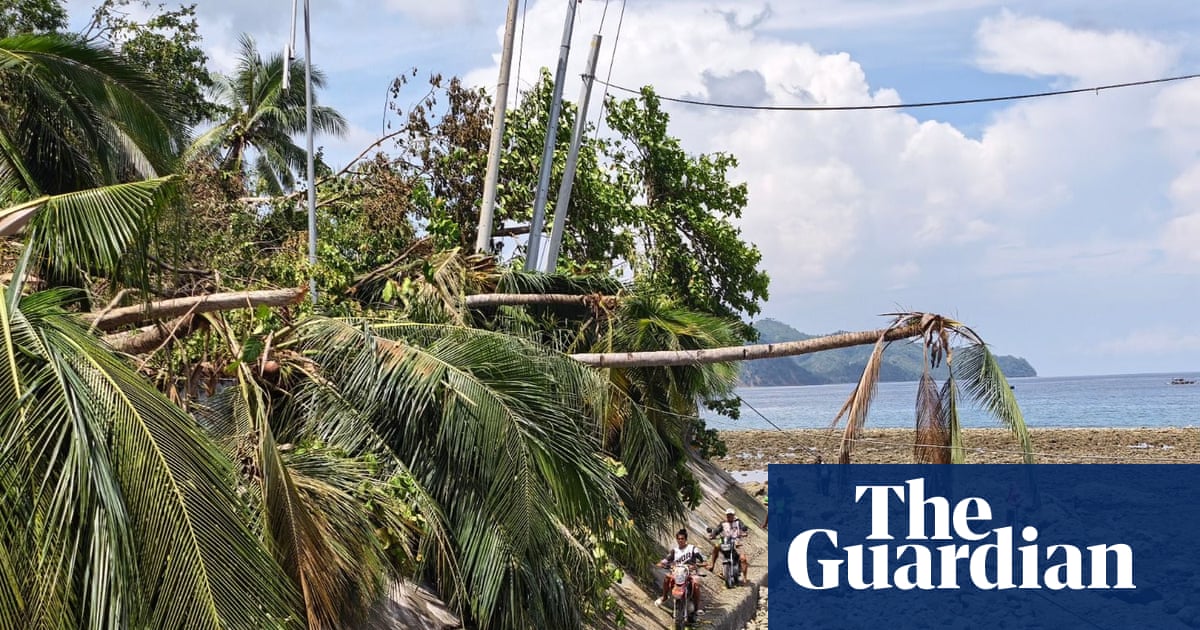
Philippines earthquake lifts seabed by up to 2 meters—geologists warn of long-term risks
A magnitude 7.8 earthquake that struck the southern Philippines on October 27 has lifted sections of the seabed by up to two meters, according to preliminary data from the Philippine Institute of Volcanology and Seismology (Phivolcs). The dramatic vertical shift—confirmed by satellite measurements and on-site surveys—raises concerns about future tsunami risks and the stability of coastal communities already reeling from the disaster, which has killed at least 35 people and left thousands displaced.
The quake, centered near the province of Davao Oriental, triggered a small tsunami warning that was later canceled after waves of less than a meter were observed. However, Phivolcs director Renato Solidum told reporters the seabed displacement “indicates significant stress buildup along the fault line,” suggesting the region remains at elevated risk of aftershocks or a larger seismic event. “This is not an isolated incident,” Solidum said. “The Philippine archipelago sits on one of the world’s most active tectonic zones, and we must prepare for the possibility of further ground deformation.”
Geologists say the uplift—measured using interferometric synthetic aperture radar (InSAR) data—aligns with historical patterns in the region, where similar earthquakes have caused sudden vertical shifts of the seafloor. In 2013, a magnitude 7.2 quake near Bohol raised parts of the seabed by up to 1.5 meters, leading to localized flooding and structural damage. The current displacement, while larger, follows a similar geological mechanism: the sudden release of energy along the Philippine Fault System, where the Philippine Sea Plate grinds past the Sunda Plate.
While the immediate tsunami threat has diminished, experts warn that the seabed uplift could alter ocean currents and sediment flows, potentially increasing erosion along vulnerable coastlines. “The long-term impact on marine ecosystems and fishing communities isn’t yet clear, but we’re monitoring changes in the seabed topography closely,” said Dr. Maria Leonora Guzman, a marine geophysicist at the University of the Philippines. “In some cases, uplift can create new underwater ridges, which might attract marine life—but it can also destabilize coastal defenses.”
Rescue and recovery efforts remain focused on the hardest-hit areas, where entire villages reported infrastructure collapse. The Philippine Red Cross has deployed emergency teams to Davao City and nearby municipalities, while the military continues airlifting supplies to remote villages cut off by landslides. Meanwhile, the United Nations Office for the Coordination of Humanitarian Affairs (OCHA) has issued a flash appeal for $20 million to support relief operations, citing “critical gaps in shelter, food, and medical care.”
As authorities assess the damage, seismologists are urging preparedness for potential aftershocks. The U.S. Geological Survey (USGS) has recorded over 50 aftershocks since the main quake, with magnitudes ranging from 4.0 to 5.5. “The risk of a larger aftershock cannot be ruled out,” said Dr. Lucy Jones, a USGS seismologist specializing in subduction zones. “Historically, regions like Mindanao experience a ‘cluster’ of quakes following a major event, sometimes lasting weeks or even months.”
The earthquake has also reignited debates about the Philippines’ seismic resilience. Despite being one of the world’s most earthquake-prone countries—averaging 20 destructive quakes annually—the nation’s building codes and early warning systems remain unevenly enforced, particularly in rural areas. A 2022 World Bank report noted that only 30% of structures in high-risk zones meet modern seismic standards, leaving millions vulnerable.
In the wake of the disaster, local governments are scrambling to reinforce evacuation protocols. Davao City Mayor Sarah Duterte announced plans to expand tsunami evacuation towers along the coast, citing the “wake-up call” provided by the recent uplift data. “We’ve learned that even small changes in the seabed can trigger unexpected hazards,” she said. “Our priority now is to ensure communities know where to go—and how to respond—if another quake strikes.”
Internationally, the disaster has drawn attention to the broader risks posed by tectonic shifts in the Pacific Ring of Fire. The region, which includes Indonesia, Japan, and the western United States, accounts for 90% of the world’s earthquakes. “This event is a stark reminder that subduction zones—where one tectonic plate dives beneath another—can produce some of the most destructive quakes,” said Dr. Thorne Lay, a seismologist at the University of California, Santa Cruz. “The Philippines is particularly exposed because of its complex fault network, which can amplify ground shaking.”
As recovery efforts continue, scientists are analyzing whether the seabed uplift could serve as a warning sign for future quakes. Some studies suggest that sudden vertical shifts may precede larger seismic events, though the relationship remains debated. “We’re still in the early stages of understanding these connections,” said Guzman. “For now, the safest assumption is that the region remains at high risk—and preparedness must be our top priority.”
For residents and officials alike, the earthquake serves as a critical test of the Philippines’ ability to respond to natural disasters. With aftershocks continuing and the seabed’s new contours reshaping coastal landscapes, the coming weeks will determine whether the nation’s infrastructure, early warning systems, and community resilience can withstand the next seismic challenge.
—
Why did the seabed rise so dramatically during the earthquake?
The uplift of up to two meters was caused by the sudden movement of tectonic plates along the Philippine Fault System, where the Philippine Sea Plate is subducting beneath the Sunda Plate. According to Phivolcs, the quake’s epicenter near Davao Oriental triggered a “thrust faulting” mechanism, where the seabed was pushed upward as the plates locked and then released energy. This type of displacement is common in subduction zones but is particularly pronounced in the Philippines due to the region’s high seismic activity.
Geologists compare the phenomenon to a “sudden jerk” in the Earth’s crust. “Imagine two hands pressing together—when one hand slips, the other is forced upward,” explained Dr. Lay. “In this case, the seabed acted like the ‘hand’ being pushed up by the force of the quake.” The uplift was confirmed using satellite data from Japan’s ALOS-2 radar, which detected changes in elevation with millimeter precision.
While the uplift itself is not unusual, its magnitude—nearly double the average for similar quakes—has raised questions about whether the fault system is entering a period of heightened activity. “This could indicate that stress has been building for years along this segment,” said Solidum. “But without deeper geological data, we can’t yet say whether it’s part of a larger pattern or an isolated event.”
What are the immediate risks from the seabed uplift?
In the short term, the primary concerns are:

- Tsunami potential: While the initial tsunami warning was canceled, Phivolcs has not ruled out the possibility of localized waves if aftershocks trigger underwater landslides. “The seabed’s new shape could create unstable slopes,” warned Guzman.
- Coastal erosion: The uplift may alter ocean currents, accelerating erosion in low-lying areas already vulnerable to storm surges.
- Infrastructure strain: Buildings and roads near the coast could face additional stress from changes in ground stability.
Longer-term, marine ecosystems may shift as the seabed’s new contours reshape habitats. Fisheries in the region could also be affected if sediment flows change, disrupting traditional fishing grounds.
How does this earthquake compare to past disasters in the Philippines?
The October 27 quake shares key similarities with the 2013 Bohol earthquake, which also caused seabed uplift and significant structural damage. However, the current event’s magnitude—7.8 compared to 7.2—suggests a higher energy release. Below is a comparison of key metrics:
| Metric | 2013 Bohol Earthquake | 2023 Davao Earthquake |
|---|---|---|
| Magnitude | 7.2 | 7.8 |
| Seabed uplift (max) | 1.5 meters | 2 meters |
| Death toll | 222 | 35 (and rising) |
| Aftershocks (7+ days) | Over 100 | Over 50 (ongoing) |
| Tsunami impact | Minor coastal flooding | Small waves (<1m) |
While the death toll is lower this time, the larger magnitude and seabed displacement indicate a more powerful seismic event. “The Bohol quake was devastating, but this one has the potential for even greater ground deformation,” said Jones. “That’s why we’re advising caution in the coming weeks.”
What are communities doing to prepare for aftershocks?
Local governments and aid organizations are implementing several measures:
- Evacuation drills: Davao City has ordered mandatory tsunami evacuation exercises in coastal barangays (villages).
- Infrastructure checks: Engineers are inspecting bridges, schools, and hospitals for structural weaknesses.
- Early warning upgrades: The Philippine Atmospheric, Geophysical and Astronomical Services Administration (Pagasa) is testing enhanced seismic sensors along the coast.
- Psychosocial support: The Red Cross is deploying counselors to address trauma among displaced families.
However, challenges remain. In remote areas, many residents lack access to real-time alerts, and some evacuation routes were damaged in the initial quake. “We’re working to fill those gaps, but it’s a race against time,” said OCHA’s regional coordinator for Asia and the Pacific, Indira Rajan.
Could this quake trigger a larger seismic event?
Seismologists caution that the risk of a larger quake cannot be ruled out, particularly if stress is redistributed along nearby fault lines. “The Philippine Fault System is interconnected, meaning energy released in one area can influence another,” said Lay. “But predicting exactly where or when is still beyond our capabilities.”
Historical data shows that major quakes in the region often cluster. For example, the 2010 magnitude 7.7 quake near Mindanao was followed by a series of aftershocks, including a 6.9 tremor just days later. “We’re monitoring the situation closely, but we can’t assume this is the end of the sequence,” said Solidum.
Residents are advised to:
- Stay in designated evacuation zones if near the coast.
- Have a 72-hour emergency kit ready.
- Follow updates from Phivolcs and Pagasa.
—
Frequently asked questions about the earthquake and seabed uplift
Why does the seabed uplift matter for tsunami risks?
The uplift can create underwater ridges or slopes that, if destabilized by aftershocks, may trigger underwater landslides—one of the primary causes of tsunamis. While the immediate tsunami threat has passed, Phivolcs is monitoring for any sudden changes in the seabed that could increase risk.
How accurate are the measurements of the seabed rise?
The 2-meter figure comes from satellite radar data (InSAR) and ground surveys by Phivolcs. These methods are precise to within centimeters, though some variation may occur in areas with dense vegetation or steep terrain.
Will the seabed uplift affect fishing industries?
Potentially. The uplift may alter ocean currents and sediment flows, which could disrupt fishing grounds. Marine biologists are studying whether new underwater ridges will attract different species, but the long-term impact remains uncertain.
Are aftershocks still expected, and how long will they last?
Yes. The USGS has recorded over 50 aftershocks since the main quake, with magnitudes up to 5.5. Aftershocks can continue for weeks or even months, though their frequency and intensity typically decrease over time.
What should residents do if they feel another strong quake?
Phivolcs recommends the “Drop, Cover, and Hold On” method: drop to your hands and knees, cover your head and neck with your arms, and hold on to a sturdy piece of furniture until the shaking stops. If near the coast, move to high ground immediately.
How can I help disaster relief efforts?
Donations can be directed to verified organizations like the Philippine Red Cross (redcross.org.ph) or the UN’s OCHA appeal. Avoid sending cash or goods without coordination—local authorities prioritize medical supplies, shelter materials, and food.
