
Photograph: Felicity Hammond’s human-AI feedback loop – Royal Institute of British Architects Journal
Felicity Hammond has implemented a “human-AI feedback loop” to produce architectural imagery, a methodology detailed in the Royal Institute of British Architects (RIBA) Journal. This process replaces linear prompting with an iterative cycle where the artist continuously refines AI outputs through a dialogue of adjustments, moving the technology from a tool of generation to a collaborator in visual exploration.
What is the human-AI feedback loop in Felicity Hammond’s work?
The human-AI feedback loop is a non-linear creative process used by Felicity Hammond to bridge the gap between a conceptual architectural idea and a final synthetic image. According to reports in the RIBA Journal, this method avoids the “one-shot” approach common in generative AI, where a user enters a prompt and accepts the first few results. Instead, Hammond treats the AI as a partner in a recursive conversation.
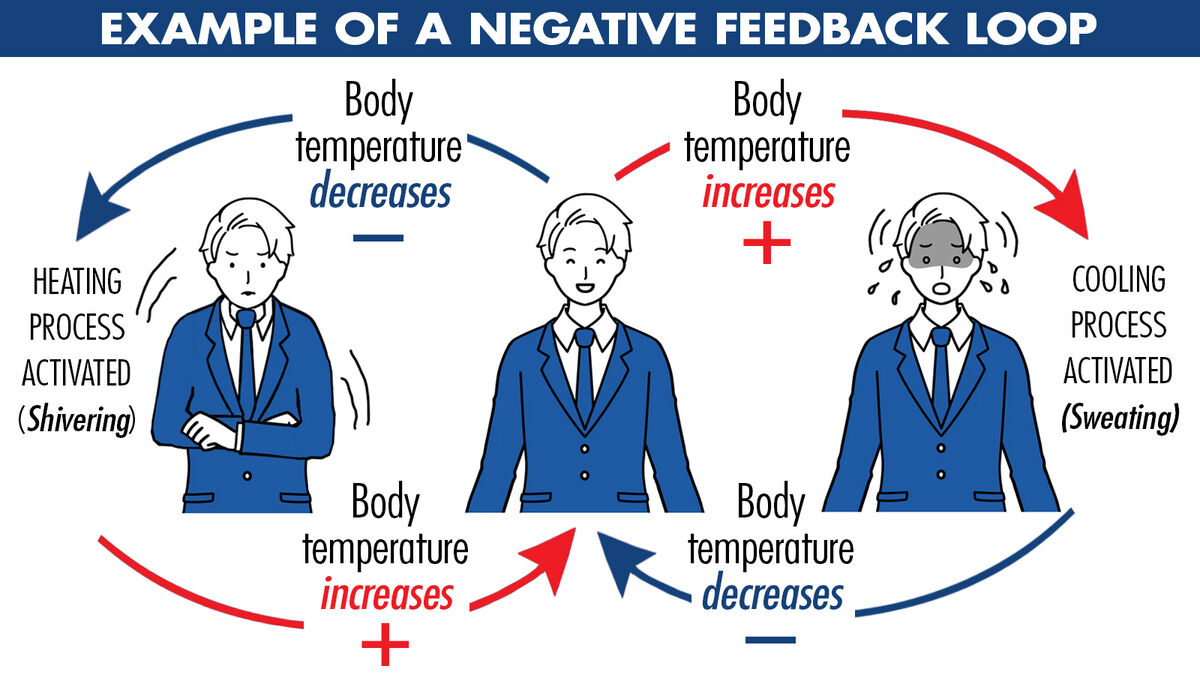
In this loop, the human provides an initial direction, the AI generates a response, and the human then analyzes that response to identify specific deviations or unexpected successes. These observations are fed back into the system as refined constraints or new prompts. This cycle repeats dozens or hundreds of times, narrowing the distance between the artist’s intent and the machine’s interpretation.
Key characteristics of this loop include:
- Iterative Refinement: Constant tweaking of parameters based on visual evidence.
- Curatorial Control: The artist acts as a filter, deciding which AI “hallucinations” are valuable and which are errors.
- Bidirectional Influence: The AI’s unexpected outputs often change the artist’s original vision, creating a symbiotic evolution of the image.
How does this method differ from standard AI prompting?
Most users interact with generative AI through “prompt engineering,” a process that often resembles a vending machine: a specific input is expected to yield a specific output. Hammond’s feedback loop shifts this dynamic toward a collaborative sketch process. While prompt engineering focuses on the input, the feedback loop focuses on the reaction to the output.
Standard AI generation often struggles with architectural precision—specifically in maintaining structural logic or specific spatial relationships. By using a feedback loop, Hammond can isolate these failures and correct them incrementally. This prevents the AI from drifting too far into abstraction while still allowing it to suggest textures, lighting, and compositions that a human might not have conceived independently.
| Feature | Standard AI Prompting | Hammond’s Feedback Loop |
|---|---|---|
| Workflow | Linear (Prompt $rightarrow$ Image) | Recursive (Prompt $rightarrow$ Image $rightarrow$ Analysis $rightarrow$ Prompt) |
| Artist Role | Operator / Director | Collaborator / Curator |
| Outcome | Rapid prototyping / Randomness | Precise visual exploration / Intentionality |
| Control | Low to Medium (reliant on prompt) | High (incremental refinement) |
Why does the human-AI feedback loop matter for architecture?
Architecture relies on the precise communication of space, light, and materiality. The RIBA Journal’s focus on this method highlights a critical tension in the industry: the need for efficiency versus the need for accuracy. Generative AI is incredibly fast, but it often produces “architectural soup”—images that look plausible at a glance but are structurally impossible or spatially incoherent.
Hammond’s approach addresses this by introducing a layer of human critical thinking back into the generative process. By treating the AI as a feedback mechanism, architects can use these tools to explore “latent space”—the mathematical realm of possibilities between known data points—without losing sight of the physical realities of building design.
The feedback loop transforms AI from a generator of “finished” images into a tool for visual research, allowing architects to test atmospheric conditions and material interactions before committing to a final design.
This shift has several industry implications:
- Redefining the “Render”: The traditional 3D render is a calculation of a known model. The feedback loop creates an “evocation” of a space that may not yet be fully modeled but is visually explored.
- Speed of Ideation: Architects can cycle through hundreds of atmospheric variations in the time it would take to set up a single traditional lighting rig in software like V-Ray or Corona.
- Conceptual Flexibility: The loop encourages “happy accidents,” where the AI’s misinterpretation of a prompt leads to a more interesting architectural solution.
What are the technical challenges of implementing a feedback loop?
Maintaining a consistent visual identity across a feedback loop is technically demanding. Generative models are prone to “drift,” where a small change in a prompt can radically alter the rest of the image. To combat this, artists often employ specific techniques to anchor the image while the loop iterates.
The struggle with consistency
One of the primary hurdles is the lack of “spatial memory” in many AI models. If an artist asks the AI to change the color of a window frame, the AI might inadvertently change the shape of the entire building. Hammond’s process requires a disciplined approach to prompt layering and the use of tools like in-painting or image-to-image references to keep the core architecture stable while the “feedback” focuses on specific details.
The role of the “Latent Space”
The feedback loop is essentially a journey through “latent space.” This is the multi-dimensional space where the AI stores its understanding of concepts (e.g., “brutalism,” “golden hour,” “concrete”). By iteratively adjusting prompts, Hammond is navigating this space, finding the exact coordinates where the AI’s understanding of a material matches the artist’s vision. This requires a high degree of visual literacy to recognize when the AI is close to the desired result.
For those interested in the technical side of this evolution, a related explainer on latent space navigation provides further context on how these models process visual data.
How does this impact the role of the architectural photographer?
The “Photograph” aspect of the RIBA Journal discussion is particularly provocative. By labeling these AI-generated images as “photographs” or using the language of photography, Hammond challenges the definition of the medium. Traditional architectural photography is about capturing a physical reality; the feedback loop is about capturing a simulated reality.
This creates a new hybrid role: the synthetic photographer. This professional does not use a camera to capture light, but uses a feedback loop to “develop” an image from data. The skill set shifts from understanding aperture and shutter speed to understanding algorithmic bias and prompt recursion.
Critics argue that this removes the “truth” from architectural photography. However, proponents suggest that architectural visualization has always been a form of manipulation—from hand-painted renderings to heavily photoshopped CGI. The feedback loop is simply the next evolution in the quest to communicate the feeling of a space rather than just its dimensions.
What are the broader ethical implications for the RIBA community?
The integration of AI into the architectural workflow raises significant questions regarding authorship and intellectual property. When an image is the result of a thousand-turn feedback loop between a human and a model trained on millions of existing images, who owns the result?
The authorship debate
If the AI provides the “creative spark” through a hallucination that the human then refines, the line between tool and creator blurs. The RIBA community must grapple with whether these images should be credited as “AI-assisted” or if the human’s role as the curator of the feedback loop constitutes full authorship.
The risk of “Visual Homogenization”
There is a danger that the feedback loop, while more controlled than simple prompting, still relies on the biases of the training data. If most AI models are trained on a specific subset of “Instagrammable” architecture, the feedback loop may inadvertently steer architects toward a globalized, homogenized aesthetic—what some call “AI-core”—where buildings look stunning in a synthetic image but lack local context or cultural specificity.
To avoid this, practitioners are encouraged to:
- Use Diverse Datasets: Incorporate non-standard architectural references into the loop.
- Prioritize Localism: Explicitly prompt for regional materials and climatic conditions.
- Maintain Human Skepticism: Use the AI to explore, but use physical models and site visits to validate.
Comparing AI workflows in architectural visualization
To understand where Hammond’s feedback loop fits, it is helpful to compare it to other current industry standards for creating architectural imagery.
| Method | Primary Goal | Human Effort | Predictability |
|---|---|---|---|
| BIM/CGI Rendering | Technical Accuracy | Very High (Modeling) | Absolute |
| Direct AI Prompting | Rapid Concepting | Low (Typing) | Low (Random) |
| Human-AI Feedback Loop | Atmospheric Exploration | Medium to High (Iterating) | Moderate (Guided) |
What is the future of the human-AI collaborative loop?
The movement toward a feedback-based workflow suggests that the future of architectural design will not be “AI replacing architects,” but “architects using AI to think.” As models become more sophisticated, the loop will likely move from 2D images to 3D volumes and real-time environments.
We can expect the emergence of “Live Feedback Loops,” where an architect modifies a physical model or a VR space, and the AI suggests material or lighting updates in real-time, creating a continuous stream of visual dialogue. This would effectively merge the conceptual phase of design with the visualization phase, allowing the two to happen simultaneously.
Furthermore, the integration of “ControlNets” and other steering mechanisms will allow the feedback loop to be even more precise. Instead of relying on text prompts to correct the AI, architects will be able to provide “spatial sketches” that the AI must follow, combining the structural rigor of traditional drafting with the atmospheric power of generative AI.
Common misconceptions about AI in architectural imagery
Several myths persist regarding how AI is used in professional architectural contexts. Clarifying these is essential for understanding the value of the feedback loop.
Myth 1: AI creates a “finished” building design.
In reality, AI creates a picture of a building. It does not understand gravity, building codes, or zoning laws. The feedback loop is a tool for visual communication, not a replacement for structural engineering.
Myth 2: The AI does all the creative work.
The feedback loop proves the opposite. The AI provides a range of possibilities, but the human provides the judgment. The “creativity” lies in the human’s ability to recognize a meaningful pattern in the AI’s noise and steer it toward a specific goal.
Myth 3: AI imagery is always “fake.”
While the images are synthetic, the concepts they explore—light, shadow, scale, and materiality—are real architectural concerns. The feedback loop allows these concepts to be tested more rapidly than ever before.
For more on the ethics of synthetic media, see our guide to AI transparency in professional portfolios.
Frequently Asked Questions
What exactly is the “feedback loop” in Felicity Hammond’s process?
It is an iterative cycle of prompting, generating, analyzing, and re-prompting. Rather than accepting a single AI output, the artist uses each result as a stepping stone to refine the next, using the AI’s output as a way to discover and correct visual details.
Can this method be used by architects who aren’t artists?
Yes, although it requires a different skill set than traditional CAD software. It requires “visual literacy”—the ability to analyze an image and describe exactly what needs to change in terms of light, texture, and composition to reach a specific goal.
Does the RIBA Journal endorse AI-generated images as “photography”?
The discussion in the RIBA Journal serves more as an exploration of the boundaries of the medium than a formal endorsement. It highlights how the process of creating these images mirrors the iterative nature of architectural design and the curatorial nature of photography.
How does the feedback loop improve the quality of AI images?
It reduces the “randomness” of AI. By incrementally guiding the model, the artist can eliminate structural errors and refine atmospheric details that a single prompt would likely miss or mishandle.
Is this process faster than traditional 3D rendering?
For conceptual and atmospheric exploration, yes. It is significantly faster to iterate through 50 AI-generated lighting schemes than to render 50 different versions of a 3D scene. However, for final technical documentation, traditional BIM and CGI remain necessary.
