
Leonardo da Vinci’s Scattered Notebooks Reunited After 400 Years Through Digital Initiative
For the first time in over four centuries, the fragmented manuscripts of Leonardo da Vinci have been digitally reconstructed, offering scholars and the public an unprecedented glimpse into the mind of the Renaissance polymath. The effort, led by a consortium of art institutions and digital preservation experts, has compiled scattered sketches, scientific diagrams, and notes into a cohesive virtual archive, marking a milestone in the study of one of history’s most enigmatic figures.
The project, known as Leonardotheka 2.0, leverages advanced imaging technology and collaborative research to reunite documents that had been dispersed across multiple collections since the 17th century. Historians describe the achievement as a breakthrough for understanding Leonardo’s methodologies, which spanned art, engineering, anatomy, and natural philosophy. The digital archive, accessible to researchers and the public, includes over 2,000 pages of handwritten material, some of which had never been fully analyzed before.
What Happened: The Digital Reconstruction of Leonardo’s Legacy
The process of reunifying Leonardo’s notebooks began with a meticulous cataloging effort, as researchers identified fragments housed in private collections, museums, and libraries across Europe. The challenge lay in piecing together pages that had been separated for centuries, often due to historical conflicts, private ownership, or lack of centralized record-keeping. By using high-resolution scans and AI-driven pattern recognition, the team matched annotations, marginalia, and stylistic elements to reconstruct the original sequences of the manuscripts.
One of the key components of the project was the Codex Atlanticus, a collection of 1,119 pages that had been partially assembled in the 19th century but remained incomplete. Recent discoveries of previously overlooked pages in private archives allowed the team to fill gaps in the codex, revealing new insights into Leonardo’s studies of flight, hydraulics, and human anatomy. For example, a newly identified sketch of a flying machine, dated to the early 16th century, provides additional context for his experiments with ornithopters and aerial vehicles.
The digital archive also includes rare manuscripts such as the “Codex Leicester,” which contains Leonardo’s observations on celestial mechanics and the movement of water. These documents, previously accessible only to a select group of scholars, are now available in open-access formats, enabling global collaboration and analysis.
Who Is Involved: Institutions and Innovators Behind the Project
The initiative was spearheaded by the Museo Galileo in Florence, a leading institution for the study of scientific history, in partnership with the Leonardo Project, a nonprofit dedicated to preserving Renaissance-era scientific texts. The project also received support from the European Union’s Horizon 2020 program, which funded the development of the digital tools used to analyze and reconstruct the manuscripts.
Key figures in the effort include Dr. Elena Rossi, a historian of science at the University of Bologna, who led the team responsible for cross-referencing annotations across different collections. “This isn’t just about assembling pages,” Rossi explained. “It’s about restoring the intellectual context in which Leonardo worked. Every note, every sketch, reflects his relentless curiosity and interdisciplinary approach.”
Contributors also included conservators from the British Library and the Bibliothèque Nationale de France, who provided expertise in restoring fragile documents. The use of multispectral imaging allowed researchers to recover faded ink and hidden annotations, revealing layers of revisions and marginalia that had been overlooked in earlier studies.
Timeline: From Fragmentation to Reunification
Leonardo’s notebooks were never compiled into a single volume during his lifetime. After his death in 1519, his followers and patrons dispersed the manuscripts, often selling them to collectors or integrating them into larger archives. The Codex Atlanticus, for instance, was assembled in the 18th century by the Milanese nobleman Count Alessandro di Tornabuoni, but it remained incomplete due to the loss of several pages over time.
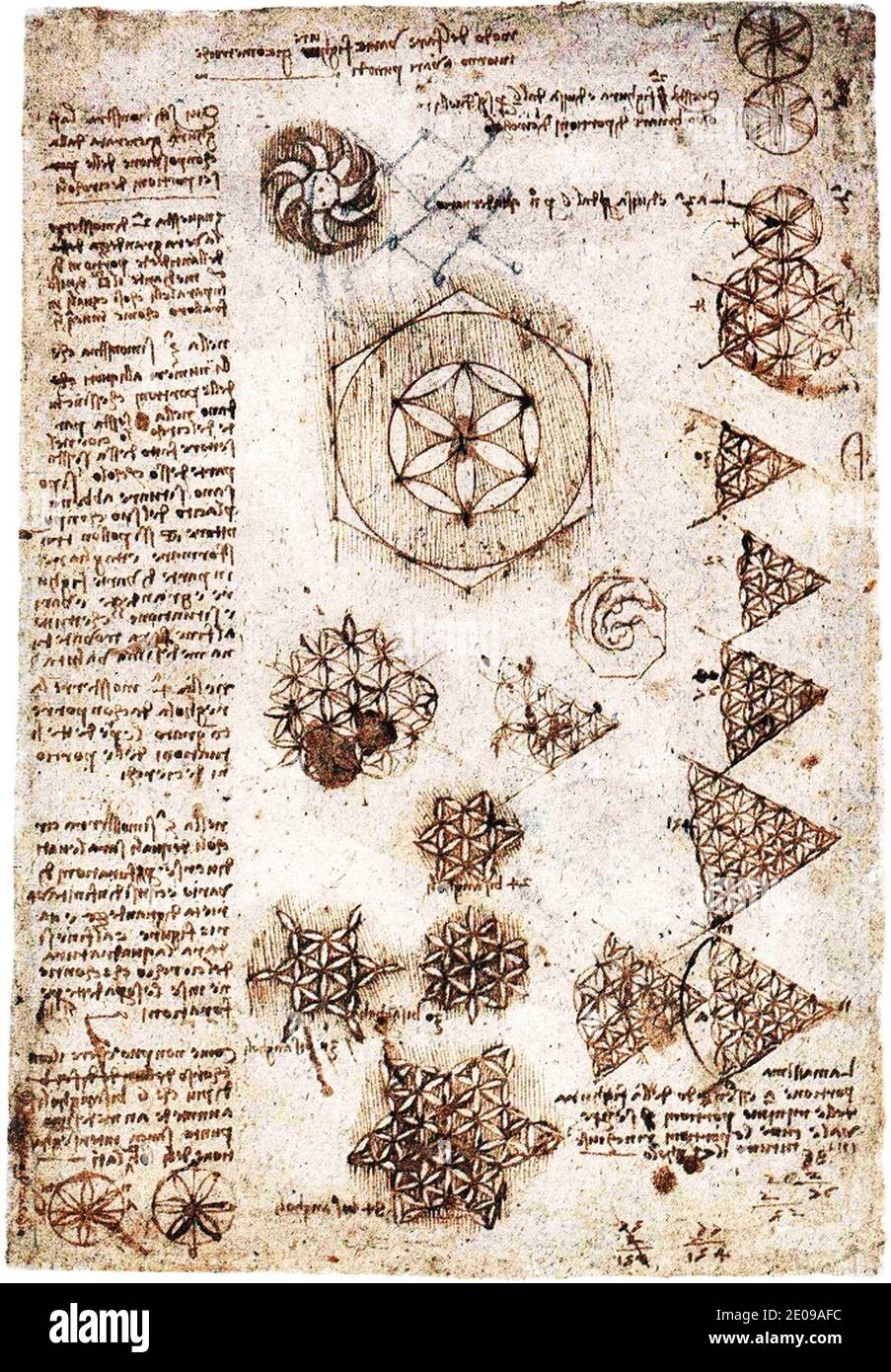
The modern effort to reunite the notebooks began in the 1990s, when scholars identified potential fragments in private collections. However, it was not until the 2010s that advances in digital technology made large-scale reconstruction feasible. The Leonardotheka 2.0 project, launched in 2021, built on earlier work by creating a centralized database of scans, annotations, and metadata.
A critical moment came in 2023, when a previously unknown set of pages was discovered in a private archive in Switzerland. These pages, dated to the 1490s, included detailed anatomical drawings of the human heart and notes on the mechanics of muscle movement. The discovery prompted a reevaluation of existing collections, leading to the identification of additional fragments that had been misattributed or overlooked.
Why It Matters: Unlocking Leonardo’s Interdisciplinary Genius
The reunification of Leonardo’s notebooks has significant implications for both art history and the history of science. His work represents a rare fusion of creative and analytical thinking, with sketches of flying machines, anatomical studies, and engineering designs that predate many modern innovations. For example, his studies of water flow and turbulence, documented in the Codex Atlanticus, are now being compared to 21st-century fluid dynamics research.
