
Residents of French village say US Defense Secretary Hegseth not welcome for D-Day visit – France 24
US Defense Secretary Pete Hegseth’s visit to France for the D-Day anniversary has triggered a diplomatic rift after he compared modern migration to an “invasion” and criticized European defense spending. While the trip was intended to honor the liberation of Europe, reports from France 24 indicate that residents of a French village have explicitly stated that Hegseth is not welcome, reflecting a sharp clash between the Secretary’s rhetoric and local sentiment.
Why are residents of a French village opposing Pete Hegseth’s visit?
The friction surrounding the US Defense Secretary’s presence in France centers on a fundamental disconnect between the commemorative nature of D-Day and the political messaging employed by Hegseth. According to reporting from France 24, residents in a French village have expressed that the Defense Secretary is not welcome. This local backlash is largely a response to the tone and content of Hegseth’s public statements during his official trip.
D-Day is viewed in France not merely as a military victory, but as a sacred symbol of liberation and international cooperation. When a high-ranking US official uses the anniversary as a platform for contemporary political grievances, it can be perceived by locals as a desecration of the event’s solemnity. The opposition from village residents suggests that the rhetoric used by the US delegation has overshadowed the intended spirit of remembrance.
The tension is further amplified by the specific nature of Hegseth’s comments. By framing current European social and political challenges through the lens of military conflict, the Secretary has alienated those who view the D-Day beaches as sites of peace and liberation rather than tools for modern political leverage.
The “Invasion” Comparison: Hegseth’s D-Day Speech
The most contentious aspect of the visit was a speech delivered by Secretary Hegseth that drew a direct parallel between the 1944 Allied landings and current migration patterns in Europe. As reported by the BBC, Hegseth attacked Europe over migration, utilizing the term “invasion” to describe the movement of people into the continent.
This choice of language is particularly volatile given the setting. The D-Day landings were a planned military invasion designed to end Nazi occupation; applying that same terminology to migration shifts the narrative from one of humanitarian or social crisis to one of military aggression. Forbes further detailed that Hegseth compared the historical events of D-Day to Europe being “stormed” by what he termed “dangerous ideologies.”

This rhetorical strategy serves several purposes from a political standpoint, but it carries significant diplomatic risks:
- Framing Migration as Conflict: By using words like “invasion” and “stormed,” Hegseth reframes a demographic and political issue as a security threat.
- Ideological Critique: The reference to “dangerous ideologies” suggests that the US administration views current European governance or social values as a vulnerability.
- Symbolic Contrast: Using the beachheads of Normandy—where the US and France fought as allies—to critique current French and European policy creates a stark contrast that many find offensive.
The comparison of a liberation effort to modern migration patterns has transformed a commemorative event into a flashpoint for transatlantic political disagreement.
Defense Spending and the Transatlantic Rift
Beyond the rhetoric regarding migration, Secretary Hegseth used his visit to press European nations on their financial commitments to collective security. According to Yahoo, Hegseth marked the D-Day anniversary with sharp words directed at Europe regarding its defense spending.
This is not a new point of contention in US-Europe relations, but the timing and delivery during a D-Day visit have added a layer of tension. The US has long encouraged NATO allies to increase their defense budgets to ensure a more equitable distribution of the burden of regional security. However, delivering this critique while standing on the ground where US soldiers died to liberate Europe is seen by some as opportunistic.
The core of the dispute involves the balance of power and responsibility within NATO. The US administration’s position, as echoed by Hegseth, is that Europe must take greater ownership of its own defense to avoid over-reliance on American military capabilities. When this is paired with critiques of migration, it paints a picture of a US administration that views Europe as both ideologically adrift and strategically complacent.
| Issue | Hegseth’s Position (per reports) | Local/European Reaction |
|---|---|---|
| Migration | Describes it as an “invasion” and “storming” of Europe. | Viewed as inflammatory and inappropriate for D-Day. |
| Defense Spending | Calls for increased European spending and less US reliance. | Seen as a sharp critique during a time of remembrance. |
| Diplomatic Tone | Aggressive, focused on “dangerous ideologies.” | Residents in some villages declare him “not welcome.” |
Official Business vs. Personal Life: The Family Trip
Adding another layer to the controversy was the composition of the Secretary’s traveling party. The Washington Post reported that Pete Hegseth took six of his children with him to France on this official trip.
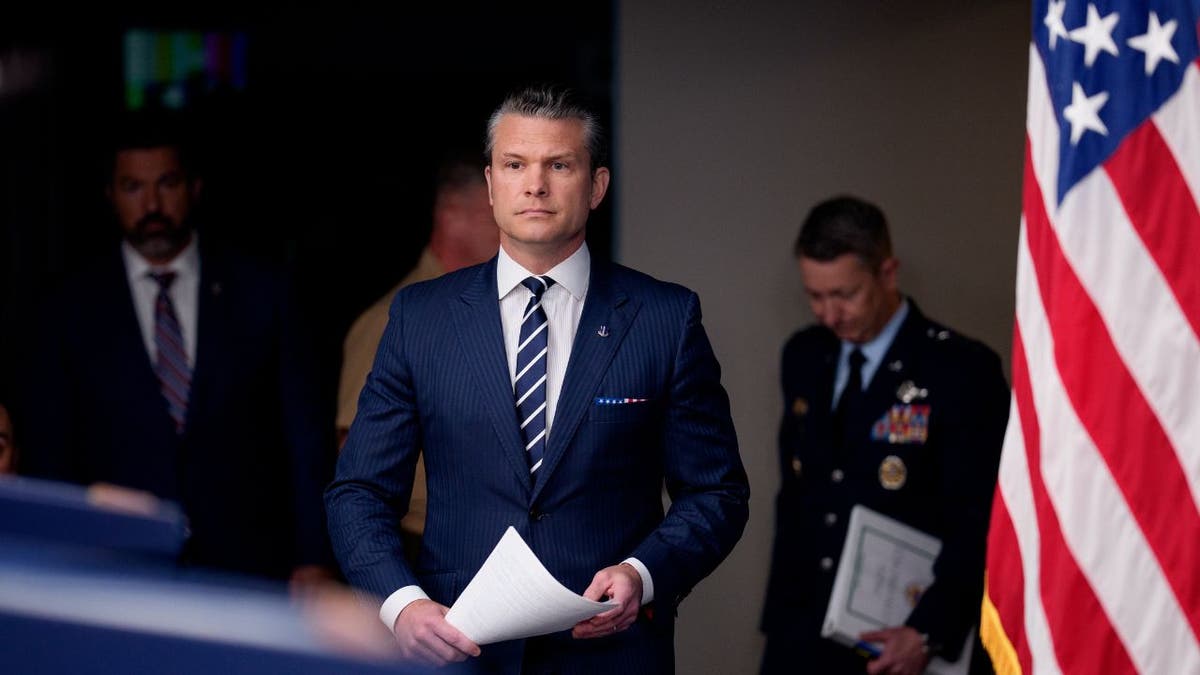
In the world of high-level diplomacy, the presence of immediate family on an official state visit is not unheard of, but the scale of this arrangement—bringing six children—has raised questions about the nature of the trip. Critics argue that the inclusion of a large family suggests a blurring of the line between a professional diplomatic mission and a personal family vacation, potentially detracting from the seriousness of the official engagements.
From a logistical and security standpoint, traveling with six children requires significant resources and coordination. When the official visit is already marred by diplomatic friction and public protests in French villages, the image of a family outing can clash with the gravity of the political tensions unfolding around the Secretary.
The Broader Impact on US-France Relations
The reaction to Secretary Hegseth’s visit is more than just a local dispute in a small village; it reflects a broader strain in the relationship between the United States and its European allies. The use of “invasion” rhetoric during a liberation anniversary strikes at the heart of the shared history that binds these nations.
Historically, D-Day has served as the ultimate symbol of the “Special Relationship” and the broader Western alliance. By pivoting the conversation toward migration and spending, Hegseth has shifted the focus from shared victory to current division. This approach risks framing the US not as a partner in liberation, but as a critic of European sovereignty and social policy.
The implications of this shift include:
- Erosion of Soft Power: Inflammatory language can alienate the European public, making it harder for the US to build coalitions on other global issues.
- Political Polarization: The rhetoric aligns with right-wing populist movements within Europe, potentially deepening internal European divisions.
- Diplomatic Friction: When local populations actively reject a visiting official, it creates a challenging environment for official diplomatic channels to operate effectively.
For those interested in how these tensions fit into a larger pattern, a related explainer on NATO defense obligations may provide further context on why defense spending remains such a volatile topic.
Common Misconceptions About the Visit
In the wake of the reporting, several oversimplifications have emerged regarding the conflict. It is important to distinguish between the official diplomatic goals of the US government and the personal rhetoric used by the Secretary.
Misconception: The entire French government has rejected Hegseth.
While France 24 reported that residents of a specific village said he was not welcome, this does not necessarily represent the official stance of the French state. There is often a gap between grassroots sentiment in Normandy and the diplomatic protocols followed by the government in Paris.
Misconception: The “invasion” comment was a reference to 1944.
Some have attempted to frame Hegseth’s language as a historical reference to the D-Day landings. However, the BBC and Forbes reports make it clear that the “invasion” and “storming” terminology was specifically applied to modern migration and “dangerous ideologies,” not the military operations of World War II.
Misconception: Bringing children on official trips is prohibited.
There is no strict rule forbidding family members from accompanying officials. The controversy reported by The Washington Post is not about the legality of the act, but about the optics and the perceived appropriateness given the political climate of the visit.
Frequently Asked Questions
Why did France 24 report that Pete Hegseth was not welcome?
France 24 reported that residents of a French village expressed that the US Defense Secretary was not welcome due to his inflammatory rhetoric regarding migration and his criticisms of European defense spending during a visit intended to honor D-Day.
What did Pete Hegseth say about migration in France?
According to the BBC and Forbes, Secretary Hegseth compared modern migration to an “invasion” and stated that Europe was being “stormed” by “dangerous ideologies.”
Did Pete Hegseth criticize European countries during his trip?
Yes. As reported by Yahoo, Hegseth used his visit to mark D-Day to deliver sharp criticisms of Europe’s current defense spending levels, urging nations to increase their contributions to their own security.
Who accompanied the US Defense Secretary on his official trip?
The Washington Post reported that Pete Hegseth brought six of his children along for the official visit to France.
How does this visit affect the US-France relationship?
The visit has created significant tension, as the use of military terminology like “invasion” to describe migration—especially at a site of liberation—is seen by many in France as offensive and diplomatically tone-deaf.
