
WatchOS 27 Fixes Siri at Last, but You May Need to Buy a New Apple Watch to Get It
Apple’s watchOS 27 introduces “Siri AI,” a conversational assistant powered by Apple Intelligence that enables natural dialogue and deep personal context awareness. While these updates significantly upgrade the Apple Watch experience, reports from The Verge indicate that a substantial number of older models will not support the new operating system, meaning many users will need to purchase new hardware to access these AI capabilities.
For years, the Apple Watch’s version of Siri has felt like a limited shadow of its iPhone counterpart, often struggling with complex queries or failing to understand the user’s immediate needs. The announcement of watchOS 27, detailed during Apple’s WWDC 2026 event, suggests a fundamental shift in how the wearable interacts with its owner. By integrating Apple Intelligence, the company is moving away from rigid voice commands toward a fluid, conversational interface. However, as CNET and other outlets have highlighted, this leap in intelligence comes with a hardware cost.
What is Siri AI and How Does It Change the Apple Watch?
The centerpiece of watchOS 27 is the debut of Siri AI. Unlike previous iterations of the assistant, which functioned primarily as a trigger for specific app actions or simple web searches, Siri AI is designed as a conversational partner. According to Apple’s preview, the assistant is now capable of handling open-ended questions and engaging in natural, back-and-forth conversations.
The most significant technical leap is the assistant’s ability to understand “personal context.” This means Siri AI can reference information stored across the user’s ecosystem to provide specific answers without the user having to navigate through multiple apps. Apple provides several concrete examples of this functionality:
- Personal Data Retrieval: Users can ask Siri AI to find their driver’s license number or locate a door code for a house rental.
- Note Integration: The assistant can pull specific details directly from a saved note on command.
- Cross-App Action: Siri AI can share flight details with family members or set new goals for Activity rings without the user manually opening the respective apps.
Beyond personal data, Siri AI leverages broad world knowledge by referencing online information in real-time. This allows the watch to provide up-to-date insights on everything from local ferry schedules to wellness tips and workout ideas, making the device more of an autonomous information hub than a simple notification screen.
“Powered by Apple Intelligence, Siri AI is your conversational AI assistant with entirely new capabilities on Apple Watch.” — Apple watchOS 27 Preview
The Hardware Hurdle: Why Your Current Watch Might Be Obsolete
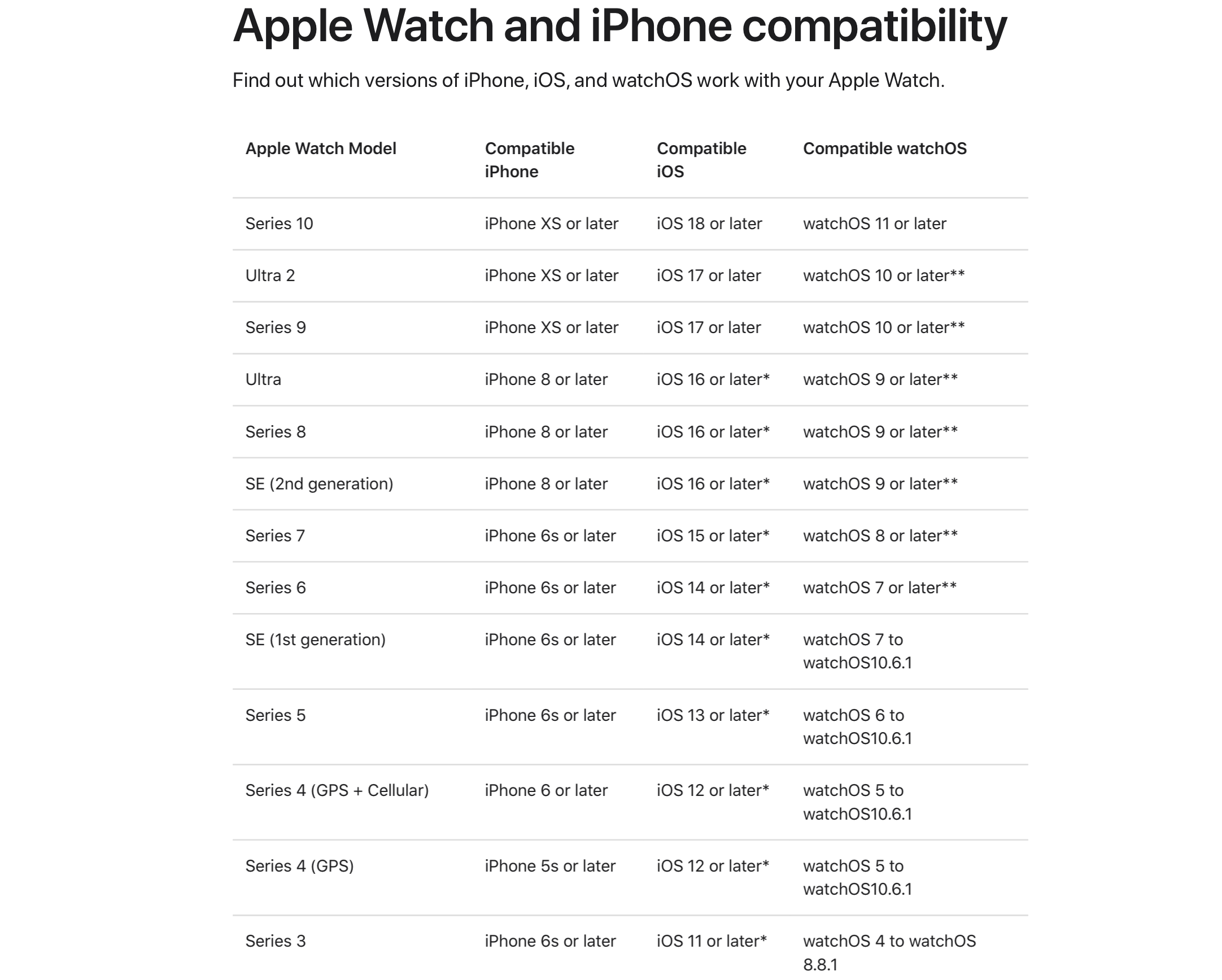
The phrase “WatchOS 27 Fixes Siri at Last, but You May Need to Buy a New Apple Watch to Get It” captures the central tension of this release. While the software is a leap forward, the computational requirements of Apple Intelligence are steep. Reporting from The Verge confirms that Apple is dropping support for a “long list” of older Apple Watch models with this update.

The integration of large language models (LLMs) and on-device AI processing typically requires more RAM and more powerful neural processing units (NPUs) than those found in older silicon. While Apple has not detailed the exact technical cutoff for every model, the trend of dropping legacy hardware is a recurring theme in the transition to AI-centric operating systems.
The Wearable Update War
This move by Apple places the company in a complex position regarding device longevity. Android Authority has noted a “wearable update war,” suggesting that competitors like Google and Samsung have found success by managing expectations around updates or implementing different support cycles. Apple’s strategy has traditionally been to provide several years of support, but the shift toward “Apple Intelligence” represents a paradigm shift that may render older chips physically incapable of running the new Siri AI architecture.
| Feature | Previous Siri (watchOS 26 and older) | Siri AI (watchOS 27) |
|---|---|---|
| Interaction Style | Command-based / Single-turn | Conversational / Back-and-forth |
| Context Awareness | Limited to basic app triggers | Deep personal context (Notes, Licenses, etc.) |
| Knowledge Source | Static triggers / Web search | Real-time online referencing & Apple Intelligence |
| Hardware Support | Broad legacy support | Restricted to newer, AI-capable hardware |
New Interface Elements and Navigation Improvements
Siri AI is not the only major change in watchOS 27. Apple is overhaulng how users interact with the watch’s interface to reduce friction and increase speed. One of the most visible changes is the dynamic app grid, which aims to make accessing frequently used applications faster and more intuitive.
Furthermore, Apple is introducing a single tap gesture designed specifically for the Smart Stack widgets. This allows users to open a widget with one hand, streamlining the process of glancing at weather, calendar events, or activity levels without needing to navigate through multiple swipes or presses.
The Dedicated Siri App
In a departure from previous versions where Siri was purely a system-level overlay, watchOS 27 introduces a dedicated Siri app. This app serves as a centralized hub for all AI interactions. Key features of the Siri app include:
- Conversation Continuity: Users can start a question on their iPhone and pick up exactly where they left off on their Apple Watch.
- Pinned Conversations: Important AI threads can be pinned for quick access, treating AI interactions more like a messaging history than a series of isolated commands.
- Unified History: All conversations are brought together in one place, allowing users to revisit previous brainstorming sessions or retrieved information.
This integration suggests that Apple views the Apple Watch not just as a standalone device, but as a seamless extension of the AI experience that begins on the iPhone.
Health and Fitness: Workout Buddy and Cycle Tracking
While the AI focus dominates the headlines, watchOS 27 continues to expand the Apple Watch’s role as a health monitor. Two significant additions stand out: Workout Buddy and expanded Cycle Tracking.
Workout Buddy is designed to act as a motivational coach, utilizing the user’s fitness data to provide new insights. Rather than just recording heart rate and calories, the feature analyzes trends to provide proactive motivation and guidance based on the user’s actual performance history.
In the Health app, Apple is introducing specialized support for perimenopause and menopause. By tracking specific physiological markers associated with these transitions, the Apple Watch aims to provide users with a better understanding of their body’s changes during these life stages. This move aligns with Apple’s broader strategy of moving into specialized medical and wellness tracking, transitioning the device from a general fitness tracker to a sophisticated health tool.
Timeline and Availability
The rollout of these features will be staggered, reflecting the complexity of deploying AI across millions of devices.
- watchOS 27 Release: The operating system is scheduled to arrive this fall.
- Siri AI Availability: The AI-powered assistant will launch initially in English later this year.
- Hardware Requirements: Users should check their specific model compatibility as the fall release approaches to determine if a hardware upgrade is necessary.
For those wondering if they should upgrade their current device, the decision likely hinges on the value they place on the conversational AI. If the current “command-and-response” Siri is sufficient, older watches will likely continue to function on previous OS versions. However, for those seeking the “personal context” and “back-and-forth” capabilities of Apple Intelligence, a newer model will be mandatory.
The shift toward AI-dependent hardware creates a new cycle of obsolescence. While Apple has historically supported devices for many years, the jump to Apple Intelligence is a structural change. Users are no longer just updating a user interface; they are upgrading the very engine that processes their requests.
Common Questions About watchOS 27 and Siri AI
Will my current Apple Watch support watchOS 27?
While Apple has not released a final definitive list of all compatible models in the preview, reports from The Verge indicate that a “long list” of older watches will lose support. Generally, devices lacking the newer neural processing chips required for Apple Intelligence are the most likely to be dropped.
When will Siri AI be available in languages other than English?
According to Apple’s official preview, Siri AI is coming in English later this year. No specific dates or timelines for other languages have been provided at this time.

What is the difference between the old Siri and Siri AI?
The original Siri functioned primarily on a trigger-and-response basis. Siri AI, powered by Apple Intelligence, is conversational, meaning it can handle back-and-forth dialogue, understand personal context (like finding a door code in your notes), and reference real-time online information for detailed insights.
How does the new Siri app work?
The Siri app is a dedicated space on the Apple Watch that stores your conversation history. It allows you to pin important chats and syncs your interactions across your iPhone and Watch, so you can start a conversation on one device and finish it on the other.
What are the new health features in watchOS 27?
The update introduces “Workout Buddy,” which provides motivational insights based on fitness data, and adds specific tracking and support for perimenopause and menopause within the Health app.
As the tech industry pivots toward generative AI, the Apple Watch is evolving from a passive tracker into an active assistant. The transition to watchOS 27 marks the end of the “simple” voice assistant era and the beginning of the AI-integrated wearable. For many, this will be the most significant upgrade in years—provided they have the hardware to run it.
