
Treasury Yields Hold Steady as Traders Await More Economic Data – CNBC
Treasury yields hold steady as traders await more economic data – CNBC reports that the U.S. bond market is currently navigating a period of cautious stability. Investors are balancing conflicting signals, where strong employment figures and geopolitical instability in the Middle East are creating a tug-of-war between expectations for higher interest rates and the demand for safe-haven assets.
What is Driving the Current Stability in Treasury Yields?
The current state of the bond market is characterized by a lack of clear direction, with several major financial outlets reporting a “steady” or “little changed” environment. According to reports from CNBC and Barron’s, traders are largely in a holding pattern, refusing to make aggressive bets until a fresh batch of economic indicators provides a clearer picture of the U.S. economy’s trajectory.
This stagnation occurs when the market is caught between two opposing forces. On one side, there is evidence of economic resilience that suggests interest rates may need to stay higher for longer. On the other, there are external shocks—specifically geopolitical unrest—that typically drive investors toward the perceived safety of government bonds, which pushes yields down.
Key factors contributing to this equilibrium include:
- Anticipation of Economic Reports: Traders are waiting for definitive data on inflation and employment to gauge the Federal Reserve’s next move.
- Geopolitical Hedging: Tensions in the Middle East often prompt a “flight to quality,” where investors buy Treasuries to protect capital.
- Rate Hike Speculation: Recent jobs data has fueled bets that the central bank may maintain or increase rates to cool the economy.
The Impact of Jobs Data and Rate Hike Bets
While some reports highlight stability, others point to an underlying upward trend in yields. Bloomberg reports that Treasuries have seen drops in price—which corresponds to a rise in yields—as strong jobs data and tensions involving Iran fuel bets on further rate hikes.
The relationship between employment data and Treasury yields is direct. When jobs reports show a surprisingly strong labor market, it signals to the Federal Reserve that the economy is not cooling sufficiently to meet inflation targets. This increases the likelihood that the Fed will raise interest rates or keep them elevated. Because new bonds are issued with these higher rates, existing bonds with lower rates become less attractive, leading investors to sell them, which drives yields upward.
TradingView has specifically noted that the US 10-Year Yield has resumed an increase, suggesting that the market may be pricing in a “higher-for-longer” interest rate environment despite the intermittent periods of stability.
The tension between strong domestic economic data and global instability is creating a volatile environment for the 10-year Treasury, as traders weigh the risk of inflation against the need for capital preservation.
How Middle East Tensions Create a “Safe-Haven” Effect
Contrary to the pressure from jobs data, geopolitical instability often acts as a cooling mechanism for yields. Moomoo observes that Treasury yields have cooled down as tensions rise in the Middle East, a phenomenon known as the “safe-haven bid.”
In times of international crisis—such as the escalating tensions involving Iran mentioned by Bloomberg—investors typically move their money out of riskier assets, like stocks or emerging market currencies, and into U.S. Treasuries. Because the U.S. government is viewed as one of the safest borrowers in the world, the demand for these bonds increases.
The mechanics of the safe-haven bid work as follows:
- Increased Demand: Global investors buy U.S. Treasuries to avoid volatility in other markets.
- Price Increase: High demand drives up the price of the bonds.
- Yield Decrease: Because bond prices and yields move in opposite directions, the surge in price forces the yield downward.
This creates a direct conflict with the “jobs data” narrative. While the labor market is pushing yields up, the conflict in the Middle East is pulling them down, resulting in the “steady” or “little changed” readings reported by CNBC and Barron’s.
Comparing Market Drivers: Bullish vs. Bearish for Yields
To understand why the market is currently stalled, it is helpful to look at the competing forces acting on Treasury yields. The following table summarizes the primary drivers mentioned across current financial reporting.
| Driver | Effect on Yields | Primary Cause | Reporting Source |
|---|---|---|---|
| Strong Jobs Data | Upward Pressure | Increased bets on Fed rate hikes | Bloomberg |
| Middle East Tensions | Downward Pressure | Safe-haven demand (Flight to Quality) | Moomoo |
| Economic Data Wait | Neutral/Steady | Traders awaiting confirmation | CNBC / Barron’s |
| 10-Year Trend | Upward Pressure | Resumption of yield increases | TradingView |
The Significance of the 10-Year Treasury Yield
Much of the focus remains on the 10-year Treasury yield because it serves as a global benchmark for borrowing costs. When the 10-year yield moves, it impacts everything from mortgage rates to corporate loans and the valuation of stocks.
For instance, when TradingView reports that the 10-year yield is resuming an increase, it suggests that long-term borrowing costs are likely to rise. This can put pressure on companies with high debt loads and make home loans more expensive for consumers. Conversely, when the “safe-haven” effect takes over and yields cool, it can provide temporary relief to borrowers but may signal a broader lack of confidence in global economic stability.
Investors monitor this specific yield to determine the “term premium”—the extra compensation investors require for the risk of holding a long-term bond rather than rolling over short-term debt. Currently, the term premium is being influenced by the uncertainty of whether inflation will remain sticky or if a geopolitical shock will trigger a global recession.
Why Traders Are Hesitant to Move
The phrase “traders await more economic data” indicates a state of market paralysis. In professional trading, making a large directional bet (going “long” or “short” on bonds) during a period of conflicting data is high-risk. If a trader bets that yields will fall due to Middle East tensions, but a subsequent jobs report comes in unexpectedly strong, they could face significant losses.

This hesitation is why CNBC and Barron’s characterize the market as steady. The “wait-and-see” approach is a risk-management strategy used when the macroeconomic narrative is split between domestic strength and international fragility.
Common Misconceptions About Bond Yields
Many casual observers confuse bond prices with bond yields, leading to a misunderstanding of news reports. It is important to clarify these distinctions to properly interpret reports from Bloomberg and Moomoo.
Misconception: “Treasuries dropping” means yields are falling.
In reality, when Bloomberg reports that “Treasuries Drop,” they are referring to the price of the bond. When bond prices drop, the yield (the effective interest rate) rises. Therefore, a drop in Treasuries is actually a bullish signal for yields and a bearish signal for bondholders.
Misconception: Safe-haven demand always lowers yields.
While generally true, if the safe-haven demand is accompanied by a massive spike in inflation (for example, if Middle East tensions cause oil prices to skyrocket), the inflation fear may eventually outweigh the safe-haven bid, causing yields to rise despite the instability.
Misconception: A “steady” yield means the economy is stable.
A steady yield often means the market is undecided, not that the economy is calm. As seen in the current context, the stability is actually the result of two very volatile forces canceling each other out.
Identifying the Next Market Catalyst
For the market to break out of its current steady state, a dominant narrative must emerge. Currently, the market is waiting for a “tie-breaker.” This could come in several forms:
- CPI or PPI Data: If inflation prints significantly higher than expected, the “rate hike” narrative from Bloomberg will likely overpower the “safe-haven” narrative from Moomoo, sending yields sharply higher.
- Escalation in Iran/Middle East: A major geopolitical event could trigger a massive flight to safety, causing a sharp drop in yields regardless of the jobs data.
- Federal Reserve Communication: Any official statement from the Fed regarding their outlook on interest rates would provide the clarity that traders, according to CNBC, are currently seeking.
For those tracking these movements, monitoring the 10-year yield’s ability to maintain its recent increase, as noted by TradingView, will be key to determining if the market has finally decided that economic growth and inflation are more important than geopolitical risk.
For more context on how these movements affect broader markets, you may find a related explainer on inflation and interest rates useful.
Frequently Asked Questions
Why do Treasury yields stay steady when there is bad news?
Yields may remain steady when opposing forces balance each other. For example, bad geopolitical news typically lowers yields (safe-haven bid), but strong economic data typically raises them (rate hike bets). When these two forces are equal, the yield appears to hold steady, as reported by CNBC.
What is the difference between a bond price and a bond yield?
They have an inverse relationship. When the price of a Treasury bond goes up, the yield goes down. When the price drops—as Bloomberg noted in the context of rate hike bets—the yield increases.
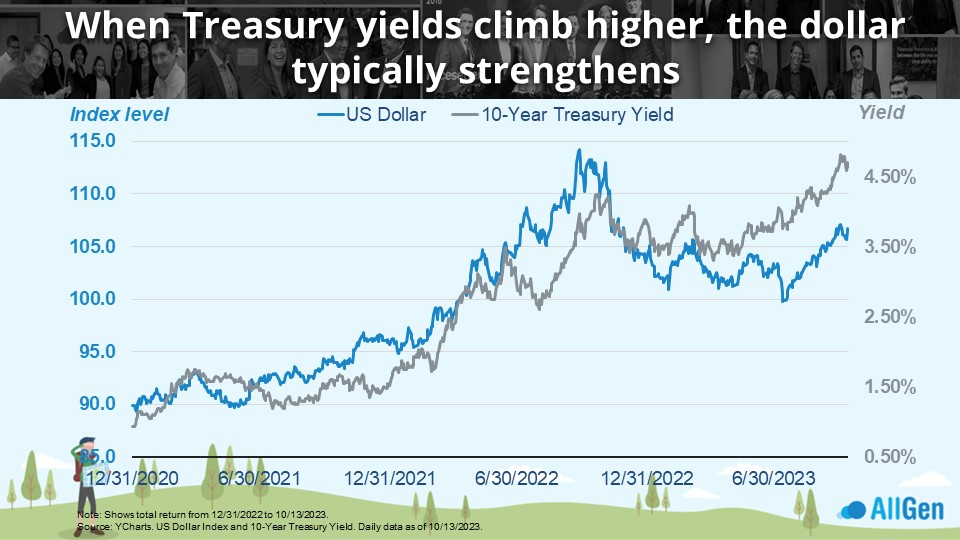
How does jobs data affect the 10-Year Treasury yield?
Strong jobs data suggests a robust economy, which often leads to higher inflation. This prompts the Federal Reserve to raise interest rates to cool the economy. Investors then demand higher yields on the 10-year Treasury to match these expected higher rates.
What is a “safe-haven bid”?
A safe-haven bid occurs when investors sell risky assets (like stocks) and buy secure assets (like U.S. Treasuries) during times of global crisis. This increased demand drives up bond prices and lowers the yields, a trend observed by Moomoo during Middle East tensions.
Why is the 10-year yield considered a benchmark?
The 10-year Treasury yield is used as a reference point for many other interest rates, including mortgages and corporate bonds. Its movement signals the market’s long-term expectation for inflation and economic growth.
