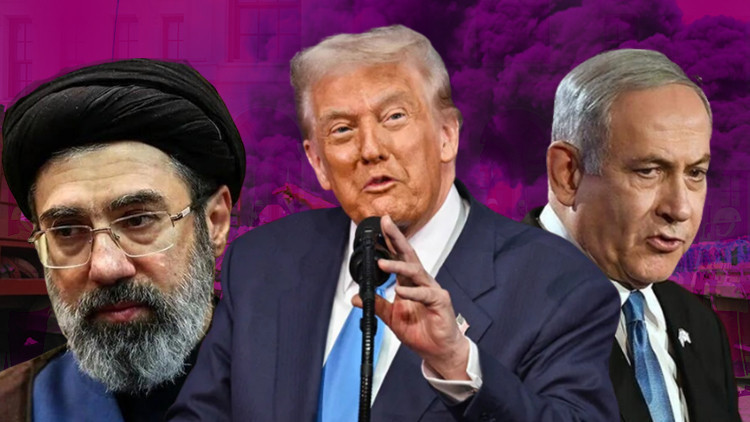
President Donald Trump has reportedly pressured Israeli Prime Minister Benjamin Netanyahu to halt military operations, warning that Israel risks diplomatic isolation in its confrontation with Iran. According to public statements, Trump has convinced Netanyahu to stop the attacks, with both Israel and Iran now appearing ready for an immediate ceasefire.
- Key Figures: U.S. President Donald Trump and Israeli Prime Minister Benjamin Netanyahu.
- Core Development: A reported shift in U.S. support for Israel, leading to pressure for a ceasefire.
- Diplomatic Warning: Trump cautioned Netanyahu that Israel could be left to face Iran without U.S. backing.
- Current Status: Both Iran and Israel are reportedly open to an immediate cessation of hostilities.
Why is Trump Warning Netanyahu of Isolation?
The diplomatic relationship between Washington and Jerusalem has seen a sharp turn, with reports indicating that Prime Minister Benjamin Netanyahu has lost the support of President Donald Trump. This tension culminated in a direct warning from the U.S. president regarding Israel’s strategic position in the Middle East.
Be careful, you could be left alone against Iran.
Donald Trump
This warning suggests a potential shift in U.S. security guarantees. By highlighting the risk of isolation, Trump has signaled that continued military escalation could alienate the U.S., leaving Israel to manage the threat from Tehran without its primary global ally.
How the U.S. is Pressuring Israel for a Ceasefire
The U.S. administration has moved from passive support to active intervention to end the current flare-up. According to public statements, President Trump claims to have successfully negotiated a change in Israel’s military posture.

I convinced Netanyahu to stop the attacks.
Donald Trump
This pressure appears to have yielded results on both sides of the conflict. Trump stated that “Iran and Israel are ready” for an immediate ceasefire, indicating that the U.S. has played a central role in bringing the two adversarial powers to a tentative agreement to stop fighting.
The Shift in U.S.-Israel Diplomatic Relations
The current friction is not an isolated incident but the result of a pattern of increasing criticism from Washington. Local media reports indicate that the U.S. has issued a series of successive anti-Israel statements, marking a departure from previous diplomatic alignments.
This shift is evidenced by the contrast between the administration’s former rhetoric and the current warnings of isolation. The combination of public criticism and private warnings has created a high-pressure environment for the Israeli government, forcing a reconsideration of its military strategy against Iran to avoid a total rupture with the United States.
