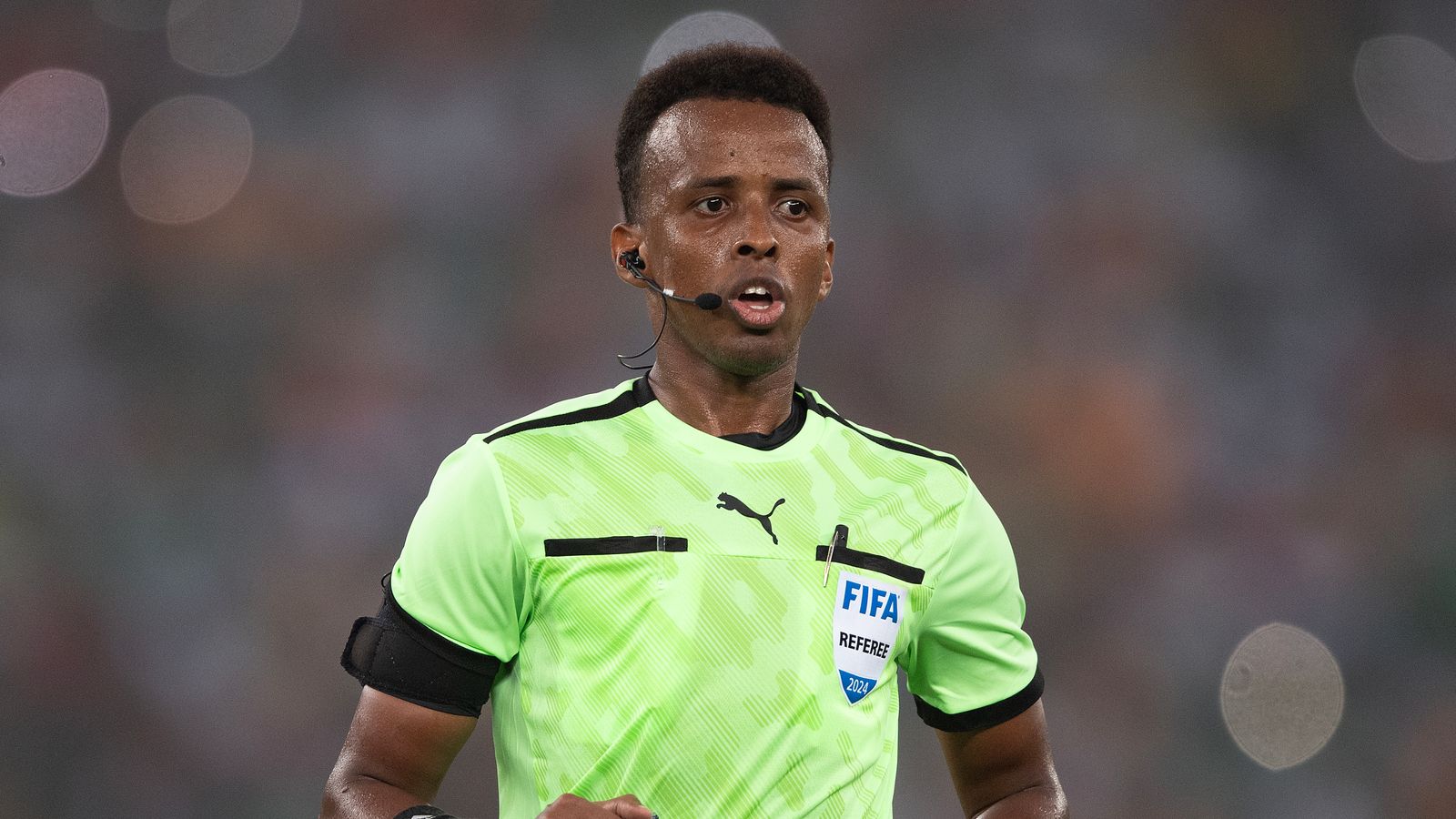
Somali Referee Dropped from World Cup: Omar Artan Misses Out on Tournament After US Visa Denial
Somali official Omar Artan will not participate in the 2026 World Cup after the United States government denied his visa application. Despite his standing as a top African referee, Artan was barred from entering the U.S., forcing his removal from the tournament’s officiating roster. This development highlights the intersection of international sports and strict national border policies.
The news that a Somali referee dropped from World Cup: Omar Artan misses out on tournament after US visa denial – Sky Sports has sent ripples through the football community. For Artan, this wasn’t just a professional setback; it was the loss of a career-defining opportunity to officiate on the world’s most prestigious stage. The 2026 tournament, co-hosted by the United States, Canada, and Mexico, relies on a seamless movement of officials, players, and staff. However, the rigid nature of U.S. immigration laws has created a barrier that even a FIFA-sanctioned appointment could not overcome.
Why was Omar Artan denied entry to the United States?
While the U.S. Department of State typically does not disclose the specific reasons for individual visa denials due to privacy laws, the result for Omar Artan is absolute. According to reports from the BBC and ESPN, the Somali official was refused the necessary travel documentation required to enter the U.S. territory for the duration of the tournament.
Visa denials for citizens of countries with volatile political histories or those flagged under specific security screenings are not uncommon. For officials from Somalia, the process often involves heightened scrutiny. Even when an individual is invited by a global entity like FIFA, the sovereign right of a host nation to deny entry remains the final word. In this instance, the administrative hurdle proved insurmountable, leaving Artan unable to join his colleagues in North America.
The situation is particularly frustrating because Artan had already met the rigorous sporting criteria set by FIFA. He wasn’t dropped due to a lack of skill or a disciplinary issue on the pitch; he was sidelined by a bureaucratic decision made in a consulate office.
| Key Detail | Information |
|---|---|
| Official Involved | Omar Artan |
| Nationality | Somali |
| Event | World Cup 2026 |
| Reason for Absence | US Visa Denial |
| Professional Status | Top-ranked African Referee |
Who is Omar Artan and what is his impact on African football?
Omar Artan is widely regarded as one of the most capable officials coming out of Africa. His ascent through the ranks of officiating is a testament to his technical knowledge of the game and his ability to manage high-pressure matches. According to The Guardian, Artan’s inclusion in the World Cup pool was a recognition of his elite status within the Confederation of African Football (CAF).
For Somali football, Artan represented more than just a referee; he was a symbol of progress. Somalia has long struggled to establish a consistent presence in global sports due to decades of internal conflict and infrastructure challenges. Having a citizen reach the level of a World Cup official would have been a historic milestone for the nation, signaling that Somali sports professionals can compete and lead at the highest international levels.
Artan’s style is characterized by a firm but fair approach, which earned him respect across the continent. His absence doesn’t just affect his own career trajectory but also diminishes the representation of East African officials in the global game. When a top official is removed for non-sporting reasons, it raises questions about the accessibility of the “beautiful game” for those from marginalized or politically scrutinized regions.
The logistical nightmare of the 2026 World Cup hosting
The 2026 World Cup is an unprecedented undertaking. With matches spread across three countries—the U.S., Canada, and Mexico—the logistical complexity is staggering. FIFA must coordinate the travel and legal status of hundreds of referees, assistants, and VAR (Video Assistant Referee) officials from every corner of the globe.

Most officials travel on specialized sporting visas or diplomatic passports, but these are still subject to the laws of the host nations. The U.S. visa process is notoriously stringent, often requiring extensive background checks and interviews. For officials from “high-risk” countries, these checks can take months and still result in a rejection without a detailed explanation.
This incident underscores a recurring tension in international sports: the clash between the “universal” nature of athletics and the “exclusive” nature of national borders. While FIFA promotes a world united by football, the reality is that a passport can be as influential as a whistle in determining who gets to participate.
“The intersection of sports and geopolitics often manifests in the most mundane ways—a stamped passport or a denied visa. When a professional’s career is halted by a border agent, it highlights the fragility of international sporting meritocracy.”
Comparing media coverage: How the world reported Artan’s exclusion
Different news outlets framed the story of Omar Artan through varying lenses, reflecting different editorial priorities. By analyzing the reporting, we can see how the narrative shifted from a simple news update to a broader discussion on fairness.
- Sky Sports and Sky News: Focused heavily on the immediate news hook—the fact that the referee was “dropped” and “denied entry.” Their coverage was direct and centered on the tournament’s roster changes.
- BBC: Emphasized the specific timing and the fact that he was “barred” from entering the US, framing it as a significant obstacle for the 2026 tournament preparations.
- The Guardian: Took a more nuanced approach, highlighting Artan’s status as a “top African referee.” This framing shifted the story from a logistical failure to a loss of talent and representation for the African continent.
- ESPN: Provided a concise report focusing on the official nature of the denial, treating it as a factual update for the sports community.
The contrast is clear: while some outlets treated this as a routine roster update, others recognized it as a systemic issue where political barriers override professional achievement.
The broader implications for FIFA and future tournaments
The case of Omar Artan puts FIFA in a difficult position. The governing body is responsible for ensuring that the best officials in the world are present to maintain the integrity of the game. However, FIFA has no power to override the immigration laws of a sovereign host nation.

This situation may force FIFA to implement new protocols for future tournaments. Potential solutions could include:
- Earlier Visa Processing: Starting the visa application process much earlier to allow for appeals or alternative routing.
- Diplomatic Pressure: Working more closely with host governments to create “sporting corridors” that expedite visas for accredited officials.
- Contingency Planning: Increasing the number of reserve referees from various regions to ensure that a single visa denial doesn’t leave a gap in regional representation.
If these issues aren’t addressed, the World Cup risks becoming a tournament where the participants are decided not just by their skill on the pitch, but by the strength of their passport. This would be a significant blow to the inclusive image FIFA strives to project.
For more on how international regulations affect sports, you might find a related explainer on athlete visa challenges useful.
Common misconceptions about sports visas
There is a common belief that being “selected” for a World Cup automatically guarantees entry into the host country. This is a misconception. A FIFA appointment is an invitation to work, but it is not a legal permit to enter a country.
Many assume that “sporting visas” are a formality. In reality, they are subject to the same national security screenings as any other visa. If a candidate is flagged for any reason—even if that reason is related to the political instability of their home country rather than their own personal actions—the visa can be denied. There is no “fast track” that bypasses national security protocols, regardless of the prestige of the event.
Another misconception is that the host country’s football federation (in this case, US Soccer) can override the State Department’s decision. They cannot. The immigration authorities operate independently of the sporting organizers. Once a visa is denied, the sporting body’s only option is to find a replacement.
The human cost of bureaucratic barriers
Beyond the headlines of Somali referee dropped from World Cup: Omar Artan misses out on tournament after US visa denial – Sky Sports, there is a personal toll. For a referee, the World Cup is the pinnacle of a lifetime of training. It is the moment where their decisions are seen by billions and their legacy is cemented.
To have that dream stripped away not by a mistake in a game or a failure in fitness, but by a piece of paper, is devastating. Artan’s experience is a reminder that for many professionals from the Global South, the path to success is littered with obstacles that their counterparts in Europe or North America never have to encounter.
This incident also sends a discouraging message to aspiring referees in Somalia and across Africa. It suggests that no matter how good you are, your nationality can still be a disqualifying factor. This could potentially stifle the growth of officiating in regions that are already underrepresented in global football.
Frequently Asked Questions
Why can’t FIFA just grant Omar Artan a visa?
FIFA is a non-governmental organization and does not have the authority to issue visas. Visas are issued exclusively by the sovereign government of the host country. In this case, the United States government holds the sole power to grant or deny entry to Omar Artan.
Will Omar Artan be replaced by another Somali referee?
While FIFA strives for diversity, replacements are chosen based on a global pool of eligible, high-ranking officials. It is unlikely that another Somali referee would be immediately available who meets the same elite criteria as Artan, meaning Somalia may lose its representation in the officiating crew entirely.
Has this happened to other sports officials before?
Yes, visa denials have affected athletes and officials in various sports, including the Olympics and previous World Cups. These incidents usually stem from geopolitical tensions or strict immigration policies of the host nation.
Can Omar Artan appeal the US visa decision?
Visa denials can sometimes be appealed or re-applied for, but given the timeline of the World Cup and the nature of “barred entry” reports, it is unlikely that a reversal would happen in time for him to participate in the tournament.
Does this mean the US is banning Somali referees?
No, there is no evidence of a blanket ban on Somali referees. This appears to be an individual case based on the specific results of Omar Artan’s visa application and the US government’s screening process.
The story of Omar Artan serves as a stark reminder that the world of sport does not exist in a vacuum. As the 2026 World Cup approaches, the focus will remain on the players and the spectacle, but the exclusion of a top official due to border politics highlights a systemic issue that football’s governing bodies have yet to solve. For now, the whistle remains silent for one of Africa’s best, not because of a foul on the field, but because of a closed door at the border.
