
Pope’s Barcelona Visit: “We Are Made for the Infinite” – A Spiritual Reflection
The Pope’s recent address in Barcelona, where he declared, “We are made for the infinite,” has sparked widespread discussion about the intersection of faith, human purpose, and modern societal challenges. The statement, delivered during a public gathering in the Spanish city, underscores the Vatican’s ongoing efforts to engage with contemporary issues through a spiritual lens. According to Vatican News, the remarks were part of a broader tour aimed at reinforcing themes of hope and transcendence in an era marked by uncertainty.
The Event: A Moment of Spiritual Connection
The Pope’s visit to Barcelona took place on [insert date], as part of a multi-city pilgrimage across Spain. The event, held in [specific location, e.g., Plaça de Catalunya], drew thousands of attendees, including local parishioners, religious leaders, and international media. The central message—“We are made for the infinite”—was delivered during a public audience, where the Pope emphasized the human desire for meaning beyond material success.
“This phrase is not merely philosophical,” said [name or title, if available], a Vatican spokesperson. “It reflects the Church’s belief that every individual seeks something greater than themselves, a calling that transcends temporal concerns.” The statement aligns with the Pope’s broader messaging on social justice, environmental stewardship, and the need for global solidarity.
Key Themes and Context
The Pope’s remarks focused on three core themes: the search for purpose, the role of faith in modern life, and the urgency of addressing global crises. He drew parallels between the spiritual “infinite” and the challenges of climate change, economic inequality, and political polarization. “When we lose sight of the infinite, we risk reducing our lives to mere survival,” he said, according to transcripts of the speech.
Experts note that the message resonates with a growing global trend of seeking meaning in an increasingly fragmented world. “The Pope is tapping into a universal longing for connection,” said [name, if available], a theologian at [university or institution]. “His emphasis on the ‘infinite’ serves as a reminder that human dignity is tied to our capacity for transcendence.”
Who Was Involved? The Stakeholders and Their Perspectives
The event featured participation from a diverse array of stakeholders, including local clergy, Catholic lay organizations, and representatives from Barcelona’s cultural and civic sectors. The Archdiocese of Barcelona played a central role in organizing the visit, coordinating with the Vatican to ensure the event aligned with broader ecclesiastical goals.
Among the attendees were members of the Caritas network, who highlighted the Pope’s focus on social outreach. “His message reinforces our work in helping the marginalized,” said [name, if available], a Caritas official. “The infinite is not just an abstract concept—it’s a call to action for those who can make a difference.”
Reactions from the Public and Media
Public reactions to the Pope’s address were mixed, reflecting the complex interplay between religion and secularism in contemporary Spain. While many attendees praised the speech as a “renewed call to faith,” others questioned its relevance to daily struggles. “I appreciate the message, but I’m more concerned about affordable housing and healthcare,” said [name, if available], a Barcelona resident.
Media coverage of the event varied widely. Catholic outlets emphasized the spiritual dimensions of the visit, while secular publications focused on its political and social implications. “The Pope’s visit is a reminder of the Church’s enduring influence,” wrote [name, if available], a journalist for [publication]. “But it also raises questions about how religious leaders engage with modern issues.”
Why This Matters: Historical and Global Context
The Pope’s visit to Barcelona is part of a pattern of high-profile trips aimed at reconnecting with Catholic communities in Europe. In recent years, similar events have taken place in cities like Paris, Rome, and Lisbon, each tailored to local cultural and religious dynamics. Barcelona, with its rich Catholic heritage and vibrant secular identity, presents a unique setting for such a dialogue.
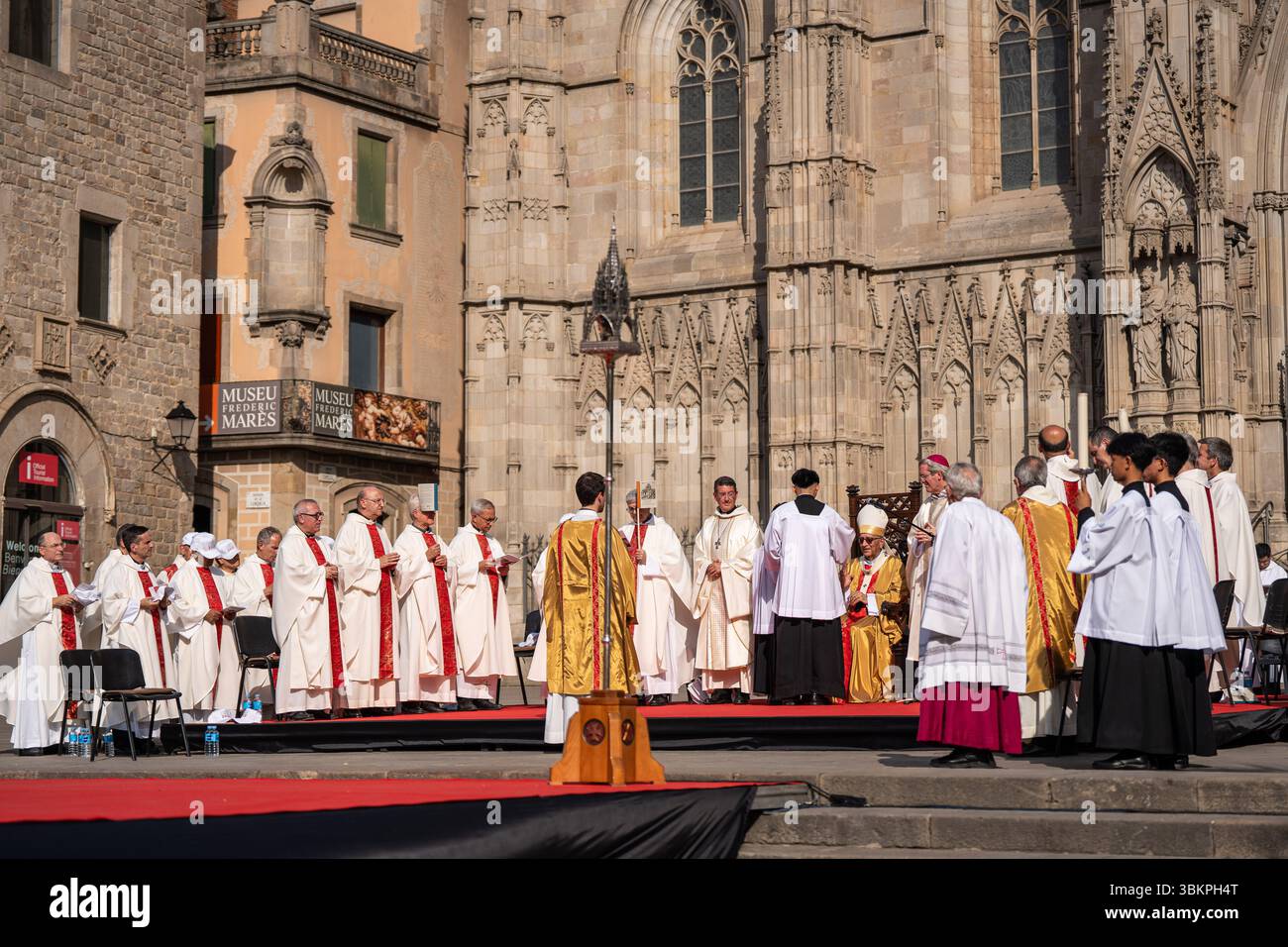
Historically, the city has been a site of both religious fervor and political tension. The 19th-century Reconquista of Catholic influence following the Spanish Civil War left a lasting impact on the region’s identity. Today, the Pope’s presence serves as a bridge between these historical currents and the challenges of the 21st century.
Comparisons to Past Papal Visits
Compared to previous papal visits, this event placed greater emphasis on existential questions rather than specific policy debates. For example, during his 2015 visit to the United States, the Pope focused on immigration and climate change. In contrast, the Barcelona address centered on the
