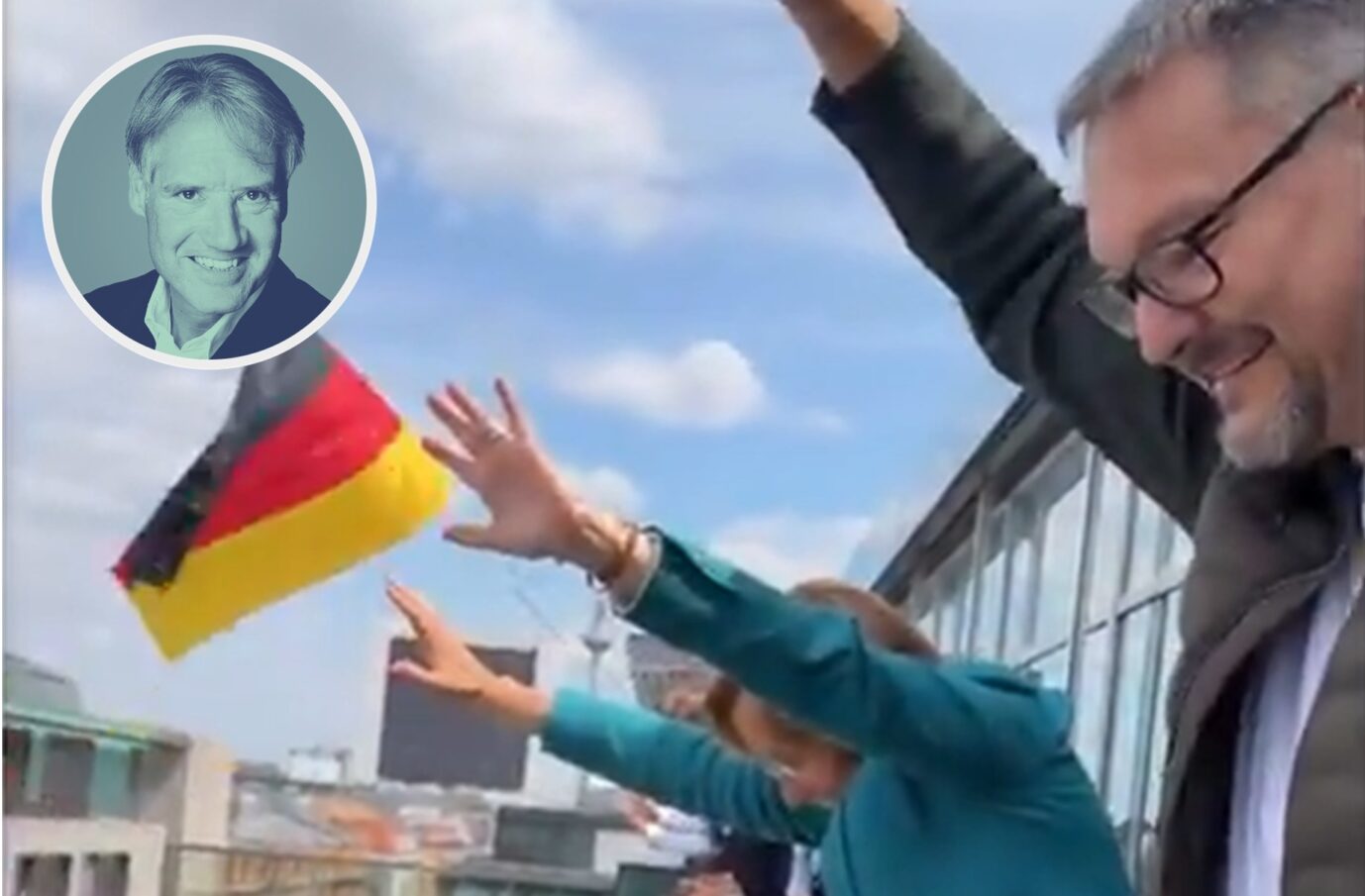
Beatrix von Storch, a politician with the Alternative for Germany (AfD) party, prompted an intervention by the Bundestag police after waving the German national flag. The incident has fueled a broader cultural dispute regarding the use of national symbols and whether such displays are treated differently based on the political affiliation of the individual involved.
The Confrontation at the Reichstag
The situation unfolded when Beatrix von Storch began waving the German flag, an act that quickly drew the attention of the Bundestag police. According to local media reports, the police intervened shortly after the display began, transforming a gesture of national symbolism into a security matter within the parliamentary district.

The intervention has been characterized by some observers as a scandal, questioning why the act of waving a national flag would trigger a police response in the heart of Germany’s legislative center.
A Debate Over Political Symbolism
The incident has highlighted a sharp divide in how the German flag is perceived and policed in the current cultural climate. Some reports suggest a double standard in the enforcement of rules, arguing that while thousands of people may wave the national flag in other contexts without consequence, the action is viewed as a provocation when performed by AfD members.
This tension reflects a larger struggle over who “owns” national identity and symbols. While the AfD views the display as a legitimate expression of patriotism, critics often view the party’s use of the flag as an attempt to co-opt national imagery for right-wing populist goals.
Now more than ever: Let’s happily wave the German flag.
This sentiment, appearing in conservative media reports, suggests that the police intervention has only served to embolden supporters of the gesture, framing the act as a necessary defiance against political correctness.
Cultural Implications of the Police Response
The reaction from the Bundestag police has led to accusations that the administration in Berlin selectively ignores similar displays of nationalism unless they are linked to the AfD. This perception of bias transforms a simple act of flag-waving into a piece of political theater, where the police response becomes as significant as the original act.
By treating the flag as a potential police matter, the incident underscores the volatility of national symbols in contemporary German society, where the line between patriotic expression and political provocation remains heavily contested.
