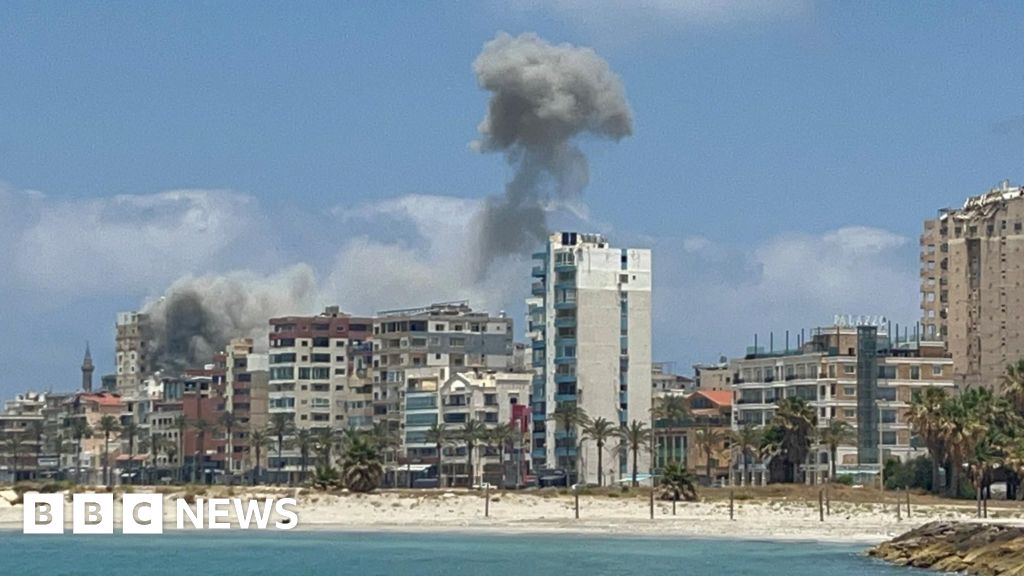
Israeli air strikes hit Lebanese city of Tyre despite Iranian warning to stop attacks – BBC
Israeli air strikes hit the Lebanese city of Tyre, killing eight people and forcing the evacuation of the city’s Christian quarter, according to The Guardian. These strikes occurred despite warnings from Iran to cease attacks, representing the deadliest assault on Tyre since the current conflict began, per The Globe and Mail.
What happened during the air strikes in Tyre?
Israeli military aircraft launched a series of strikes targeting the coastal city of Tyre in southern Lebanon. According to reports from The Guardian, the operation resulted in at least eight deaths. The intensity of the bombardment led to immediate emergency measures, including a mandatory evacuation order for residents of the city’s Christian quarter.
The Globe and Mail reports that these specific strikes are the deadliest experienced by Tyre since the onset of the current fighting. The scale of the destruction suggests a shift in the intensity of operations in southern Lebanon, moving beyond targeted strikes on specific infrastructure to broader urban impact.
Local reports and updates from CNN indicate that the strikes were part of a wider pattern of Israeli operations across southern Lebanon. The focus on Tyre, a major strategic and population center, signals a high-priority objective for the Israeli Defense Forces (IDF) in their effort to degrade capabilities in the region.
- Casualties: Eight confirmed dead according to The Guardian.
- Evacuations: Specific orders issued for the Christian quarter of Tyre.
- Severity: Deadliest strikes on the city since the conflict’s start, per The Globe and Mail.
Why did these strikes occur despite Iranian warnings?
The BBC reports that Iran had issued explicit warnings to Israel to stop its attacks in Lebanon. These warnings were intended to prevent a further escalation of hostilities that could draw Iran directly into a full-scale conflict. Despite these diplomatic signals, Israel proceeded with the strikes on Tyre.
The timing of the attacks is particularly significant. The New York Times reports that these strikes followed a period where both Iran and Israel appeared to be pulling back from direct confrontation. This “pull back” suggested a fragile tacit understanding to avoid a regional war, which the strikes on Tyre have now severely strained.

Analysts suggest that Israel’s decision to ignore the Iranian warnings stems from its immediate security priorities. The Israeli government has consistently stated that it will take necessary action to neutralize threats from Hezbollah, which is heavily funded and armed by Tehran. By striking Tyre, Israel is signaling that its tactical objectives in Lebanon take precedence over Iranian diplomatic pressures.
| Source | Key Perspective on the Escalation |
|---|---|
| BBC | Highlighted the Iranian warning to stop attacks prior to the strikes. |
| The New York Times | Noted a previous trend of both nations pulling back from direct conflict. |
| The Globe and Mail | Emphasized that these were the deadliest strikes on Tyre to date. |
| The Guardian | Focused on the immediate human cost (8 dead) and specific neighborhood evacuations. |
How does this fit into the broader Iran-Israel conflict?
The strikes on Tyre are not isolated incidents but are a flashpoint in the ongoing “shadow war” between Israel and Iran. For years, these two powers have fought via proxies, with Iran supporting Hezbollah in Lebanon and other militias in Syria and Iraq. However, the recent trend has seen a shift toward more direct interactions.
According to The New York Times, the cycle of “pull back and strike” indicates a volatile equilibrium. When tensions peak, international pressure often forces a temporary cooling-off period. The current strikes suggest that the cooling-off period has ended, and Israel is now pursuing a more aggressive posture to dismantle Hezbollah’s infrastructure in southern Lebanon.
The involvement of Iran is central to the conflict’s geometry. Iran views Hezbollah as its primary deterrent against Israel on the Mediterranean coast. Any significant degradation of Hezbollah’s power in cities like Tyre is viewed by Tehran as a direct blow to its regional influence. This is why the Iranian warnings mentioned by the BBC were so explicit; Iran is attempting to maintain its proxy’s viability without being forced into a direct war with Israel.
The Strategic Importance of Tyre
Tyre is more than just a population center; it is a strategic port city. Control or influence over the coastal regions of southern Lebanon allows for the movement of supplies and personnel. By targeting Tyre, Israel is attempting to disrupt the logistics and command-and-control structures that Hezbollah utilizes to launch rockets into northern Israel.
The evacuation of the Christian quarter, as reported by The Guardian, also adds a complex social layer to the conflict. Lebanon is a delicately balanced sectarian state. Strikes that affect diverse neighborhoods can create internal political pressure within Lebanon, potentially forcing the Lebanese government to take a more active role in restraining Hezbollah or seeking an immediate ceasefire.
What are the immediate consequences for southern Lebanon?
The immediate consequence is a massive displacement of civilians. The evacuation orders in Tyre’s Christian quarter are part of a larger trend of “clearance” operations where the IDF warns civilians to leave specific zones before launching heavy air strikes. This creates a humanitarian crisis as thousands of people move north toward Beirut or the Bekaa Valley.
The Globe and Mail’s reporting on the “deadliest” nature of these strikes suggests that the level of ordnance being used has increased. This leads to greater structural damage to civilian infrastructure, which complicates the possibility of a quick return for displaced residents once hostilities cease.
Furthermore, the strikes have increased the risk of miscalculation. With Iran issuing warnings and Israel ignoring them, the window for diplomatic intervention is narrowing. CNN’s live updates indicate that the region remains on high alert for a retaliatory response, either from Hezbollah via rocket fire or from Iran through other regional channels.
Key Humanitarian Impacts
- Mass Displacement: Evacuation orders are forcing residents out of established neighborhoods.
- Infrastructure Loss: The “deadliest” strikes reported by The Globe and Mail imply significant urban destruction.
- Casualties: The death of eight civilians in a single operation underscores the high risk to non-combatants.
For a more detailed look at the regional dynamics, see a related explainer on the Hezbollah-Israel border conflict.
How are international actors responding to the escalation?
The international community, led largely by the United States and France, has expressed concern over the potential for a regional conflagration. The New York Times suggests that the U.S. has been working behind the scenes to maintain the “pull back” mentioned in their reporting, attempting to keep the conflict contained to the Lebanon-Israel border.
However, the BBC’s report on Iranian warnings shows that Tehran is also attempting to manage the escalation, albeit from a position of supporting its proxies. The contradiction between Iran’s warnings and its continued support for Hezbollah creates a complex diplomatic environment where warnings are often viewed by Israel as empty threats or tactical maneuvers rather than genuine attempts at peace.
The United Nations has repeatedly called for a cessation of hostilities and the protection of civilians. The evacuation of religious quarters, such as the Christian quarter in Tyre, is often cited by international observers as a sign of the indiscriminate nature of urban warfare, regardless of the military targets intended by the striking force.
Comparing the Narratives
There is a notable contrast in how the news is being framed. While some outlets focus on the military necessity of the strikes to protect northern Israel, others, like The Guardian, emphasize the civilian toll and the displacement of residents. The New York Times provides a strategic lens, framing the event as a failure of the recent “pull back” phase. This suggests that the “truth” of the event depends on whether the observer prioritizes tactical military goals, humanitarian costs, or regional geopolitical stability.
Common misconceptions about the Tyre air strikes
One common misconception is that these strikes are a sudden escalation. In reality, as The Globe and Mail notes, while these are the deadliest strikes on Tyre, the fighting in southern Lebanon has been ongoing for some time. The escalation is in the intensity and the location of the targets, not the existence of the conflict itself.
Another misconception is that Iranian warnings are a sign that Iran wants to avoid all conflict. According to the BBC and NYT reports, Iran’s warnings are often strategic. By warning Israel, Iran can claim it tried to prevent the war if it eventually breaks out, thereby positioning itself as the “rational actor” to the international community while still providing the weapons that fuel the conflict.
Finally, some may believe the evacuation orders protect all civilians. However, the rapid nature of these orders—as seen in the Christian quarter of Tyre—often leaves residents with very little time to secure their property or find safe shelter, leading to chaos and increased vulnerability during the strikes.
Frequently Asked Questions
Who was killed in the Israeli air strikes on Tyre?
According to The Guardian, at least eight people were killed in the strikes. Specific identities have not been widely released, but the casualties occurred during a period of intense bombardment of the city.
Why was the Christian quarter of Tyre evacuated?
The Guardian reports that evacuation orders were issued for the Christian quarter as part of Israeli military operations. These orders are typically issued to clear civilians from areas where the IDF intends to conduct air strikes against suspected military targets.

Did Iran warn Israel before the attacks?
Yes, according to the BBC, Iran issued warnings to Israel to stop its attacks in Lebanon. These warnings were an attempt to prevent further escalation, though they did not stop the strikes on Tyre.
Are these the worst strikes Tyre has seen?
The Globe and Mail reports that these are the deadliest strikes on the city of Tyre since the current fighting began, indicating a significant increase in the scale of the assault.
Is there a risk of a wider war between Iran and Israel?
The New York Times reports that while there was a period of “pulling back” from direct conflict, the recent strikes in Lebanon and the ignored warnings from Tehran increase the volatility of the region and the risk of a broader confrontation.
As the situation in southern Lebanon evolves, the focus remains on whether the IDF will expand its operations further into urban centers or if diplomatic pressure from the U.S. and other powers can establish a sustainable ceasefire. For further analysis, you may find a related explainer on Iranian regional strategy useful.
