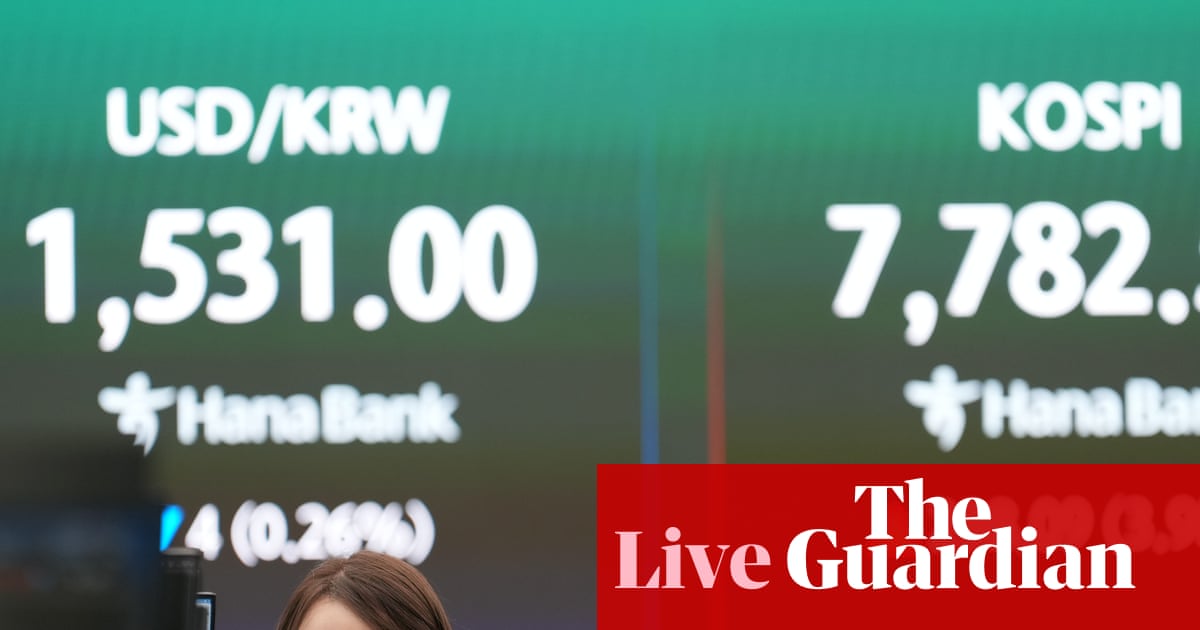
Chip stocks bounce back as OpenAI files for Wall Street float – business live – The Guardian
Chip stocks have experienced a significant recovery following the news that OpenAI has filed for an initial public offering (IPO). This filing, described as a “Wall Street float,” is part of a broader wave of AI-driven mega-sales and a surge in investment as financial institutions rush to fund the artificial intelligence sector through various channels.
Why did chip stocks rally after the OpenAI IPO filing?
The positive movement in chip stocks is a direct reaction to the news that OpenAI is pursuing a public listing. In the AI ecosystem, there is a symbiotic relationship between the software companies developing large language models and the hardware manufacturers providing the necessary compute power. When a dominant player like OpenAI moves toward a public float, it serves as a massive validation of the long-term demand for high-performance semiconductors.
Investors view the OpenAI filing not just as a corporate milestone for one company, but as a signal that the AI industry is maturing into a sustainable, public-market phase. Because the training and deployment of advanced AI models require vast quantities of specialized chips, any growth or scaling of AI companies typically translates into increased orders for hardware. The “bounce back” in chip stocks suggests that the market is pricing in continued, aggressive infrastructure spending to support the next generation of AI services.
Key drivers of this market reaction include:
- Infrastructure Validation: An IPO suggests a level of scale that requires permanent, massive hardware investments.
- Market Sentiment: The filing helps dispel fears of an “AI bubble” by showing that the industry’s leaders are ready for the scrutiny of public markets.
- Sector Synergy: Growth in AI software (the “brain”) inevitably drives growth in AI hardware (the “engine”).
Understanding the “AI Bonanza” and Wall Street’s funding rush
According to reporting from the Wall Street Journal, financial institutions are currently rushing to fund the AI sector in “every conceivable way.” This indicates that the investment appetite has moved beyond traditional venture capital and into a more complex array of financial instruments. The “AI bonanza” refers to the aggressive pursuit of returns in a sector that is seen as the primary driver of future economic productivity.

Wall Street is not merely looking at IPOs but is exploring diverse funding mechanisms to capture the upside of AI. This rush suggests a high level of urgency among investors to secure stakes in companies that control the foundational technology of artificial intelligence. The OpenAI filing is the most visible manifestation of this trend, but the broader strategy involves a multi-pronged approach to funding the massive capital expenditures required to build and maintain AI clusters.
The current funding landscape is characterized by:
- Mega-Sales: A trend of high-valuation exits and public offerings, with CNN noting that the OpenAI filing is the latest in a stream of possible AI mega-sales.
- Diverse Capital Influx: A shift from early-stage seed funding to massive institutional capital injections.
- Aggressive Valuation: A willingness to accept high premiums for companies that demonstrate a clear path to AI dominance.
The “Hat Trick” of tech IPOs: A broader market trend
The OpenAI filing does not exist in a vacuum. CNBC has characterized the current environment as a “hat trick” of tech IPOs, suggesting that OpenAI is one of three major technology companies making a move toward the public markets in a short window. This clustering of IPOs indicates a synchronized reopening of the window for high-growth tech companies.
For several years, many high-valuation tech firms remained private longer than previous generations of startups. The “hat trick” suggests a shift in market conditions where both the companies and the investors feel the timing is right for public liquidity. This trend is particularly potent in the AI space, where the cost of competing—specifically the cost of compute and talent—is so high that public markets are becoming a necessary source of capital.
| Market Signal | Implication for Investors | Industry Impact |
|---|---|---|
| OpenAI IPO Filing | Direct equity access to AI leadership | Validates AI software monetization |
| Chip Stock Recovery | Confidence in hardware demand | Ensures supply chain scaling |
| “Hat Trick” of IPOs | Return of the tech public offering wave | Increased liquidity for AI startups |
The power struggle: OpenAI vs. Anthropic
While OpenAI captures the headlines with its move toward Wall Street, other players are exerting significant influence behind the scenes. An opinion piece from the Washington Post suggests that Anthropic might actually be the “most powerful company in the world.” This highlights a critical tension in the AI industry: the difference between public visibility and structural power.
The perception of Anthropic’s power likely stems from its approach to AI safety and its competitive positioning against OpenAI. While OpenAI is moving toward a public corporate structure, the influence of companies like Anthropic is often measured by the sophistication of their models and the strategic partnerships they maintain. The contrast between OpenAI’s public “float” and Anthropic’s perceived power suggests a fragmented leadership landscape where no single entity has absolute control over the trajectory of artificial intelligence.
This rivalry creates a “virtuous cycle” for the broader market:
- Accelerated Innovation: Competition between OpenAI and Anthropic forces faster development cycles.
- Increased Spend: Both companies compete for the same limited pool of high-end chips, further boosting the chip stocks mentioned in the Guardian report.
- Diversified Risk: For Wall Street, having multiple powerful AI entities reduces the risk of a single point of failure in the AI economy.
Implications for the global economy and investors
The convergence of OpenAI’s IPO filing and the subsequent rally in chip stocks signals a transition in the AI narrative. The conversation is moving from “what can AI do” to “how do we fund and scale AI at a global level.”
The fact that Wall Street is rushing to fund the sector in “every conceivable way” indicates that AI is no longer viewed as a speculative experiment but as a fundamental piece of economic infrastructure. However, this rush also brings risks. The “bonanza” atmosphere can lead to overvaluation if the revenue generated by AI services does not eventually match the astronomical costs of the hardware and energy required to run them.
“The OpenAI filing is the latest in a stream of possible AI mega-sales, signaling a broader shift in how the AI industry accesses capital.”
For investors, the key takeaway is the interconnectedness of the AI stack. A move by a software leader (OpenAI) provides a tailwind for hardware providers (chip stocks), which in turn creates a more stable environment for other tech IPOs (the “hat trick”). This interdependence means that volatility in one area of the AI sector will likely ripple through the others.
Related analysis on AI market volatility may provide further context on how these stocks behave during periods of high speculation.
Common misconceptions about AI IPOs and chip stocks
There is a common belief that an IPO is a sign that a company has “finished” its growth phase. In the case of OpenAI, the opposite is likely true. The filing for a Wall Street float is more likely a strategic move to secure the massive amounts of capital needed to continue scaling its models and infrastructure. Public markets provide a level of liquidity and capital access that private funding—even from the wealthiest venture firms—cannot match.
Another misconception is that chip stocks only rise when new chips are announced. As this current news cycle demonstrates, chip stocks can “bounce back” simply based on the expected future demand created by the growth of AI software companies. The market is not just buying the chips that exist today; it is betting on the chips that will be required to power the models OpenAI and its rivals will build over the next decade.
Frequently Asked Questions
What does it mean when a company “files for a Wall Street float”?
A “float” refers to the shares of a company that are available for trading by the public. When a company files for a float, it is essentially initiating the process of an Initial Public Offering (IPO), moving from being a private company to a public one listed on a stock exchange.
Why are chip stocks specifically linked to OpenAI’s IPO?
OpenAI’s AI models require immense computational power provided by specialized chips. A successful public offering for OpenAI suggests the company will continue to grow and scale, which necessitates the purchase of more chips, thereby increasing the revenue and valuation of the companies that manufacture them.

What is the “AI bonanza” mentioned by Wall Street?
The “AI bonanza” refers to the current period of intense investment and high valuations within the artificial intelligence sector. It is characterized by a rush of capital from institutional investors seeking to profit from the transformative potential of AI technology.
Who is Anthropic and why are they mentioned alongside OpenAI?
Anthropic is a primary competitor to OpenAI in the development of large language models. While OpenAI is moving toward a public listing, some analysts and commentators view Anthropic as an equally or more powerful force in the industry due to its technical capabilities and strategic influence.
What is a “hat trick” of tech IPOs?
In this context, a “hat trick” refers to three significant technology companies filing for or completing IPOs within a short timeframe. It signals a broader trend of tech companies returning to the public markets after a period of remaining private.
As the AI sector continues to evolve, the movement of companies like OpenAI into the public sphere will likely serve as a bellwether for the rest of the industry. The reaction of chip stocks proves that the market views the software and hardware components of AI as a single, integrated engine of growth. Investors will be watching closely to see if the current “bonanza” leads to sustainable long-term value or if the rush to fund AI in “every conceivable way” creates new systemic risks.
